

Providing affordable, accessible, high quality, relevant Science Engineering and Technology programmes
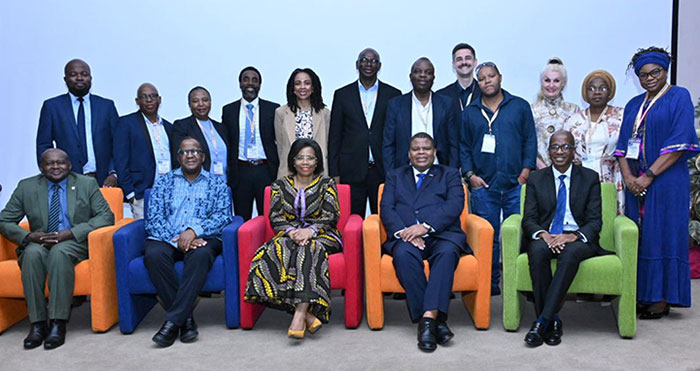
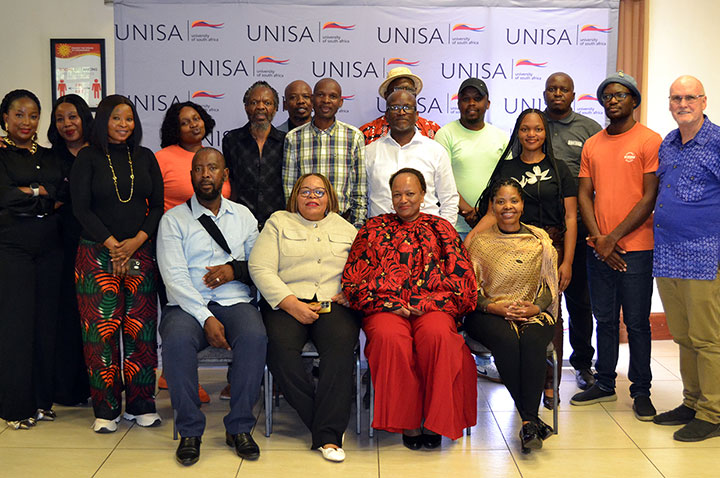
Unisa management with representatives from government, industry and municipalities
The recently hosted Unisa Water Imbizo by the Institute for Nanotechnology and Water Sustainability (iNanoWS) provided a platform for meaningful dialogue and collective thinking geared towards developing tangible solutions to South Africa’s water supply, infrastructure and quality challenges. Held at the university’s Science Campus in Florida, the imbizo, themed "Reimagining a water‑secure South Africa", spotlighted the multifaceted crises stemming from aging infrastructure, climate change, rising water demands due to increasing population, and deteriorating water quality.
Coinciding with the National Water Month, the event raised awareness around the protection and sustainable management of the country’s water resources, and educated the public about their responsibility in water conservation. It brought together academia, government, water supply utilities and communities to develop effective, evidence-based and socially legitimate solutions.
This year’s imbizo was held in partnership with the Department of Water and Sanitation, Johannesburg Water, the Water Research Commission of South Africa (WRC), Rand Water, City of Johannesburg, City of Tshwane and the Leadership in Water Innovation.
In her opening address, Prof Puleng LenkaBula, Unisa’s Principal and Vice-Chancellor (VC), reflected on the 2025 Unisa Water Imbizo, stating that the dialogue reframed South Africa’s water challenges not as a matter of absolute scarcity, but as a management crisis, further affecting allocation, equity and imagination. "We questioned the dominant narrative that characterises South Africa as inherently 'water‑scarce'," she recalled. LenkaBula urged government to use insights generated from this year’s imbizo to strengthen policy, regulation and enforcement around infrastructure maintenance, non‑revenue water reduction and the protection of vulnerable communities.
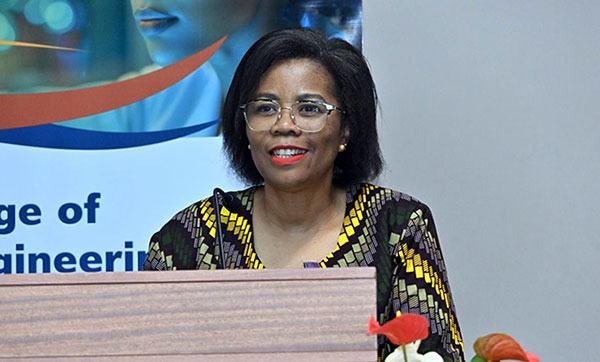
Prof Puleng LenkaBula
Further, the VC called on industry and water utility partners to deepen collaboration with universities and research institutions, pilot and adopt locally developed innovations, and invest in the skills pipeline that will sustain the country’s systems. Similarly, LenkaBula urged Unisa staff and students to produce knowledge that is interdisciplinary, decolonial, ethically grounded, implementable and impactful to communities.
Keynote speaker, Honourable David Mahlobo, Deputy Minister of Water and Sanitation, underscored the significant role of universities in contributing towards evidence-based solutions to the country’s water challenges. "Despite the severity of the water crises, South Africa is not powerless," he declared. Mahlobo added: "We have substantial institutional assets through various expertise capable of generating empiric solutions." He also acknowledged that the nation has previously overcome far greater structural obstacles.
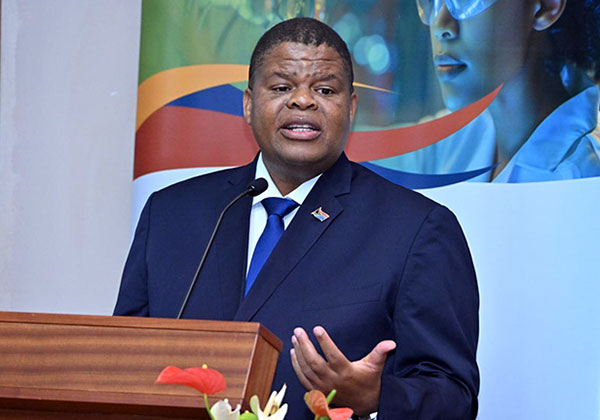
Hon David Mahlobo
Mahlobo also stressed that these challenges demand collective responsibility from relevant sectors, including civil society, organised labour and communities. Importantly, he appreciated the significant contributions by Unisa, iNanoWS and the WRC in strengthening South Africa’s water research, development and innovation ecosystem. Mahlobo further maintained that innovations produced at universities should not be confined to laboratories, research journals and pilot projects, but progress to implementation in relevant and affected areas. "The challenge in South Africa is not a shortage of ideas, but a shortage of institutional translation of research," he argued.
Concluding, Mahlobo expressed confidence in the continuous production of world-class science and innovation by South African universities and the emergence of a new generation of water professionals. He affirmed that by acting decisively, collectively and intelligently through platforms such as the Unisa Water Imbizo, future generations can inherit a resilient, sustainable, innovative and just water sector.
The imbizo featured engaging roundtable discussions focused on areas such as water quality, monitoring and compliance, water supply and infrastructure, and collaborative strategies to ensure sustainability thereof. Unisa iNanoWS also showcased exhibitions of water treatment prototypes developed in-house and research outputs through poster presentations by master’s and doctoral students, alongside contributions from various partners.
Overall, the imbizo reinforced collective commitment from all stakeholders to move beyond diagnosis and debate towards implementation and impact, ensuring a water-secure South Africa for all.
* By Dr Nozipho N Madzivha, Communication and Marketing Specialist (acting), College of Science, Engineering and Technology
Publish date: 2026-04-14 00:00:00.0
 Unisa Mining Engineering team earns prestigious industry recognition
 Unisa explores strategic collaboration to intensify its music education
 Unisa webinar links Earth Hour, Human Rights Day and World Water Day
 Reimaging masculinity at Unisa
 Engineering resilience