

The African college of excellence in the social and human sciences
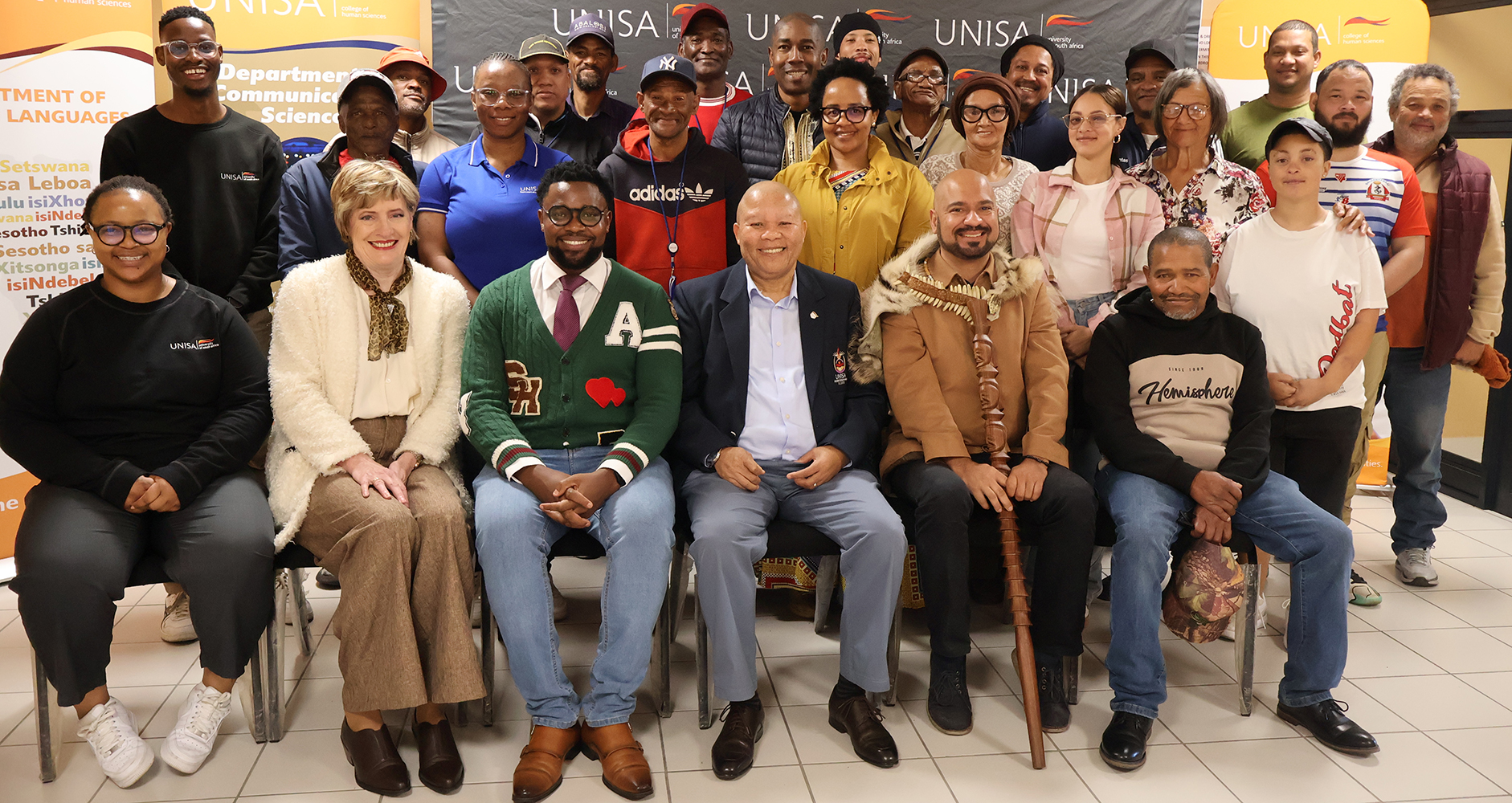
The Unisa delegation with community members and other participants during the West Coast Engaged Scholarship Workshop
For generations, fishing communities along South Africa's West Coast have accumulated knowledge of the ocean that cannot always be found in textbooks.
They know how winds affect the sea, how tides change, when seasons shift and where marine species can be found. Their languages preserve the names of places, fishing practices and environmental conditions, while their stories carry memories of communities whose identities and livelihoods have long been tied to the ocean.
It is this knowledge that the University of South Africa (Unisa) sought to understand and help preserve during a week-long Engaged Scholarship Workshop across coastal communities in Saldanha Bay, Langebaan, Paternoster and St Helena/Steenberg's Cove.
Led by Dr Anele Gobodwana from Unisa's Department of African Languages in the College of Human Sciences, the initiative brought academics together with fishers, community members, local stakeholders and indigenous knowledge holders to explore the connections between language, cultural heritage, indigenous knowledge systems and the marine environment.
At the heart of the engagement was a central principle: communities should not simply be places where academics conduct research. They should be partners in producing knowledge.
The initiative was hosted by the Unisa Western Cape Region in collaboration with the Departments of African Languages and Communication Sciences, the Institute for Sustainability and Corporate Citizenship, and the University of the Western Cape's Department of African Language Studies.
Opening the engagement, Unisa Western Cape Regional Director Motale Nkgoang said universities needed to recognise knowledge that already exists outside formal academic institutions.
"We must recognise the knowledge residing within our communities. We must recognise the knowledge embedded in the language."
Nkgoang stressed that the West Coast could not be understood through the experience of one community alone.
Each coastal community has its own history, language, traditions and relationship with the ocean. Engaging across different communities therefore provided an opportunity to understand both their shared experiences and the distinctions between them.
For Gobodwana, this requires a shift in the relationship between researchers and communities.
Coastal residents are not simply sources of information. They are custodians of knowledge accumulated through generations of living and working alongside the sea.
During the engagements, community members shared their understanding of fishing, tides, winds, weather patterns, seasons, marine life and changing environmental conditions.
But knowledge passed primarily through memory and oral tradition can disappear if it is not transferred to younger generations or properly documented.
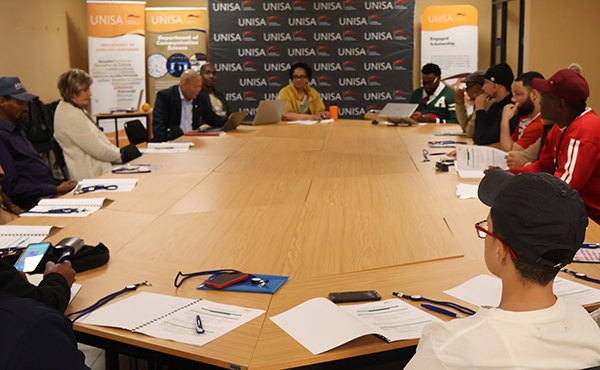
Participants discuss community knowledge, language, heritage and coastal development during the Engaged Scholarship Workshop.
"We need to write it," Gobodwana said.
One of the central ideas explored during the week was the concept of the sea as an archive.
For coastal communities, the ocean is more than a geographical feature or economic resource. It holds histories, memories and traditions that have shaped community identities over generations.
Discussions led by Paramount Chief Brett Arendze, Dr Ugo Prince, Asanda Madikizela and Dr Sebolelo Mokapela of the University of the Western Cape explored indigenous knowledge and languages, GIS-based cultural heritage mapping, governance in the West Coast District Municipality and the relationship between communities and the sea.
The conversations challenged conventional understandings of what constitutes an archive.
An archive does not necessarily consist only of documents stored in institutions. Knowledge can also be held in people's memories, language, stories, practices and relationships with particular places.
The sea itself can therefore be read through the experiences of people whose families have depended on it across generations.
Language emerged as another important part of understanding and preserving coastal heritage.
Local names for places, fishing techniques, marine species, tools and environmental conditions can carry histories and meanings that may be weakened or lost when translated.
Language, participants argued, should therefore be understood as more than a means of communication. It is also a repository of memory, identity and cultural knowledge.
This creates an important link between African languages and marine studies: understanding coastal environments also requires understanding how the people who live alongside them describe, interpret and experience those environments.
The involvement of elders and young people was consequently highlighted as particularly important.
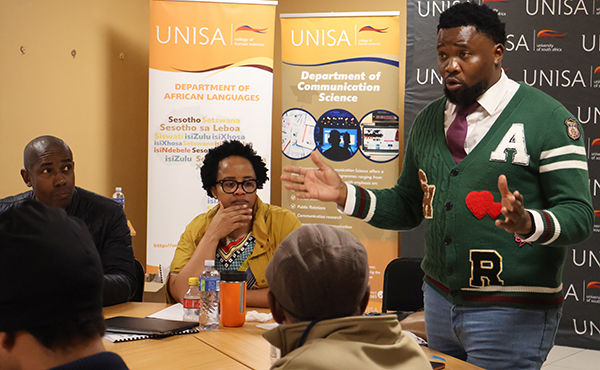
Dr Anele Gobodwana delivers a presentation during the West Coast Engaged Scholarship Workshop.
Elders can help preserve knowledge accumulated over generations, while involving younger people creates opportunities for local languages, stories and environmental knowledge to survive into the future.
The workshop also explored how Geographic Information Systems (GIS) could be used to document cultural heritage.
Mapping culturally significant locations and connecting those places to community stories can preserve not only where something happened, but why the place matters.
This approach broadens the meaning of heritage beyond monuments and historic buildings.
Coastal heritage can include tangible objects such as boats and fishing equipment, but it can also include language, songs, stories, traditional practices and cultural landscapes associated with particular communities.
The week concluded with a heritage-site tour and walkabout along the West Coast, led by Paramount Chief Brett Arendze and Saldanha Bay small-scale fishing cooperative chairperson Christie Links.
The tour allowed participants to connect discussions about knowledge and heritage with physical places carrying cultural and historical significance.
The engagement also confronted the contemporary realities facing fishing communities.
Discussions covered fishing livelihoods, permits, quotas, marine protected areas and regulatory processes, highlighting the relationship between heritage and the economic survival of coastal communities.
For many residents, fishing is not simply a commercial activity. It is a way of life intertwined with family history, community identity and cultural heritage.
This means debates about marine conservation, regulation and the blue economy cannot be separated from the people whose livelihoods and histories are connected to the sea.
Community knowledge can therefore contribute not only to preserving heritage but also to conversations about sustainable marine management and the future of the ocean economy.
The initiative aligns with Unisa's Catalytic Niche Areas, with Marine Studies providing the central academic focus for the engagement.
By bringing marine studies into conversation with African languages, communication, indigenous knowledge systems and cultural heritage, the project adopts an interdisciplinary approach to understanding coastal communities and their relationship with the ocean.
It also demonstrates how engaged scholarship can move in both directions.
Universities can bring research tools and academic expertise into communities, but communities also bring knowledge that can deepen academic understanding and challenge conventional approaches to research.
For Unisa, the West Coast engagement therefore went beyond gathering information for academic outputs.
It was about building relationships, listening to communities and exploring how knowledge developed outside universities can contribute to scholarship and debates about sustainable development.
Through the leadership of Gobodwana and the support of the Unisa Western Cape Region and its partners, the initiative is examining how language, heritage and indigenous knowledge systems can contribute to the future of coastal communities and South Africa's blue and ocean economy.
The week ultimately reinforced a simple but important principle: coastal communities are not merely places where research happens. They are custodians, producers and partners in the knowledge needed to understand the sea and shape its future.
* By Thandeka Mtyali, Intern: Communication and Marketing, Western Cape Region
Publish date: 2026-10-02 00:00:00.0

 Unisa hackathon winners develop AI solution to support students at risk of falling behind
 Beyond Black Wednesday: Unisa lecture calls for urgent action to protect media freedom and public broadcasting
 Unisa celebrates 25 new PhD graduates advancing research and innovation
 From Maramanzhi to master's: Unisa graduate champions Tshivenda through scholarship
 Unisa students help shape digital complaints system to improve accountability and service delivery