

The African college of excellence in the social and human sciences
The University of South Africa (Unisa) is strengthening efforts to combat gender-based violence and femicide (GBVF) through an engaged scholarship initiative that brings academic expertise and frontline social work practice together to improve support for victims and vulnerable communities.
More than 60 social workers from across the Bojanala District gathered at Mabe Park in Rustenburg for a two-day Victim Empowerment and Gender-Based Violence and Femicide Workshop. Hosted by Unisa's College of Human Sciences through its Department of Social Work, the workshop formed part of the Peo E Ntle Engaged Scholarship Project, which seeks to empower communities through education, research and practical interventions. The initiative was undertaken in collaboration with the Department of Social Development (DSD), bringing together university researchers and social work practitioners to strengthen prevention strategies, improve victim support and promote more effective responses to GBVF.
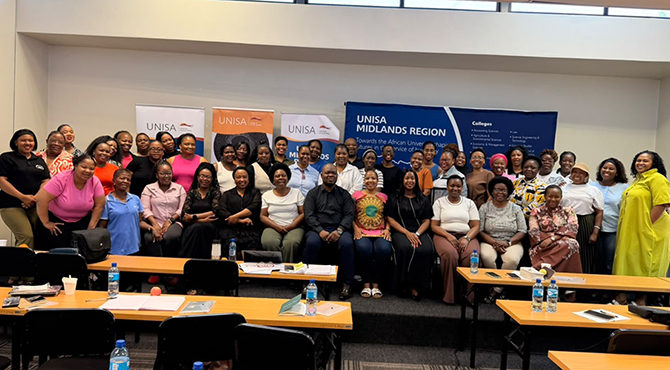
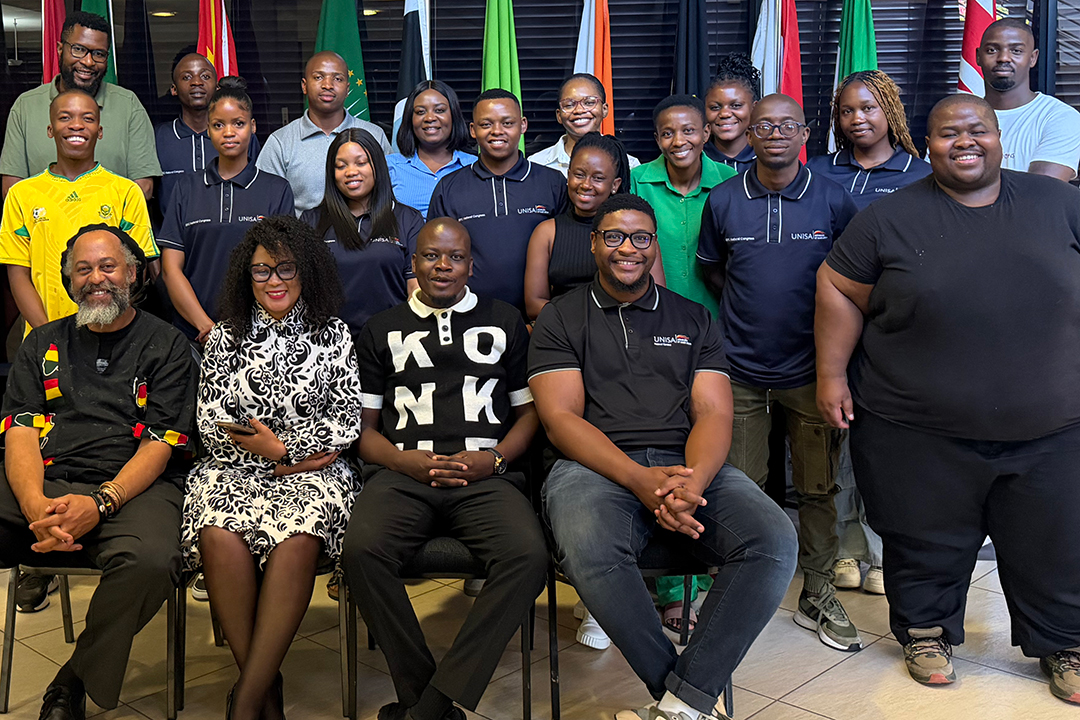
Social workers and members of Unisa's Peo E Ntle Engaged Scholarship Project gather during the Victim Empowerment and Gender-Based Violence and Femicide (GBVF) Workshop held in Rustenburg on 21 and 22 October 2026. The initiative focused on strengthening victim support, prevention strategies and community responses to GBVF.
Peo E Ntle, meaning a beautiful seed, reflects the project's vision of nurturing positive and lasting change within communities. The initiative recognises that addressing gender-based violence requires more than responding to individual incidents. It also demands sustained education, community involvement, professional development and stronger support systems for those affected. The project is led by Dr Goitseone Leburu, with support from Prof Paul Mbedzi, Chair of Unisa's Department of Social Work.
Other members of the project team include Dr Xolisa Mazibuko, Prof Kgashane Malesa, Dr Minenhle Zwane, Prof Mmamoagi Skhosana and Kgomotso Kekana. Through their combined expertise, the team seeks to connect academic research with the practical challenges faced by social workers and communities. The Rustenburg workshop marked an important step in extending the project's reach and establishing relationships that can support longer-term community engagement.
A central focus of the workshop was strengthening the knowledge and professional capabilities of social workers who support victims of gender-based violence. Participants examined approaches to victim empowerment, prevention and intervention, with particular attention to the importance of informed and responsive social work practice. Addressing attendees, Prof Malesa encouraged social workers to embrace research as an essential part of their professional responsibilities. He emphasised that practitioners must remain informed about the legislation and policies designed to protect their clients.
His message highlighted the importance of evidence-based practice, which enables social workers to draw on research, professional knowledge and applicable legal frameworks when responding to complex cases. By strengthening their understanding of relevant policies and legislation, practitioners can better support vulnerable individuals and contribute to more effective community responses to violence. Prof Mbedzi reinforced the importance of respecting the dignity, independence and rights of people seeking social work services. He reminded participants that their responsibility is to empower clients rather than make decisions on their behalf.
This approach recognises that individuals affected by violence should be supported to understand their options and make informed decisions about their circumstances. It also emphasises the importance of treating victims with dignity, listening to their experiences and ensuring that professional interventions respond to their needs. The workshop encouraged practitioners to reflect on their responsibilities in creating supportive environments where victims can access appropriate assistance and participate meaningfully in decisions affecting their lives. Collaboration between Unisa and the Department of Social Development was central to the workshop.
The department was represented at provincial level by Dineo Maribeng, Ouma Thekiso and Lorato Ratakane. The partnership provided an opportunity to connect academic expertise with the experiences of practitioners working directly with communities affected by gender-based violence. Such collaboration is important in identifying gaps in existing support systems, strengthening professional practice and developing responses that reflect the realities faced by victims. Through its engaged scholarship approach, Unisa aims to ensure that research contributes to practical improvements in communities rather than remaining confined to academic institutions.
The initiative also demonstrates the value of partnerships between universities and government departments in responding to complex social challenges. The Peo E Ntle initiative reflects Unisa’s commitment to using research, teaching and community engagement to address pressing societal challenges. Its focus on preventing gender-based violence, supporting victims and strengthening professional responses contributes directly to the United Nations Sustainable Development Goal (SDG) 5, which seeks to achieve gender equality and eliminate violence against women and girls.
The project also supports SDG 16, which promotes peaceful and inclusive societies, access to justice and effective institutions. These objectives align with the African Union's Agenda 2063 vision of an Africa where women and girls are empowered, their rights are protected and communities can live in safety and dignity. At a national level, the initiative complements South Africa's efforts to address gender-based violence and femicide through stronger prevention, protection and support measures. By equipping social workers with relevant knowledge and encouraging evidence-based interventions, the project contributes to the development of more responsive community support systems.
As the first Peo E Ntle workshop hosted in Rustenburg, the event marked the beginning of what organisers envisage as a sustained programme of community engagement and professional development. Further workshops and collaborative activities are planned to expand the project's reach and strengthen its contribution to victim empowerment and GBVF prevention. The initiative aims to increase awareness, improve community responses and equip social workers and community leaders with the knowledge needed to support vulnerable individuals. For Unisa, the workshop demonstrated how engaged scholarship can bring researchers, practitioners and government partners together around a shared commitment to social change.
By investing in professional development and community partnerships, the university is helping strengthen the foundations for more effective responses to gender-based violence. Through Peo E Ntle, Unisa and its partners are planting the seeds of lasting change, working towards communities where victims receive appropriate support, individuals are empowered to exercise their rights and the prevention of violence becomes a shared responsibility.
* By Monica Nong, Acting Communications and Marketing Officer, Midlands Region
Publish date: 2026-11-03 00:00:00.0

 Unisa's Prof Puleng Segalo elected to prestigious Academy of Science of South Africa
 Three Unisa students selected among Africa's top 20 student quality assurers
 Two Unisa professionals honoured for excellence in research and innovation management
 Unisa Astronomy researcher wins prestigious fellowship for her work on star formation
 Unisa equips Student Parliament leaders to champion ethical and accountable governance