

The African college of excellence in the social and human sciences
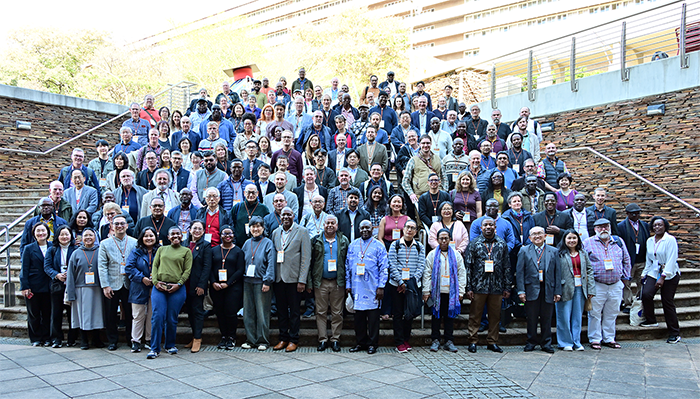
Delegates at the 16th IAMS General Assembly
The University of South Africa (Unisa) has strengthened its position as a global centre for scholarship after hosting the 16th International Association for Mission Studies (IAMS) General Assembly, bringing together some of the world's leading theologians, mission scholars and church leaders to examine how faith can help address today's most pressing global challenges.
Hosted by Unisa's College of Human Sciences in partnership with IAMS from 17 to 21 July 2026, the five-day assembly united 268 delegates from Africa, Asia, Europe, Latin America, North America, Oceania and the Pacific under the theme, "Walking Together in Mission: Facing Global Challenges for a Sustainable World."
Held every four years, the IAMS General Assembly is regarded as one of the most significant international gatherings in mission studies. The 2026 edition also marked only the third time the event has been hosted on African soil, following previous assemblies in Harare, Zimbabwe, in 1985 and Hammanskraal, South Africa.
For Unisa, hosting the assembly highlighted the university's growing influence as a platform for international academic dialogue and research collaboration.
Delegates, including missionaries, theologians, church leaders and researchers, gathered at Unisa's Pretoria campus to explore the role of Christian mission in responding to issues such as climate change, poverty, inequality, migration, technological disruption and social justice.
The discussions reflected the growing need for faith communities and academic institutions to work together in finding practical responses to global challenges while promoting sustainable development.
The next IAMS General Assembly will be held in Brazil in 2030.
The gathering also showcased Africa's expanding contribution to global mission scholarship.
Attention was given to the establishment of IAMS Africa, launched at Stellenbosch University in August 2024, to strengthen research collaboration across the continent and ensure African perspectives continue shaping international conversations on theology and mission.
The regional body aims to promote contextual research, ecumenical engagement and stronger partnerships among scholars working on Africa's unique opportunities and challenges.
Opening the assembly, Prof Fundiswa Kobo, Chair of the Department of Christian Spirituality, Church History and Missiology, reflected on the conference theme by urging delegates to embrace compassion alongside justice.
"If justice teaches us where to stand, mercy teaches us how to walk," she said, describing mercy as God's enduring presence among people facing suffering and uncertainty.
Welcoming delegates, College of Human Sciences Executive Dean, Prof Zethu Nkosi, highlighted South Africa's historical journey and the important contribution mission education has made to the country's intellectual and social development.
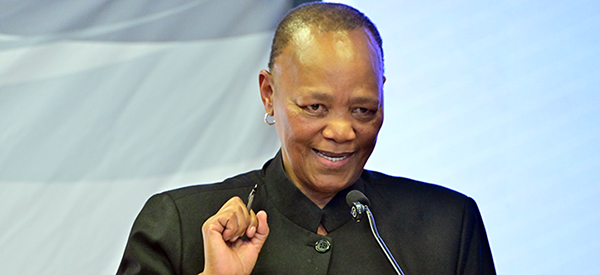
Prof Zethu Nkosi
She reaffirmed Unisa's commitment to decolonial scholarship. She encouraged delegates to partner with the university in advancing South Africa's National Development Plan and the United Nations Sustainable Development Goal on quality education.
Representing the Principal and Vice-Chancellor, Prof Puleng LenkaBula, Vice-Principal for Institutional Development, Professor Solomon Magano, officially opened the assembly.
In her message, LenkaBula said the return of the IAMS General Assembly to Africa reflected the strength of Unisa's long-standing partnership with the international organisation and reaffirmed the university's commitment to scholarship, dialogue and collaborative solutions to global challenges.
IAMS President Prof Bokyoung Park welcomed delegates to Pretoria and reflected on the association's evolution since its establishment in 1972.
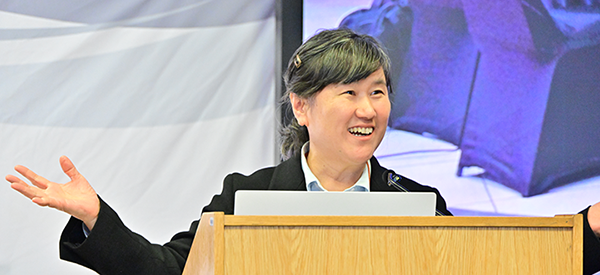
Prof Bokyoung Park
She described IAMS as a truly global academic community where scholars deepen their understanding of mission through dialogue, cultural exchange and collaborative research.
Park encouraged delegates to build relationships beyond the conference sessions, noting that many of the association's most successful collaborations had begun through informal conversations and shared experiences.
IAMS General Secretary Professor Bright Myeong Seok Lee called on delegates to view mission as a shared journey of hope and faithful service in an increasingly complex world.
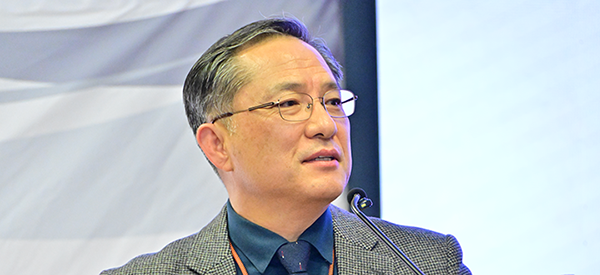
Prof Bright Myeong Seok Lee
He challenged participants to respond collectively to emerging issues, including ecological degradation, artificial intelligence and rapid technological change, while honouring Africa's historic contribution to Christian theology.
Throughout the week, internationally respected scholars explored a wide range of contemporary issues.
Prof Dana L. Robert examined the evolution of global Christian witness from the 1985 Harare Assembly to the present, while Reverend Dr Xiaoli Yang presented a creative vision for ecological mission in an era increasingly shaped by digital technology.
Dr Estêvão Raschietti concluded the plenary programme by examining the opportunities and challenges facing Christian mission in Latin America.
Delegates also heard from Prof Isabel Apawo Phiri, whose address focused on water scarcity and sustainability in Sub-Saharan Africa through the lens of African women's theology. Her presentation highlighted the Church's role in promoting ecological justice and protecting vulnerable communities.
Artificial intelligence also featured prominently during the assembly. Fr Gabriel Hanganu of the Alan Turing Institute explored how emerging technologies are reshaping Christian mission and encouraged churches to engage ethically with innovation while remaining rooted in the Gospel.
The programme extended beyond academic discussions, allowing international visitors to experience South Africa's diverse faith communities.
Delegates attended worship services in Mamelodi and Soweto before enjoying a traditional South African braai at Unisa's Kgorong precinct, strengthening friendships and fostering cultural exchange among participants from around the world.
The General Assembly concluded with the election of a new IAMS Executive Committee for the 2026 to 2030 term.
Prof Thinandavha Mashau was elected President and outlined an ambitious vision for the future of the association.
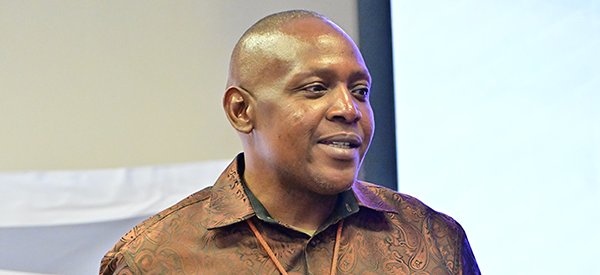
Prof Thinandavha Mashau
His priorities include amplifying marginalised voices, supporting emerging scholars, expanding digital collaboration, strengthening institutional sustainability and encouraging mission scholarship that actively engages with issues such as climate justice, migration, inequality, poverty and violence.
Mashau called on members to reimagine IAMS not simply as an academic association, but as a global movement committed to equipping future generations of scholars and practitioners to contribute meaningfully to the Church, society and sustainable development.
For Unisa, hosting the prestigious international assembly reinforced the university's reputation as a leading institution for research, dialogue and global academic engagement. The event also demonstrated how African scholarship continues to shape international conversations on faith, justice and sustainable development while creating new opportunities for collaboration across continents.
* By Dr Khabo Maduna, Communication and Marketing Specialist, Unisa College of Human Sciences
Publish date: 2026-07-24 00:00:00.0

 Unisa hackathon winners develop AI solution to support students at risk of falling behind
 Beyond Black Wednesday: Unisa lecture calls for urgent action to protect media freedom and public broadcasting
 Unisa celebrates 25 new PhD graduates advancing research and innovation
 From Maramanzhi to master's: Unisa graduate champions Tshivenda through scholarship
 Unisa students help shape digital complaints system to improve accountability and service delivery