

The African college of excellence in the social and human sciences
Professor Lebitsi Maud Modiba from the Department of Health Studies in the College of Human Sciences recently delivered her inaugural lecture entitled Ethical Leadership in Health Governance: Key to Improving Health System Performance.
 She said before embarking on her lecture, she took the time to listen to speakers and read about ethical leadership as this was discussed in the media. “I had conversations with myself and what I am going to present is a contemporary issue. My lecture today will highlight the importance of ethical leadership in organisations as leadership is regarded as the soul of an organisation because of its special role which is moral-laden.”
Professor Modiba said that the frequent publicised ethical scandals and failures in both public and private sectors have raised the important questions about the role of leadership in shaping ethical conduct in organisations. This is particularly crucial in public organisations where the leaders exercise enormous power and have access to public resources that are needed for system performance.
She said there is no way that one can discuss leadership without discussing ethics, as it is regarded as crucial and it is found at the heart of leadership. “The leaders in organisations need to be knowledgeable in ethical principles and acquire ethical virtues to check the undue influence of self-interest as they carry out their responsibilities.”
As care becomes increasingly integrated and population based, a broader systematic approach to ethical leadership in healthcare is essential, in order to improve system performance, she continued. “Let me take a page from Judge Mokgoeng Mokgoeng as reflected in the Times of the 12 April 2016 edition, as it is one of writings that touched me. He purported that unethical leaders have damaged the South African nation, and that leaders should embrace ethical leadership. Ethical leadership is not an option but a national imperative. When you are a leader you have the authority to influence those that you lead and it was doing that largely determines what those who follow are likely to do.”
Professor Modiba’s paper looked at the recent leadership landscape which she said has really shifted in that the health system performance has led to a lot of lawsuits from the patients and families; thus costing the department of health money. “By now we are all aware of the Life Esidimeni case, the KZN Health department medical negligence and many more similar cases. These stories all point to ethical leadership; as a country we cannot ignore all these challenges.”
She said although South Africa, having all the Acts and policies in place, is still faced with many challenges that affect the whole community, such as a lack of leadership and management capacity within the public health sector in South Africa; and this is shown by failure of South Africa to meet the Millennium Development Goals.
“The new sustainable development goals are a sharp reminder of this ‘unfinished business’. Despite the leadership by current and the commitment from competent health service managers and professionals, incompetence in leadership and governance failures still exist across the system. It is exacerbated by a general lack of responsibility and accountability. Leadership is a necessary element of strong health systems, and so it is vital that South Africa nurtures and sustains leaders who can work strategically within their complex environments to develop a rights-based health system that promotes health equity.”
Some of the consequences and challenges linked to unethical leadership that she highlighted during her lecture were, high maternal death, high prevalence of HIV infections, femicide and high rate of violence against women, poor leadership, poor governance as well as lack of accountability and lack of responsibility. Therefore, her paper looked at what are the gaps in the leadership in the South African health system; how do we create ethical leadership that can direct and control organisations towards good governance and what can be done to build on this base and strengthen the leadership in the health system? “Our main argument is that ethical leadership may impact the ability of the country to meet its responsibilities to adapt and succeed in the future is necessary in order to mitigate the challenges.”
Professor Modiba’s lecture explored ethical leadership as a concept and said that it was multi-dimensional. She listed competence, integrity, communication and humility as some of the virtues that an ethical leader should have. She advised: “As a leader, develop a clear and coherent ethical framework. This will assist you to draw on in making decisions and taking action. A coherent ethical framework or philosophy does not pop into your head overnight. Your experience, your background, what you have been taught and the actions of role models will assist you to develop your theoretical model.
“In other words, your ethical framework is built from everything that had gone into making you who you are. What is important is that having an ethical framework provides you with a basis for making difficult ethical decisions, rather than leaving you to struggle with each separate decision in a vacuum. Having such a foundation does not make you an ethical leader, but it helps your development as an ethical person, a necessary characteristic for an ethical leader.”
She added that the ethical framework should agree with the ethical framework, vision, and mission of the organisation. “If you do not buy into the ethical stance of the organisation, you should not take the job in the first place. Someone who truly believes her ethical duty is to make decisions for everyone, for instance, cannot ethically lead an organisation that is dedicated to collaborative decision-making and equal status as an ethical principle. Put the good of the organisation and the general good before your own interests and ego. One of the true tests of ethical leadership is making the decision that is best for the organisation even when it is not in the leader’s self-interest to do so. An ethical leader does nothing to compromise the philosophy or the vision and mission of the organisation. Encourage the discussion of ethics in general and of the ethical choices involved in specific situations and decisions and decisions as an ongoing feature of the organisational culture.”
Professor Modiba also shared how she will carry out ethical leadership going forward. “As a teacher I will continue to teach my students to embrace ethical leadership. As a senior member of the Department I will coach and mentor the young academics, and form part of discussions, discourse in the form of seminars and summits in order to address ethical issues and challenges because talking about the problems of leadership as individuals we will never win. I will work towards crafting a leadership hub in the Department of Health Studies where young leaders of tomorrow will be developed, conduct research in order to get firsthand experiences of leaders in their leadership role and join other colleagues nationally and internationally to discuss the role of ethical leadership in organisations.”
* Compiled by Rivonia Naidu-Hoffmeester
Publish date: 2018-09-10 00:00:00.0
 Unisa welcomes students during Orientation Week 2026
 Unisa hosts the Zimbabwe Open University to exchange research know-how
 Towards a ritual-informed humanitarian psychology
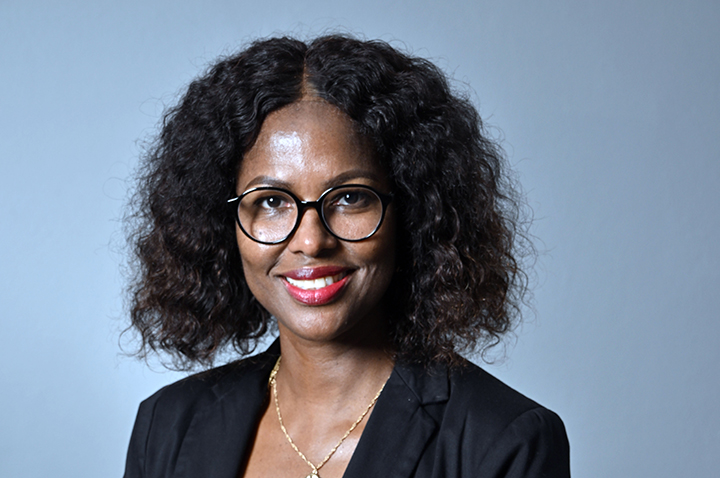 Unisan joins the Executive Committee of CSA-SA
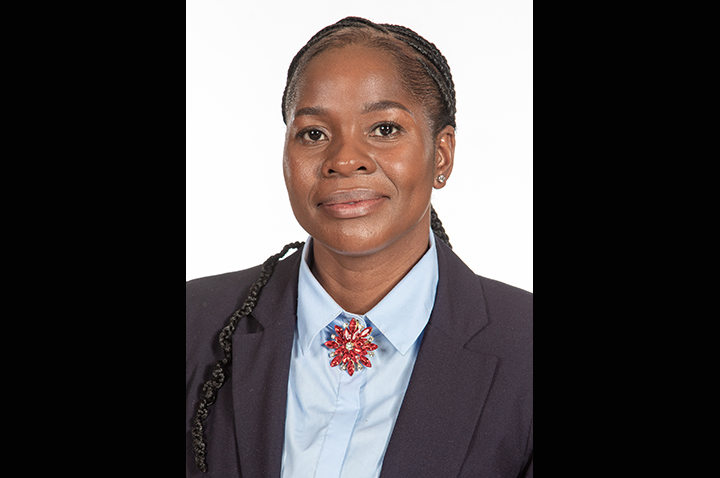 Unisan appointed to the UJ Archives Advisory Board