

The African college of excellence in the social and human sciences
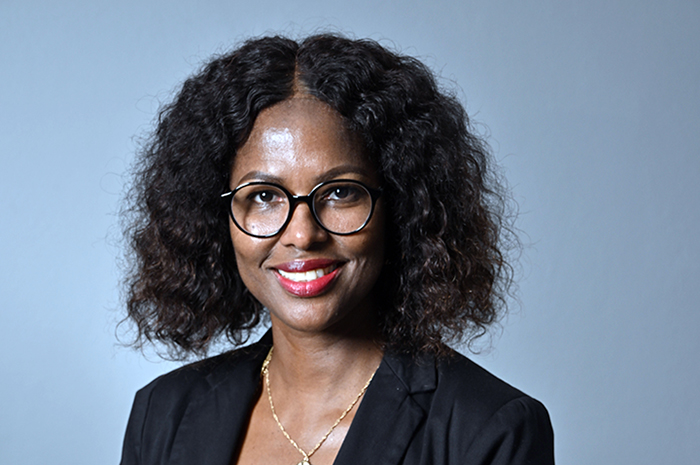
Dr Modiehi Rammutloa
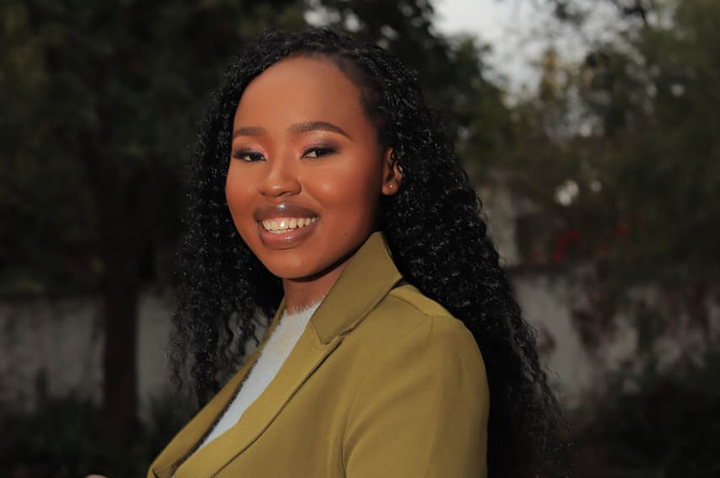
This International Women’s Month, the College of Human Sciences celebrates Dr Modiehi Rammutloa, affectionately known as Dr Mo, a senior lecturer in the Department of Information Science.
Rammutloa’s diverse research focus spans the four pillars of information and knowledge management, citizen science, research data management and the Sustainable Development Goals, as reflected in her studies. She has recently been elected to serve on the Executive Committee: Local and Regional Partnerships of the Citizen Science Association of Southern Africa (CSA-SA).
Rammutloa is stepping into a new arena of leadership, bringing with her decades of intellectual rigour, strategic insight and an unwavering commitment to progress. Her appointment marks not only a personal milestone but also a significant moment for the institution, signalling a continued investment in thoughtful, research-driven governance.
We sat down with Dr Rammutloa to learn more about this remarkable Unisan.
I was born and raised in Ga-Rankuwa, a township on the outskirts of Pretoria. I have always yearned for knowledge, and my passion and curiosity have yielded academic achievements in the form of a bachelor's degree (University of Limpopo), honours (Unisa), MPhil in Information and Knowledge Management (Stellenbosch University) and a PhD in Information Science (Unisa), which I obtained in October 2023.
My 20+ years of experience in various library sectors in the library and information science space attest to my stature as an information specialist in data standards and quality reporting at Unisa's Library Services.
As an academic, I see this as an opportunity to contribute to the development of citizen science at a regional level, thus ensuring that impact is realised at scale. The success of CSA-SA hinges on inclusivity and diverse representativity. As a member of various engaged scholarship programmes in marine and maritime studies, energy, and the development of school libraries, I saw the value and benefits of collaboration and how strong partnerships can bridge the gap between academia and the communities we serve.
This appointment presents an opportunity to raise awareness of citizen science across the region and to learn from other citizen science practitioners.
CSA-SA is a newly established association, which was formally registered in 2025. To serve on the Executive Committee, interested members from across the SADC region, representing various disciplines, were invited to submit a letter of intent to serve, accompanied by a proposal outlining the reasons for selection to the Executive Committee. I have always wanted to contribute my knowledge to citizen science activism, so I also put my name in the hat. CSA-SA members were requested to vote for their preferred candidate. The candidates with the highest votes were then elected to serve on the Executive
Committee.
One of the key points of citizen science is making science open and accessible to community members. Through the established networks, I will bring collaboration and relationship-building skills.
Since the entity was recently established, the Executive Committee is still amending the constitution, which also details CSA-SA's objectives and functions. CSA-SA seeks to promote inclusivity and coordinate and support citizen science activities in Southern Africa.
Yes, before my election to the committee, I contributed my knowledge and time to an international committee that researches the contribution of citizen-generated data to the achievement of the Sustainable Development Goals under the Committee on Data (CODATA). I have been a member since 2019. Towards the end of 2025, I pitched an idea to form a Citizen Science Association for South Africa to one of the members of Unisa's executive management. The colleague was very encouraging, and we brainstormed some ideas. The biggest concern for me was that I wanted to pitch this at the local level, meaning Unisa, and work my way up, but the reality is that the mission is bigger than Unisa and me. The opportunity to serve on the committee presented itself a few months after the brief pitch.
To create solid and sustainable platforms for collaboration and strengthen partnerships within local, regional and international organisations. To bring communities on board as equal partners in enhancing sustainability initiatives.
I would like to be remembered as an individual who truly epitomises the saying "Leave no one behind" by making a difference in communities, not through theoretical research alone, but by developing practical problem-solving solutions together with community members.
* By Nnana Martina Jege, Administrative Officer, College of Human Sciences
Publish date: 2026-03-17 00:00:00.0
 Too few vets, too many outbreaks: South Africa's FMD challenge
 Unisa sparks critical conversation on South Africa's unfinished land question
 From Unisa graduate to global fraud intelligence investigator
 Studying at Unisa was the right decision
 More than a game: Unisa is building health, teamwork and lasting connections through sport