

The African college of excellence in the social and human sciences
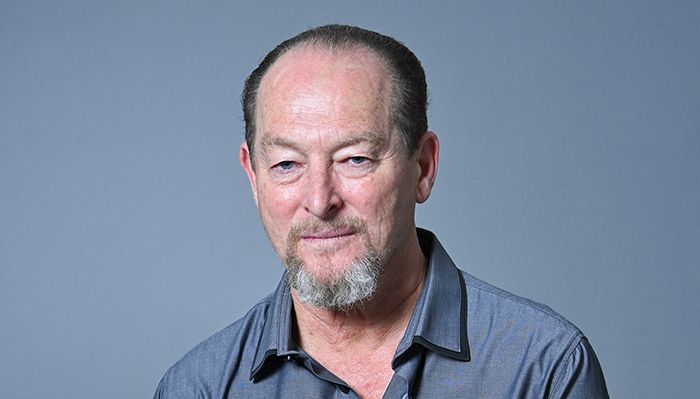
Prof Juan Nel
For Prof Juan Nel of Unisa's College of Human Sciences, research is most meaningful when it creates positive change beyond the university's walls.
His recent upgrade to a B3 rating by the National Research Foundation (NRF) recognises not only the quality of his research, but also its growing influence nationally and internationally. The rating is awarded to established researchers whose recent work has earned considerable international recognition for its quality and impact.
For Nel, the achievement is both humbling and motivating.
"I have been fortunate to contribute to Unisa’s research profile through publications, conference presentations and professional recognition," he says.
The promotion follows his 2024 C3 rating.
"At the time, I hoped I would one day achieve a higher rating," he reflects. "Receiving this recognition encourages me to continue producing research that makes a meaningful contribution to society."
Nel believes outstanding research should extend beyond academic journals and have a tangible impact on people’s lives.
"Research excellence is not about the quantity of publications but about their quality and societal impact," he says. "Research should contribute meaningfully to society, align with the Sustainable Development Goals, and make a global contribution from an African perspective."
His work focuses on inclusive, rights-based approaches to mental health and wellbeing, with particular emphasis on reducing stigma, advancing human rights and promoting psychological inclusion.
One of his most influential contributions has been the South African LGBTQIA+ Human Rights Project, which led to the development of Africa's first affirmative practice guidelines for working with sexually and gender-diverse communities. According to Nel, the project's influence has extended well beyond South Africa, contributing to international conversations on inclusion and human rights.
His research also addresses hate crimes and victimisation through initiatives such as the Hate Crimes Monitoring Project, led by Unisa’s Department of Psychology. The project seeks to better understand the nature and prevalence of hate crimes in South Africa, providing evidence that can inform policy and support vulnerable communities.
While his research addresses complex societal issues, Nel believes collaboration is one of the keys to producing meaningful scholarship.
Over the years, he has worked closely with postgraduate students, recent graduates, postdoctoral fellows and researchers from across Africa and around the world. These partnerships have strengthened both the quality and visibility of his work while creating valuable opportunities for emerging scholars.
"My work has gained visibility through mentoring and co-publishing with postgraduate students, recent graduates, postdoctoral fellows and research assistants," he says.
His research has appeared in leading international journals, including the Journal of Homosexuality, Psychology and Sexuality, the Journal of Hate Studies, the South African Journal of Psychology and the African Journal of Criminology and Victimology. He has also contributed chapters to publications by respected academic publishers, including Cambridge University Press and Oxford University Press.
Nel credits much of his success to collaboration.
"Working in large collaborative teams with internationally recognised scholars has significantly increased the visibility of my research," he says.
He also acknowledges the contribution of his senior postdoctoral fellow from Nigeria, whose support has helped strengthen several research initiatives and international partnerships. Together, they helped organise the International Network of Hate Studies Conference in South Africa, a collaboration between Unisa and the International Network of Hate Studies.
Beyond publishing research, Nel continues to play a leading role in shaping the discipline. He recently guest edited a special section of the South African Journal of Psychology and will host South Africa’s first Relationship Sciences Conference, creating new opportunities for researchers to exchange ideas and build international collaborations.
As a member of the Academy of Science of South Africa (ASSAf), Nel believes recognition is valuable because it reflects the confidence that peers place in a researcher’s work.
"Research excellence is also reflected when others recognise your work, invite you to collaborate or seek affiliation with Unisa," he says. "International conferences provide opportunities to showcase our research and build global visibility."
He is particularly proud of Unisa's commitment to building research partnerships across Africa.
"We have recruited highly impactful continental scholars, and I am proud that our university promotes collaboration across the continent despite the challenges around anti-foreigner sentiments," he says.
For Nel, the greatest reward is knowing that his work contributes to building a more inclusive society while strengthening Unisa’s reputation as a globally recognised research institution.
As he continues to advance research in psychology, mental health and human rights, his message to fellow researchers remains simple: research should never lose sight of the people it is intended to serve.
* By Lesego Chiloane, Journalist, Department of Institutional Advancement
** Photography by Shooheima Champion, Multimedia Centre
Publish date: 2026-07-28 00:00:00.0

 Reclaiming African heritage through geographical names
 From research to real-world impact: Unisa-linked project explores new ways to advance LGBTQIA+ rights
 Unisa hackathon winners develop AI solution to support students at risk of falling behind
 Beyond Black Wednesday: Unisa lecture calls for urgent action to protect media freedom and public broadcasting
 Unisa celebrates 25 new PhD graduates advancing research and innovation