
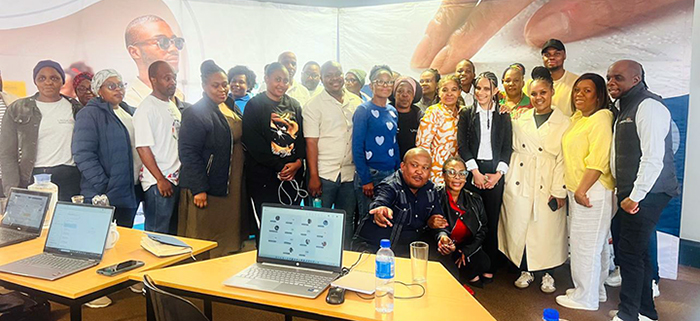
Engaged inclusive participants
Unisa’s Advocacy and Resource Centre for Students with Disabilities (ARCSWiD), in partnership with the University Capacity Development Programme (UCDP) and regional offices, hosted a series of disability-inclusive Regional Capacity Development Programmes thus far in 2026.
These workshops, held in Mthatha (15-16 April 2026), Polokwane (6-7 May 2026), and Pietermaritzburg (13-14 May 2026), will continue to reach more regions, such as the Western Cape, Midlands and Gauteng Regions, which are aimed at strengthening disability-inclusive student support services across regions within an open and distance eLearning (ODeL) environment.
The programme focused on students' and staff's capacity building and accessibility enhancement. It coordinated regional support, reinforcing Unisa’s commitment to inclusive education and aligning with institutional priorities, such as the Institutional Operational Plan (IOP) 2026. At the core of these programmes was the principle that disability should never be a barrier to access, participation or academic success.
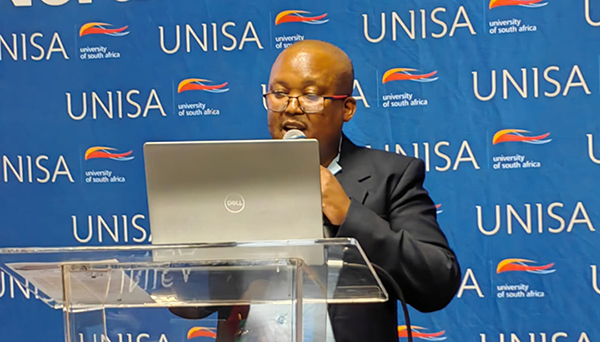
Bheki Nxumalo
Across all regions, Bheki Nxumalo, Acting Deputy Director of ARCSWiD, emphasised that access alone is not sufficient; students with disabilities must also be supported to succeed throughout their academic journey. He highlighted that students often face barriers in registration, teaching, assessment and communication, which require coordinated institutional responses. Nxumalo further called for a shift from policy awareness to practical implementation, early identification of barriers, accessible communication and integrated collaboration between departments.
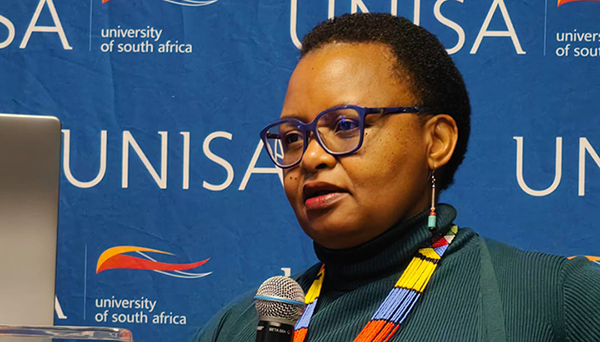
Prof Dikeledi Mahlo
Prof Dikeledi Mahlo from the Department of Inclusive Education in the College of Education introduced neurodiversity, explaining that conditions such as ADHD, dyslexia and autism should be viewed as natural variations in human cognition rather than deficits. She emphasised that inclusion improves academic success, retention, mental well-being and innovation, while a lack of support increases dropout rates.
The programmes included presentations from colleagues such as Dr Tonny Nelson Matjila from the College of Graduate Studies; Nozuko Langa from the College of Human Sciences; Fhatuwani Makahane from the Unisa Gauteng Region, Ekurhuleni; and Gugulethu Mngadi, Hellen Moraka, Vukati Ndlovu and Sophy Mabaso from ARCSWiD.
Matjila challenged the traditional medical model and argued that institutional and environmental barriers often produce disability. He called for a shift toward transformative, student-centred inclusion, where systems are redesigned to support all learners. Other young professionals who presented at the workshop include Bonolo Nketu, Realeboga Dammie, Kgotsofatso Maluleke, Margaret Motsepe, Nwabisa Veli and Nasmirha Bhamjee, all from ARCSWiD.
Delivering their presentations, the speakers collectively emphasised the importance of adopting a holistic, inclusive and student-centred approach to supporting students with disabilities from admission through to graduation. They further advocated integrating Universal Design for Learning (UDL) principles to strengthen accessibility and responsiveness within student support services. Practical strategies for inclusive support were also explored, with presenters showcasing accessible learning materials such as Braille, DAISY, large print and audio formats, while emphasising inclusive communication, disability etiquette, respect for student autonomy and understanding Deaf culture.
Discussions further addressed academic and financial support interventions, including concessions, alternative assessments, assistive technologies and funding support. In addition, the introduction of a structured mentorship programme for first-year students with disabilities was presented as a proactive intervention to strengthen peer engagement, early support, referral systems and student well-being. The workshop also critically reflected on barriers in ODeL environments, including digital divides, communication challenges, social isolation and attitudinal barriers, reinforcing the need for institutions to embed accessibility, inclusion and dignity within both institutional systems and everyday interactions.
The ARCSWiD-UCDP Capacity Development Programme demonstrates a strong institutional commitment to transforming disability inclusion at Unisa. Through collaboration across regions, the workshops strengthened staff capacity, increased awareness of accessibility and promoted inclusive service delivery.
Following the workshop, an interview was conducted with regional management and staff to gain deeper insight into the experiences, challenges, and opportunities associated with supporting students with disabilities across the Eastern Cape, North Eastern, and KwaZulu-Natal regions. Thandanani Mdlalose, Mthatha Regional Centre Manager, emphasised that regional support for students with disabilities is crucial, as it enables staff to respond more effectively to students’ needs, improve service delivery and address the sense of exclusion often experienced by students within mainstream university services.
Dr Christiane Sitshange, Mthatha Student Counsellor, noted that the training strengthened staff awareness and competence, particularly regarding neurodivergent and invisible disabilities. In the KwaZulu-Natal region, Asanda Kafile highlighted that although multipurpose computer laboratories are available at service centres such as Pietermaritzburg and Durban, limited staffing remains a major challenge, particularly when staff are absent, thereby affecting service delivery continuity. He further raised concern about the shortage of sign language interpreters in the region, which creates communication barriers for Deaf students seeking access to learning and support services.
Kafile stressed that regional staff must apply the knowledge gained from the workshop and ensure that all Unisa staff take collective responsibility for supporting students with disabilities. He concluded that inclusion in higher education means creating equal opportunities for every student to learn, participate and succeed, affirming that disability should never be a barrier to education, dignity or belonging.
* Submitted by Kefiloe Tshabalala, Maria Mohlala and Romeo Gavhi, Interns: ARCSWiD
Publish date: 2026-05-27 00:00:00.0
 Prof LenkaBula brings African scholarship and women's leadership to global sustainability dialogue
 Unisa welcomes new Ethiopian postgraduates and hosts experience-sharing session
 Completing study tasks early reduces last-minute pressure, says RSRC graduate
 Outgoing Limpopo RSRC members lead by example
 Resilience beyond the finish line