

Providing affordable, accessible, high quality, relevant Science Engineering and Technology programmes

From left: Prof Ilunga Kamika of the College of Science, Engineering and Technology, and Prof Solomon Kgatle of the College of Human Sciences
Announced by Prof Blade Nzimande, Minister of Science, Technology and Innovation, on 16 April, the National Research Foundation (NRF) has launched 41 Decadal Plan Aligned Research Chairs for Historically Disadvantaged Institutions, Universities of Technology, and Emerging Universities. Two of these chairs were awarded to Unisa: the DST/NRF SARChI Chair in Water and the Environment, and the DST/NRF SARChI Chair in Welfare and Social Development in Informal Settlements.
The incumbent of the DST/NRF SARChI Chair in Water and the Environment will be Prof Ilunga Kamika. Kamika is an NRF C3-rated researcher in the Institute for Nanotechnology and Water Sustainability (iNanoWS) at the university’s College of Science, Engineering and Technology.
The incumbent of the DST/NRF SARChI Chair in Welfare and Social Development in Informal Settlements will be Prof Solomon Kgatle. Kgatle is an NRF C1-rated researcher in the Department of Christian Spirituality, Church History and Missiology at the university’s College of Human Sciences.
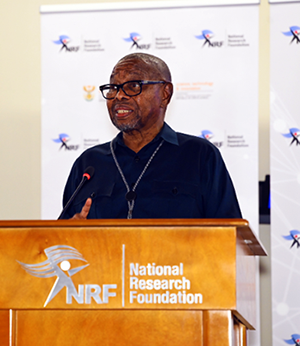
Prof Blade Nzimande, Minister of Science, Technology and Innovation, announcing the new chairs (Photo: NRF)
The initiative, a landmark intervention that forms part of the South African Research Chairs Initiative (SARChI), was launched at a prestigious event at the NRF Building. Delivering the keynote address at the event, Minister Nzimande emphasised the transformative intent of the new research chairs. "By awarding 32 of these 41 chairs to Black researchers, we are not just changing who does research; we are also changing where that research is done and for whom," he said.
The initiative aims to expand the footprint of the NRF’s Research Chairs at historically disadvantaged institutions (HDIs), universities of technology (UoTs), and emerging universities with the unveiling of 41 newly appointed research chairs at the event.
The chairs are spread across the Cape Peninsula University of Technology, the Central University of Technology, the Durban University of Technology, Nelson Mandela University, Rhodes University, Sol Plaatje University, the Tshwane University of Technology, the University of Fort Hare, the University of Limpopo, the University of South Africa, University of the Free State, the University of the Western Cape, the University of Venda, the University of Zululand and Walter Sisulu University.
The institutions also include those not formally classified as HDIs, but which hosted fewer than 14 research chairs under the NRF’s SARChI programme. The new research chairs were selected through a competitive application process following a call that closed on 14 February 2025.
Established in 2006 by the Department of Science, Technology and Innovation (DSTI) and the NRF, SARChI was designed to attract and retain excellence in research and innovation at South African public universities through the establishment of research chairs with a long-term investment trajectory of up to 15 years.
With over 360 research chairs awarded to date, the initiative garnered significant success and contributed to the development of the National System of Innovation (NSI). SARChI has successfully retained and attracted excellent researchers to the country’s research community, thereby accelerating the development of high-end skills training and the production of high-quality scientific publications. However, while it has achieved notable success, the distribution of research chairs has historically been concentrated in the country’s previously advantaged traditional universities. The NRF aims to address this through the Decadal Plan Aligned Research Chairs for Historically Disadvantaged Institutions.
In her message of support, Dr Gugu Moche, the NRF’s Acting Deputy CEO: Research, Innovation, Impact Support and Advancement, congratulated the new research chairs who hail from various universities in the country, unified in their determination and poised to make significant strides in innovation, research and innovation development, and to meet the National Development Plan 2030’s targets, under the auspices of the NRF’s continued guidance.
* Compiled by Philip van der Merwe, Editor, Department of Institutional Advancement
Publish date: 2026-04-20 00:00:00.0
 Examining the hidden geographies of resistance
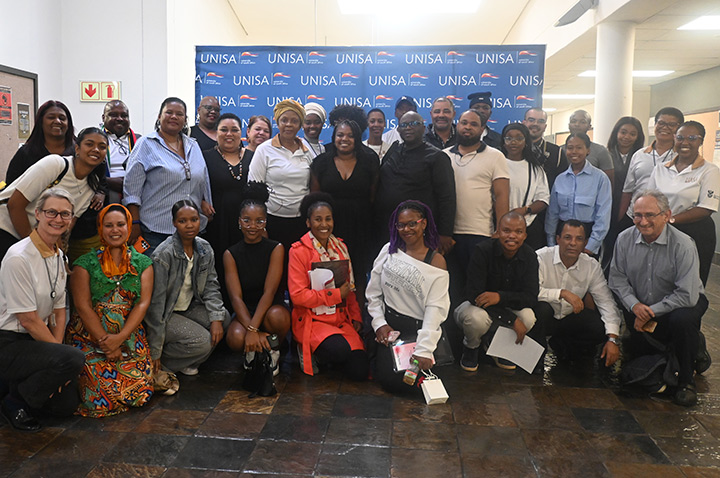 Unisa Western Cape Library celebrates South African Library Week
 Dedicated Unisa Innovation Fund a step closer
 Unisa law expert's scholarly work geared to assist victims of GBV
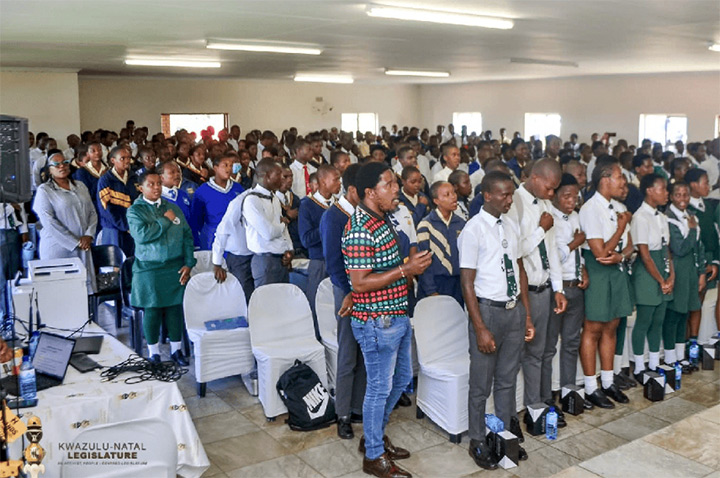 Unisa attends KZN Legislature's rural career expo