

Towards the leading College of Law and Justice in Africa

Prof Paul Mudau, Associate Professor, Department of Public, Constitutional and International Law, College of Law, Unisa
The Constitutional Court judgment in Economic Freedom Fighters and Another v Speaker of the National Assembly and Others(CCT 35/24) [2026] ZACC 17 represents a pivotal moment in South Africa’s constitutional jurisprudence on executive accountability. At its core, the case exposes a persistent tension within parliamentary democracy: the pull of political loyalty to a sitting President versus the constitutional duty to hold the executive to account. The Court’s intervention was not merely corrective but cautionary, signaling that constitutional obligations cannot be eclipsed by partisan considerations without undermining the rule of law.
Section 89 of the Constitution establishes impeachment as a grave and constitutionally structured process aimed at safeguarding constitutional supremacy rather than serving partisan ends. The independent panel appointed to assess the Phala Phala allegations concluded that there was a prima facie case warranting further inquiry. Parliament’s subsequent decision to reject the panel’s report, however, suggested an approach guided more by political calculus than by constitutional fidelity. The Court’s judgment underscores that Parliament’s role under Section 89 is not discretionary in the political sense, but constitutionally constrained and reviewable.
A central fault line identified by the Court was Parliament’s misconstruction of the legal status of the independent panel report. While the panel’s findings were not binding, they were legally significant and demanded rational engagement. Parliament’s failure lay not in disagreeing with the panel, but in doing so without a constitutionally defensible basis. In this regard, political loyalty appeared to function as an unarticulated premise, substituting reasoned constitutional evaluation with party-political solidarity.
The judgment reinforces the principle that parliamentary accountability mechanisms are not insulated from judicial scrutiny. Although separation of powers requires respect for institutional autonomy, it does not license constitutional dereliction. Where Parliament fails to fulfil its expressly assigned constitutional duties, judicial intervention becomes not only permissible but necessary. The Court thus positioned itself as the guardian of constitutional accountability rather than an intruder into political terrain.
The dilemma faced by Members of Parliament is real but constitutionally resolvable. MPs are deployed by political parties and are often subject to party discipline, yet they also swear allegiance to the Constitution.
The judgment affirms that when party loyalty conflicts with constitutional obligations, the latter must prevail. To hold otherwise would reduce Parliament to an instrument of executive protection rather than a forum of democratic oversight.
The Court’s reliance on the principles of legality and rationality is particularly significant. By framing Parliament’s failure as irrational and procedurally flawed, the Court avoided moralising the political choices of MPs and instead anchored its critique in constitutional law. This approach preserves institutional dignity while making clear that constitutional accountability is an enforceable legal standard, not a matter of political preference.
Importantly, the judgment does not pronounce on the guilt or innocence of President Ramaphosa. Rather, it clarifies that accountability processes must be allowed to function properly. Parliament’s premature termination of the Section 89 process amounted to shielding the President from constitutional scrutiny. In this sense, political loyalty did not merely delay accountability; it distorted the constitutional framework designed to ensure it.
The broader implication of the judgment is its affirmation of equality before the law. If the President can benefit from parliamentary inaction driven by political allegiance, the constitutional promise that all are subject to the law becomes hollow. The Court’s reasoning thus situates Section 89 within the deeper constitutional project of ensuring that power is exercised responsibly and transparently, regardless of office.
From a democratic perspective, the judgment may be read as a critique of Parliament’s institutional culture. Effective oversight requires not only legal mechanisms but also constitutional consciousness. Where MPs see themselves primarily as party representatives rather than constitutional actors, accountability mechanisms will inevitably falter. The Court’s intervention implicitly calls for a recalibration of parliamentary identity towards constitutional stewardship.
In conclusion, EFF v Speaker lays bare Parliament’s dilemma but decisively resolves it in favour of constitutional duty. Political loyalty, while an unavoidable feature of representative democracy, cannot justify constitutional abdication. The judgment strengthens South Africa’s accountability architecture by reaffirming that constitutional obligations are not optional, even for politically dominant actors. Ultimately, the legitimacy of Parliament, and of the presidency itself, depends on the willingness to subordinate loyalty to law.
Prof Paul Mudau
Associate Professor, Department of Public, Constitutional and International Law, College of Law, Unisa
Publish date: 2026-05-11 00:00:00.0

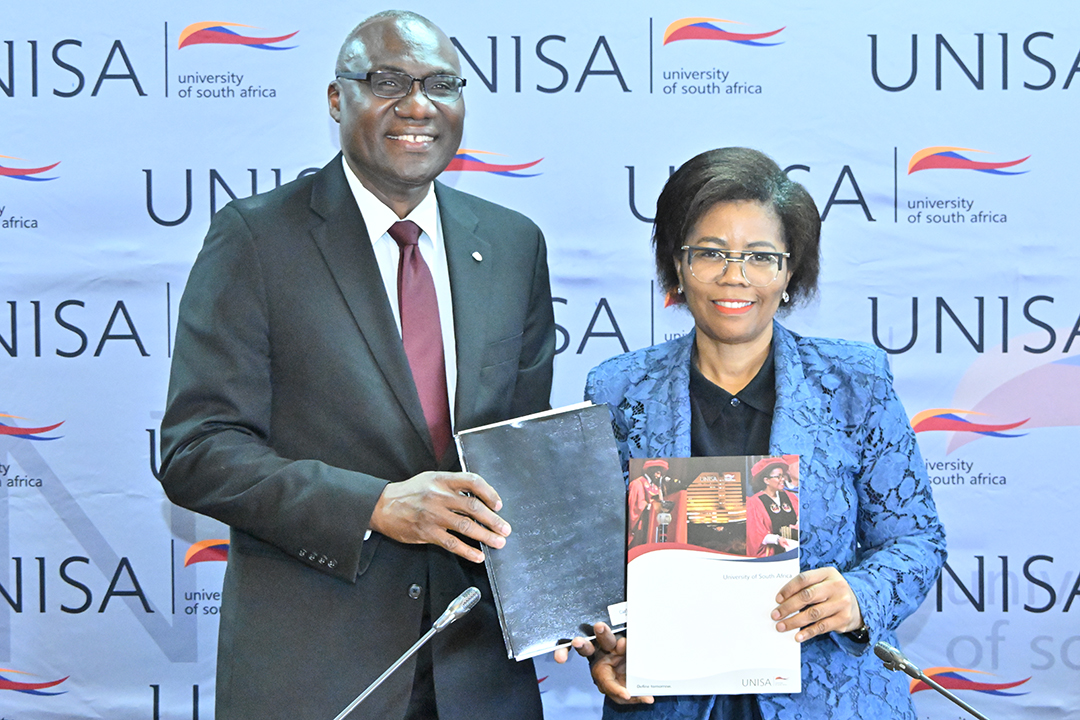 Unisa and Carleton University formalise partnership to expand academic collaboration
 Astronomy lecture highlights Africa's role in advancing space science at Unisa
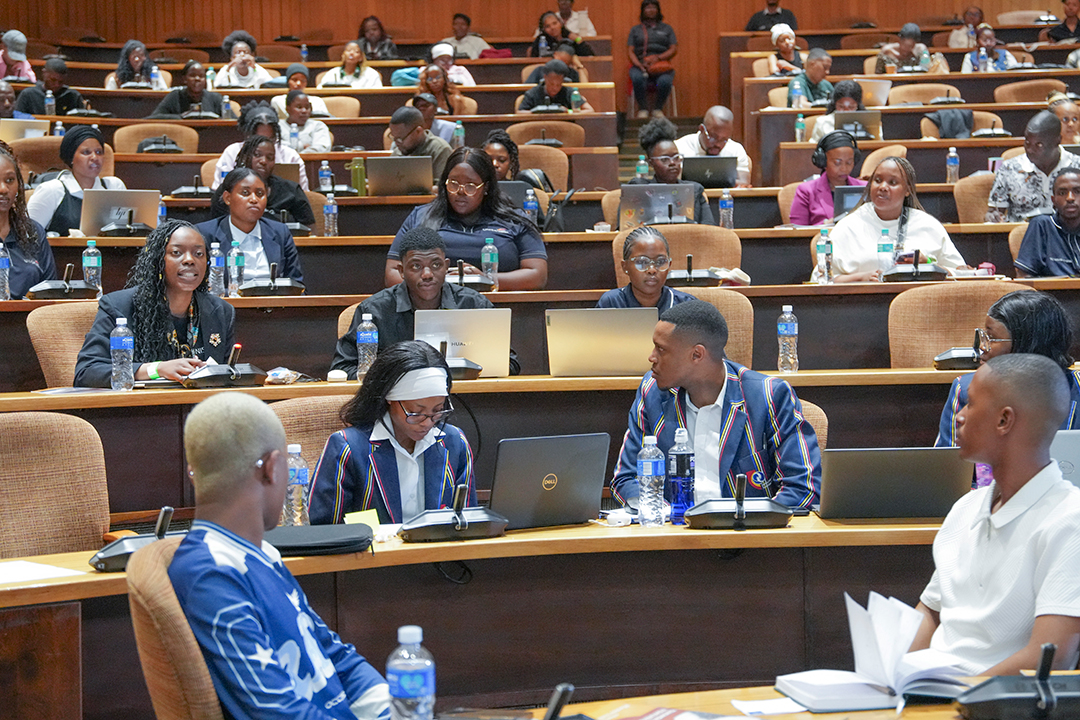 Students take centre stage as Unisa hosts National Multilingual Student Debate
 Es'kia Mphahlele's legacy lives on as Unisa hosts 17th Annual Memorial Lecture
 From waste tyres to shoe polish: Unisa Professor turns waste into opportunity