

The African college of excellence in the social and human sciences
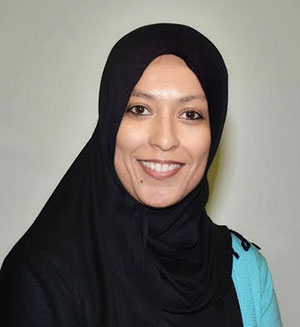
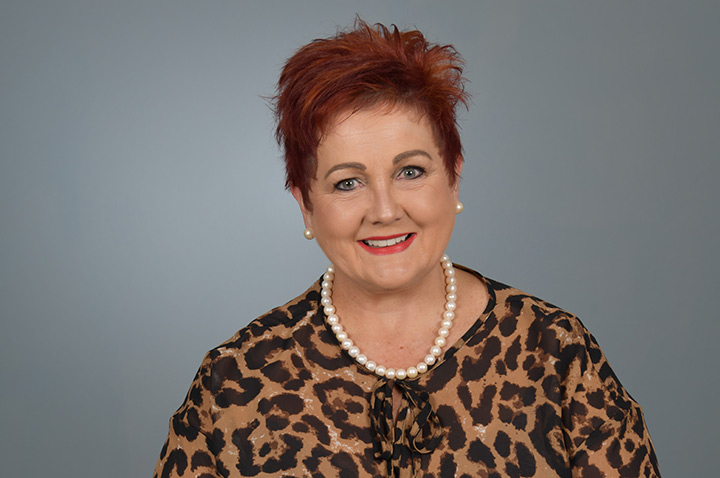
Dr Ghouwa Ismail
South Africa is plagued by social ills that permeate various spheres of society and affect sustainable development. How, then, can research generate knowledge that is relevant to policy, practice and community action?
For years, Dr Ghouwa Ismail, a Senior Researcher at Unisa’s Institute for Social and Health Sciences with expertise in psychology and social research, has been foregrounding community voices and lived experiences. "My research work informs violence prevention strategies, mental health interventions, and community development approaches that are contextually grounded and socially just," she says.
For Ismail, this enables her proactive work to support evidence-based decision-making for practitioners, policymakers and civil society, while also strengthening community capacity for resilience, care and collective action.
Aligning with Unisa’s Catalytic Niche Areas on Health Studies and the Fourth Industrial Revolution and digitisation, Ismail’s research focuses on community psychology, violence and injury prevention, mental health and social resilience, particularly on how structural inequality, social cohesion and collective action shape wellbeing and safety. She explains: "I was drawn to this field through a long-standing engagement with communities experiencing layered forms of vulnerability, in which psychological distress is deeply embedded in social, economic and historical contexts."
Her work bridges the fields of psychology, public health and community development, with an emphasis on community-engaged and socially responsive research. "I have been involved in multidisciplinary research initiatives that bridge academic knowledge with lived experience, particularly within marginalised and under-resourced communities in South Africa," says Ismail.
She is involved in several research activities, including studies on community-based violence prevention, collective efficacy and community participation in safety initiatives. Ismail is also engaged in research exploring digital and psychosocial dimensions of care, including emerging work on the use of digital platforms and artificial intelligence-mediated support relating to limited access to mental health services. Additionally, she contributes to postgraduate supervision and mentorship, collaborative research networks and community-engaged projects that prioritise ethical, participatory methodologies.
Ismail attributes some of her research highlights to nationally and internationally recognised publications on community solidarity, violence prevention and psychosocial wellbeing, particularly during and beyond the Covid-19 pandemic. Also, she has been involved in interdisciplinary research collaborations, policy-relevant studies and community-engaged projects that have influenced practice and discourse in the fields of violence prevention and community psychology.
In 2025, Ismail received a C rating from the National Research Foundation (NRF). She recalls: "I was motivated to apply for this rating to reflect critically on my research trajectory, strengthen scholarly visibility and position my work within broader national and international research conversations."
For Ismail, receiving a C rating is both affirming and humbling. "It recognises the contribution and growing impact of my research while also motivating me to continue building a sustained, high-quality research programme that is socially relevant and ethically grounded," she asserts.
Ismail further explains that being an NRF-rated researcher enhances research credibility, visibility and opportunities for collaboration. She adds that it opens access to funding opportunities, strengthens institutional research profiles, and supports engagement in national and international scholarly networks. "Importantly," Ismail concludes, "it also creates opportunities to mentor emerging researchers and contribute to building research capacity in ways that advance social justice, transformation and knowledge production in the Global South."
* By Mpho Moloele, PR and Communications, Department of Research, Innovation and Commercialisation
Publish date: 2026-04-10 00:00:00.0
 Examining the hidden geographies of resistance
 Unisa Western Cape Library celebrates South African Library Week
 Dedicated Unisa Innovation Fund a step closer
 Unisa law expert's scholarly work geared to assist victims of GBV
 Unisa attends KZN Legislature's rural career expo