

The African college of excellence in the social and human sciences
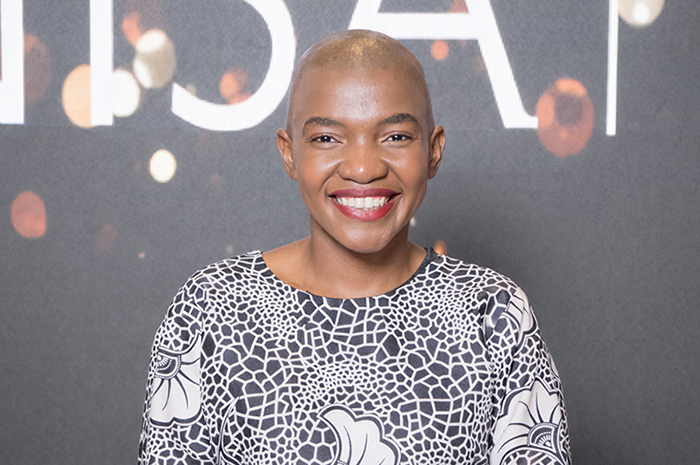
Dr Ntandoyenkosi Mlambo receiving the Women in Research Award - Youngest Female Doctoral Graduate
The history of land in South Africa bears testimony to years of power imbalance, conflict and dispossession. At the start of the colonial endeavour, the institutional church was intricately connected to the imperial force that established these unequal dynamics.
Dr Ntandoyenkosi Mlambo, a senior lecturer in Church History at Unisa, has a keen interest in spatial justice in and through the church. This has led her to explore spatial contestations, particularly concerning land owned by churches, particularly in South Africa.
Her PhD thesis, A theology of spatial justice in relation to land in South African history: 1856 –2020, with reference to three South African congregations, offers an in-depth discussion on justice, space and spatial justice.
While Mlambo’s initial career plan was not primarily to delve into South Africa’s history of land ownership among churches, today she could not be more adamant about addressing the greater question of how religion informs our ideas around justice and land.
"I did my undergraduate qualification in film and media production. I worked for multinationals and a university in the marketing and communications space. Still, halfway through one job, I experienced the urge to explore theology outside of a normal church setting," she reflects. Mlambo subsequently registered for a postgraduate diploma in theology, which she thought would end there, but, as it turns out, it was just the beginning of a new scholarly journey.
"My family was part of a land claim process in the late 1990s and early 2000s, and while that didn't work out in the ways we thought it would, it is settling down now," she says. After learning more about the process from her father, she was plagued by several questions: In what ways does God have any involvement in such things? By extension, how do churches action their justice prerogative in the world?
As Mlambo’s desire to dig deeper grew, she pursued a master’s and later a PhD in the History of Church Land. Her doctorate in Ecclesiology (Church History), obtained in 2024, examined historical spatial practices in three selected denominations and their role in shaping a theology of spatial justice. In 2025, this formidable graduate was recognised as Unisa’s Youngest Female Doctoral Graduate for 2024 at the Institutional Research, Teaching and Engaged Scholarship Excellence Awards. As she explains, this acknowledgement solidified to her that she was on the right track.
Mlambo is currently revising her PhD thesis and working on a book. As a recent recipient of a National Research Foundation Thuthuka grant – a funding instrument designed to support emerging researchers – she plans to work on a project with the Church Land Programme (CLP). This independent non-profit organisation works through a process of animation with groups of poor people to create unique responses to their unique situations.
Through this project, she will investigate how the CLP has shifted and changed, how it assists different communities in building agency to fight for their own land reform, and how this can help create policy between civil society and government. This endeavour will also seek to address the greater question of how religion shapes our ideas around justice and land.
"Case study work is important because seeing what people do in the real world and in real life gives researchers direction in how they can conceptualise their work. Doing work outside of the real world tends to decrease the impact one could have in the future," she notes.
Looking ahead, Mlambo wants to work globally around the topic of land and oppressed peoples. To that end, she hopes to study different regions of Africa, including South Sudan, by exploring how their peoples are fighting injustices within their own territories.
Another topic of research would focus on other areas of the world, such as Palestine, to establish how Palestinians seek justice, particularly for and in their land, and how they use their religious beliefs to do that. Other research avenues include whether religious belief can really help people achieve justice and, if so, how. Alternatively, if religious belief is not helpful, why is that the case?
While her PhD findings are historical, they point to what has been done right (and, sadly, wrong) across different case studies of churches and their land and buildings. Through her work, Mlambo continues to spread her research findings among churches and congregations, ensuring they are well informed about developments in the theology of spatial justice.
* By Mpho Moloele, PR and Communications, Department of Research, Innovation and Commercialisation
Publish date: 2026-02-25 00:00:00.0

 Unisa students turn Accounting Sciences knowledge into SAICA award-winning social impact
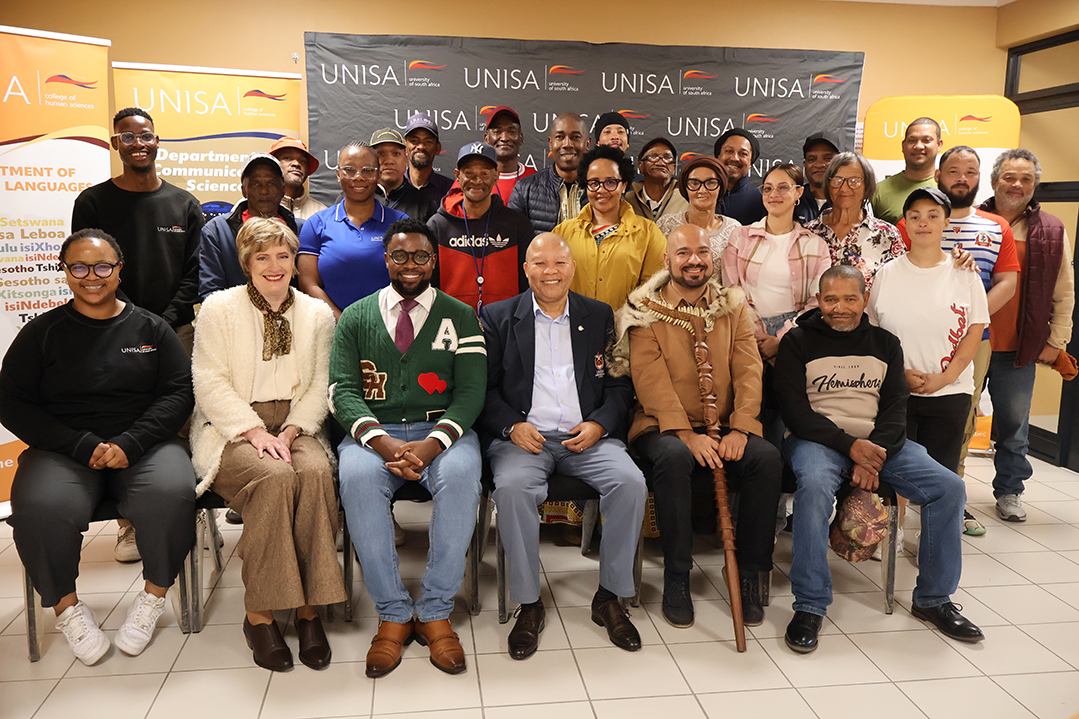 Unisa turns to West Coast communities to preserve indigenous knowledge of the sea
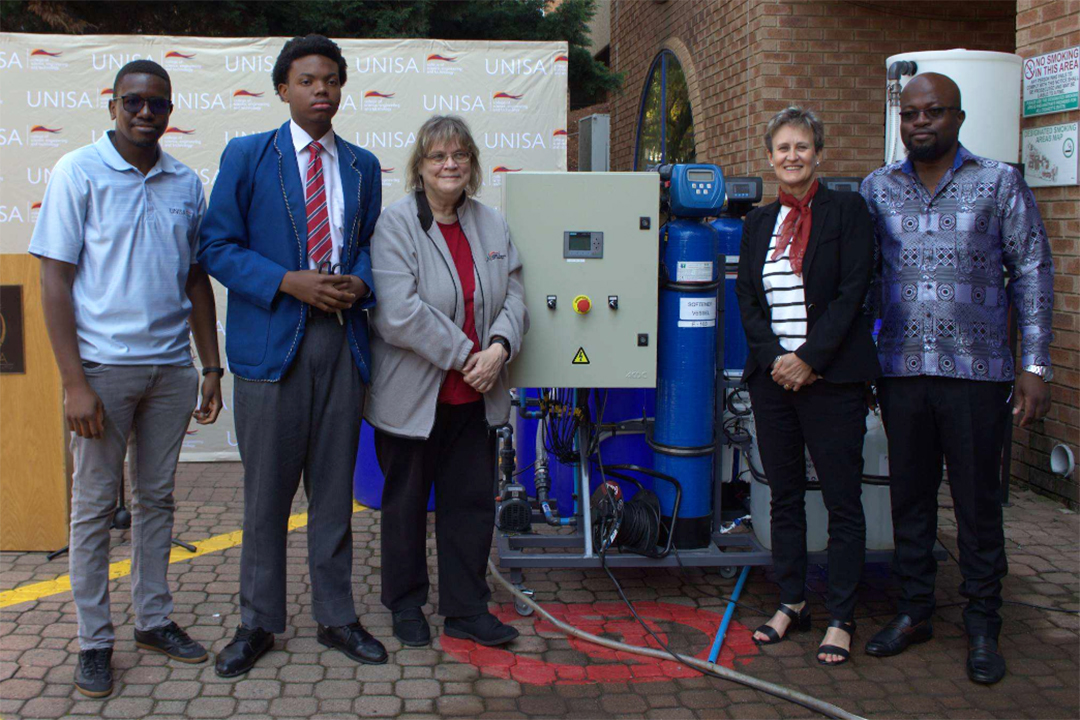 Unisa takes water research from the laboratory into communities
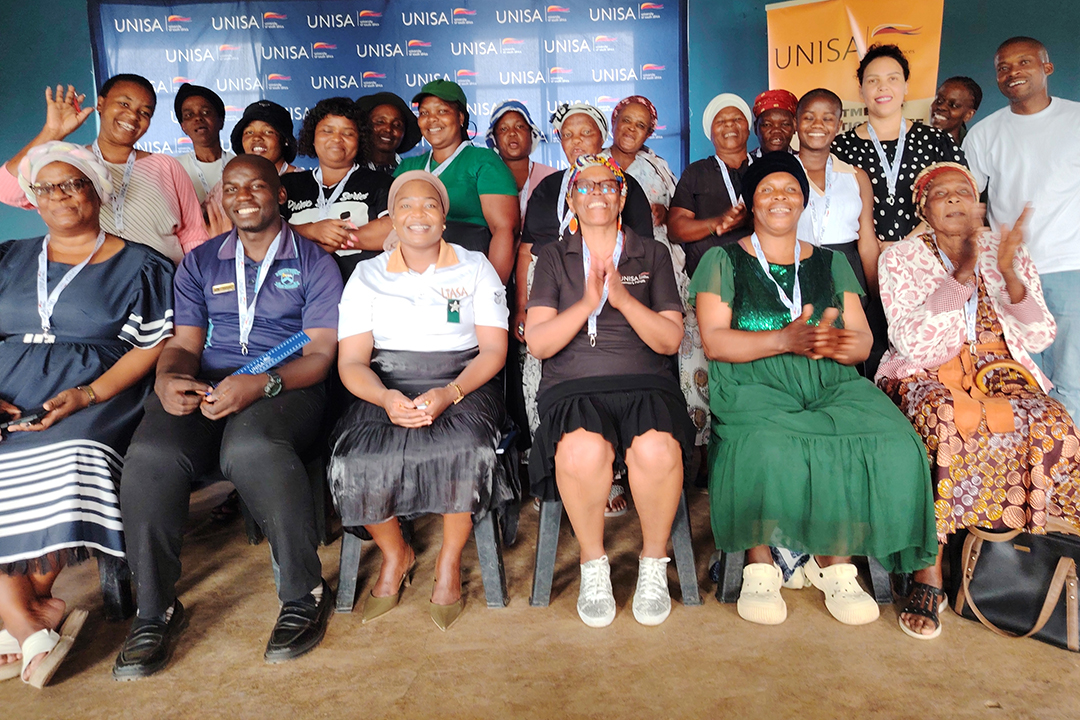 Unisa women researchers join KwaZulu-Natal farmers in fight for food security
 Calls for decolonisation and 'unlearning to learn' take centre stage at Unisa-GCIS heritage dialogue