

Applicants are required to prepare a research outline in line with the departmental focus/niche area requirements and the guidelines provided. Uploading a research outline is applicable to all qualifications, except for the MBA, MBL, coursework LLMs and coursework MCom in Industrial Psychology. Click here for the guidelines for preparing a research outline.
This page provides the selection criteria applicable to the Doctoral in Business Leadership (DBL) qualification offered by the Graduate School of Business Leadership (SBL). These selection criteria consist of the following:
Students' applications will be reviewed following the Procedures for Master's and Doctoral Degrees (section 3.1 to section 3.3). The college is not obliged to accept prospective students who meet the minimum criteria, as other factors are considered.
The SBL recognises that the opportunity to increase the rate of student throughput in DBL studies begins with the selection and admission process. Recruiting talented candidates from diverse backgrounds with the potential to succeed requires a process that will attract those likely to thrive within the business school culture. In addition, a "fit" or "match" between the potential candidate's research interest and the supervisor's expertise is also a key requirement. The selection criteria for DBL candidates are thus founded on the following two pillars:
In line with Unisa practice, the SBL is convinced that the number of doctoral registrations should be informed by the availability of suitable supervisors to ensure that available supervisory capacity is not exceeded. There is a need to maintain supervisor/student ratios conducive to high-quality results. The SBL implements various interventions to improve internal supervision capacity to plan for growth. In addition, the SBL has embarked on a process to identify what the school offers regarding high-level research expertise and supervision capacity. The SBL's focus is to increase the number of DBL registrations in key research areas in line with current research focus areas and supervisors' areas of specialisation. The SBL offers a Doctoral of Business Leadership degree, and therefore studies should be differentiated from other colleges through topics focusing on leadership.
This process assists the matching between prospective DBL candidates and its capacity before admitting a candidate.
The DBL programme has been structured to significantly guide and support selected students to contribute to business and leadership studies. The DBL takes 2 to 6 years to complete. The DBL candidates should attend the compulsory research workshops in the first year. The outcome of the research module is an approved research proposal within one academic year. After the research module has been approved, candidates are officially registered for the thesis. The admission criteria for the doctoral programme at the SBL are informed by the Unisa Admissions Policy and section 37 of the Higher Education Act 101 of 1997 (as amended), which states the following:
37. Admission to public higher education institutions
The SBL acknowledges the importance of the italicised phrase in subsection (3) above and will adopt a very flexible approach regarding admission to doctoral studies. Responsible, feasible, flexible and transparent selection criteria will promote proper and effective management of postgraduate students in the Graduate School of Business Leadership. For this reason, the selection criteria identified by the SBL aim to foster inclusivity instead of being prescriptive and exclusionary.
A student
Prospective DBL candidates will be considered for admission to the respective research focus areas of the college. The initial selection of candidates for doctoral studies will be done through the assessment of the research outline (maximum of 2,500 words) describing the following:
The following criteria will be applied equally to assess the research outline:
To prepare the outline, the SBL proposes the following course of action to the candidate:
Short-listed candidates should meet with potential supervisors and present their outlines in person at a workshop or via an electronic medium such as SKYPE or MS Teams as part of the selection process. Successful candidates will be informed in writing that they may register for the DBL proposal module. The names of unsuccessful candidates and the reasons for their rejection will be submitted to the SBL Quality Assurance and Planning Committee for validation. Applicants can appeal to the College Executive Management if admission is refused. Reasons for such refusal must be furnished to the applicant.
The following possible alternative opportunities exist for applicants who do not meet the generic admission requirements for SBL:
Applicants with degrees that have different structures from normal South African MBL/MBA degrees, applicants whose degrees do not correspond to generic SBL admission requirements (eg no mark awarded for previous dissertations, no clear evidence of having completed a research-related module as part of the previous qualification), or applicants who do not meet generic admission requirements but who have applicable experience in research that may qualify them for admission to a DBL degree will be required to apply for recognition of prior learning (RPL). Prior academic and research activity by the applicant will be evaluated in accordance with formal Unisa RPL procedures, and the outcome of the RPL process will be submitted to and approved by the SBL Executive Committee. If the approved outcome of the RPL process is positive, the applicant will be allowed to proceed with an application for admission, subject to all terms and conditions governing the admissions process.
Students who have been refused admission because of limited capacity within the SBL may reapply in subsequent years.
In instances where a student has a weak academic record, a submission may be made to the Academic Director to allow such a student admission. Students must provide a written motivation of no more than three pages requesting admission to the SBL. The SBL will consider the application considering the following:
The relevant experience, work or otherwise, of the student.
Alternative options for access to the programme.
Any other factor deemed necessary by the SBL.
Students will be allocated to a supervisor but should work independently within the requirements of higher degree studies. Students are encouraged to pursue their research in the listed research focus areas below. However, competition for a space in the programme is severe, and it is the candidate's responsibility to convince the selection panel that his/her research outline is worthy of research.
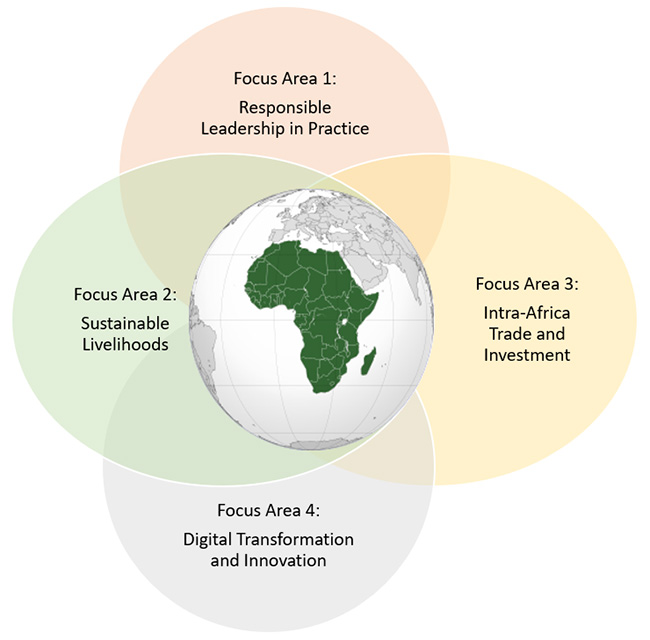
This focus area is dedicated to contributing to sustainability in general and to our better understanding of sustainable economies, industries, business and management practices
| Focus area | Short description of the focus area | The lead researcher (contact person) | Capacity per focus area/research team |
|---|---|---|---|
|
Sustainability Marketing |
The domain of sustainability marketing and business practices emerged due to the recent business and climate crisis resulted in the growing concern for sustainability. Organisations are not aloof of these changes as they are trying to incorporate these environmental and social issues into their practices. It is important to understand that sustainability marketing as departure from profit-oriented conventional marketing and business practices. This focus area explores, investigates and covers Green marketing; Cause-related marketing; Marketing and Society; sustainability orientation and practices of organizations (public and private sector); Sustainable consumption and the role of Sustainable Development Goals (SDG)’s in the areas of food, water, and energy consumption; Sustainable consumer behaviour and practices like collaborative consumption, sharing economy, and circular economy; Consumer policy and sustainability; sustainable tourism; SDG 4 and sustainability management education. Besides the main areas, collaborative co-supervision is provided in research in the areas of Sustainable project management and Sustainable supply chain area. |
Prof N Purushottam E-mail: purusn@unisa.ac.za |
Doctorates: up to 4-6. It varies year to year, and as students complete |
|
Finance and Financial Management in Africa |
The focus area covers corporate finance, international finance, and economic and business development, including SMME financing. |
Prof R Rajaram E-mail: rajarr@unisa.ac.za |
Doctorates: up to 6 |
|
Program and Project Management |
Topics covered in this focus area include infrastructure procurement and management of risks and contracts management, project appraisal, project planning, procurement, contract formulation and management, project performance evaluation and strategic project management |
Prof MF Tshehla E-mail: tshehlmf@unisa.ac.za |
Doctorates: up to 10 |
|
Microfinance and SMEs Development |
This research area focuses on SME development, microfinance for SMEs, and SMEs' challenges. |
Prof MF Tshehla E-mail: tshehlmf@unisa.ac.za |
Doctorates: up to 6 |
|
African and Global Economies and Markets |
This research area focuses on the following:
|
Prof B Muchara E-mail: muchab@unisa.ac.za |
Doctorates: up to 12 |
The focus area covers the following: Sustainable supply chain, digitisation of supply chain, vulnerability, and resilience analysis of supply chain (including supply chain management risks), and Ethics and governance in supply chain.
| Focus area | Short description of the focus area | The lead researcher (contact person) | Capacity per focus area/research team |
|---|---|---|---|
|
Rabelani Dagada is the Chair of Department: Digital Transformation and Supply Chain Management at Unisa Graduate School of Business Leadership. Prior to this, he served as the Professor Practice in Digital Transformation at the Institute of Intelligent Systems, University of Johannesburg, and Lecturer of Information Systems Management at the Wits Business School (WBS). While at the WBS, he introduced a Programme on ICT Governance and Risk Management and served as its founding Programme Director. Prof Dagada has published peer-reviewed research output on books, chapters in books, journal articles, and papers on conference proceedings. He also has extensive experience in the private sector wherein he held senior positions in the field ICT. Dagada holds Masters in Educational Computing (Rand Afrikaans University), Masters of Commerce in Information Systems (Wits), PhD in Information Systems (Unisa), and PhD in Developmental Economics at the Wits School of Governance. His research interests include the following: supply chain management, digital technologies (such as artificial intelligence, internet of things, big data, blockchain, 3-D Printing, sensors, quantum computing, augmented reality, virtual reality, metaverse, autonomous vehicles, flying cars, and biotechnology); biotechnology, ICT policy regulation; ICT in education; information systems management; digital governance; cybersecurity; digital transformation; digital business; digital banking; fintech; developmental economics; public policy; and digital supply chain management. |
Prof Rabelani Dagada E-mail: dagadr@unisa.ac.za |
5 DBL |
This department is dedicated to advancing the understanding of the following focus areas the digital transformation, supply chain management, value chain creation, marketing management, and operations management. These include but are not limited to teaching and learning, research and publication, postgraduate supervision, and engaged scholarship (community engagement) projects. Specifically, these focus areas explore how we can enhance management, leadership and economic fortunes of South Africa and other regions of the African continent in the global context.
| Focus area | Short description of the focus area | The lead researcher (contact person) | Capacity per focus area/research team |
|---|---|---|---|
|
Digital Transformation |
Rabelani Dagada is an Associate Professor of ICT at Unisa Graduate School of Business Leadership. Prior to this, he served as the Professor Practice in Digital Transformation at the Institute of Intelligent Systems, University of Johannesburg, and Lecturer of Information Systems Management at the Wits Business School (WBS). While at the WBS, he introduced a Programme on ICT Governance and Risk Management and served as its founding Programme Director. Prof Dagada has published peer-reviewed research output on books, chapters in books, journal articles, and papers on conference proceedings. He also has extensive experience in the private sector wherein he held senior positions in the field ICT. Dagada holds Masters in Educational Computing (Rand Afrikaans University), Masters of Commerce in Information Systems (Wits), PhD in Information Systems (Unisa), and PhD in Developmental Economics at the Wits School of Governance. His research interests include the following: digital technologies (such as artificial intelligence, internet of things, big data, blockchain, 3-D Printing, sensors, quantum computing, augmented reality, virtual reality, metaverse, autonomous vehicles, flying cars, and biotechnology); digital health, ICT policy regulation; ICT in education; information systems management; digital governance; cybersecurity; digital transformation; digital business; digital banking; fintech; and development economics, and public policy. |
Prof Rabelani Dagada E-mail: dagadr@unisa.ac.za |
5 DBL |
This focus area focuses on leaders in business or public sector organisations and how leadership is practised in these organisations
| Focus area | Short description of the focus area | The lead researcher (contact person) | Capacity per focus area/research team |
|---|---|---|---|
|
Strategic Dynamics, Digital Transformation (digital business models, digital disruption, digital strategy, digital dynamics), Complex Adaptive Systems, System Dynamics, Systems Thinking, Systems Engineering, Energy Dynamics. |
This research area explores how organisations create sustainable value in complex and rapidly changing environments. It focuses on strategic dynamics, digital transformation (including digital business models, digital disruption, digital strategy, and digital dynamics), systems thinking, system dynamics, complex adaptive systems, systems engineering, and energy dynamics to develop innovative, resilient, and evidence-based solutions for organisational, societal, and sustainability challenges. |
Prof Kgabo Mokgohloa E-mail: mokgok@unisa.ac.za |
8 DBL 5 MBA 1 MBL |
|
Women in Leadership |
Research focuses on a range of topics within the broader field of women in leadership. Current studies use qualitative research and the intersectional lens, amongst others, and are focussing on gender transformation, workplace bullying and sexual harassment. |
Prof Peliwe Pelisa Mnguni E-mail: mngunpp@unisa.ac.za |
2 DBL |
|
Business Ethics and Corporate Social Responsibility |
Focus areas are crystallised in: Standards of business behaviour; Advancing the effectiveness of ethics policies and programmes; Embedding ethical values and behaviours; Women breaking 'glass ceilings'; The Ethicality of Women as Leaders in Corporations and Public Service; Corporate ethics; Ethics and risk; Corporate social responsibility; Corporate sustainability; Ethical norms in international business; Ethics and leadership (e.g. charisma, manipulation, persuasion); Organisational ethics; Managers' moral decision-making; Learning and critical management perspective; CRS studies; Developing sustainable, ethical business practices. |
Prof Motsamai Molefe E-mail: molefm2@unisa.ac.za |
10 DBL |
|
Ethics and Governance |
Today, we speak of the interconnected future of business and society. For instance, the successful implementation of the national development plan is arguably necessary for the sustainable development of business. However, in the South African context, we have also seen a wide array of governance public and private sector failures and how their impact has compromised the sustainability of key public and private sector institutions as well as effective delivery of services as highlighted by the work of the Zondo Commission of Enquiry into State Capture, whose reports (Volumes 1-4) are worth reading. Consequently, therefore, the focus is on the following: Governance, national and foreign anti-corruption laws and risk management, building integrity systems, corporate social responsibility & sustainability management theories and related governance frameworks The application of human rights standards and the bill of rights concepts to the corporate governance discourse and the extent to which they may be used as a tool for evaluating the performance of businesses and articulating further the role of business in society, especially how businesses ought to be governed. Ethical Leadership and governance of ethics The focus is thus on Corporate governance, human rights and company law; human rights; corporate social responsibility and human rights, stakeholder management and human rights; and sustainability management & human rights |
Prof Motsamai Molefe E-mail: molefm2@unisa.ac.za |
10 DBL |
|
Leadership and Organisational Behaviour |
Leadership and Organisational Behaviour revolves around the study and application of knowledge about how individuals and teams behave in organisations. At the Graduate School of Business Leadership, the focus is often on how leaders behave and the effect thereof. The behaviour could be analysed at micro, meso and macro levels, and often requires taking a system approach. Specific focus areas include the effects of leadership on innovation and system psychodynamic theory. |
Prof R Steyn E-mail: steynr@unisa.ac.za |
8 DBL |
|
Leadership and Organisational Behaviour |
Leadership and Organisational Behaviour revolves around the study and application of knowledge about how individuals and teams behave in organisations. At the Graduate School of Business Leadership, the focus is often on how leaders behave and the effect thereof. The behaviour could be analysed at micro, meso and macro levels, and often requires taking a system approach. Specific focus areas include the effects of leadership on innovation and system psychodynamic theory. |
Dr PW Senoamadi E-mail: senoapw@unisa.ac.za |
2 DBL |
|
Innovation Behaviour |
Seeking a deeper understanding of the human behaviour that contributes to the functioning of organisational systems. More specifically, their ability to act innovatively towards the growth and sustainability of the organisational systems they function in while understanding the dynamics of these organisational systems (processes and procedures) towards designing for the enhanced emergence of innovation behaviour. |
Dr C Hind E-mail: hindc@unisa.ac.za |
Doctorates: up to 4 |
|
African Leadership |
Organisational Leadership in the African context, specifically its role and contribution to organisational climate/culture, and its impact on organisational and employee behaviour, through the utilisation of the meso-framework. Instrument design and validation form the technical basis for many studies to ensure that the contextual realities are acknowledged and accounted for. This entails a mixed-method approach, usually from an emic perspective. |
Prof A Grobler E-mail: grobla@unisa.ac.za |
Doctorates: up to 2 |
|
Strategic Processes and Practices |
In this research focus area, the focus is on how strategies are shaped, managed and used by humans in organisations. Strategists (individuals and teams), their networks (e.g. external consultants), the tools they use, and their colleagues and employees are the focus rather than the economic characteristics of strategy. |
Prof P Venter E-mail: ventep@unisa.ac.za |
Doctorates: up to 13 |
Last modified: Sat Nov 07 19:55:05 SAST 2026