News & Events
Unisa students help shape digital complaints system to improve accountability and service delivery
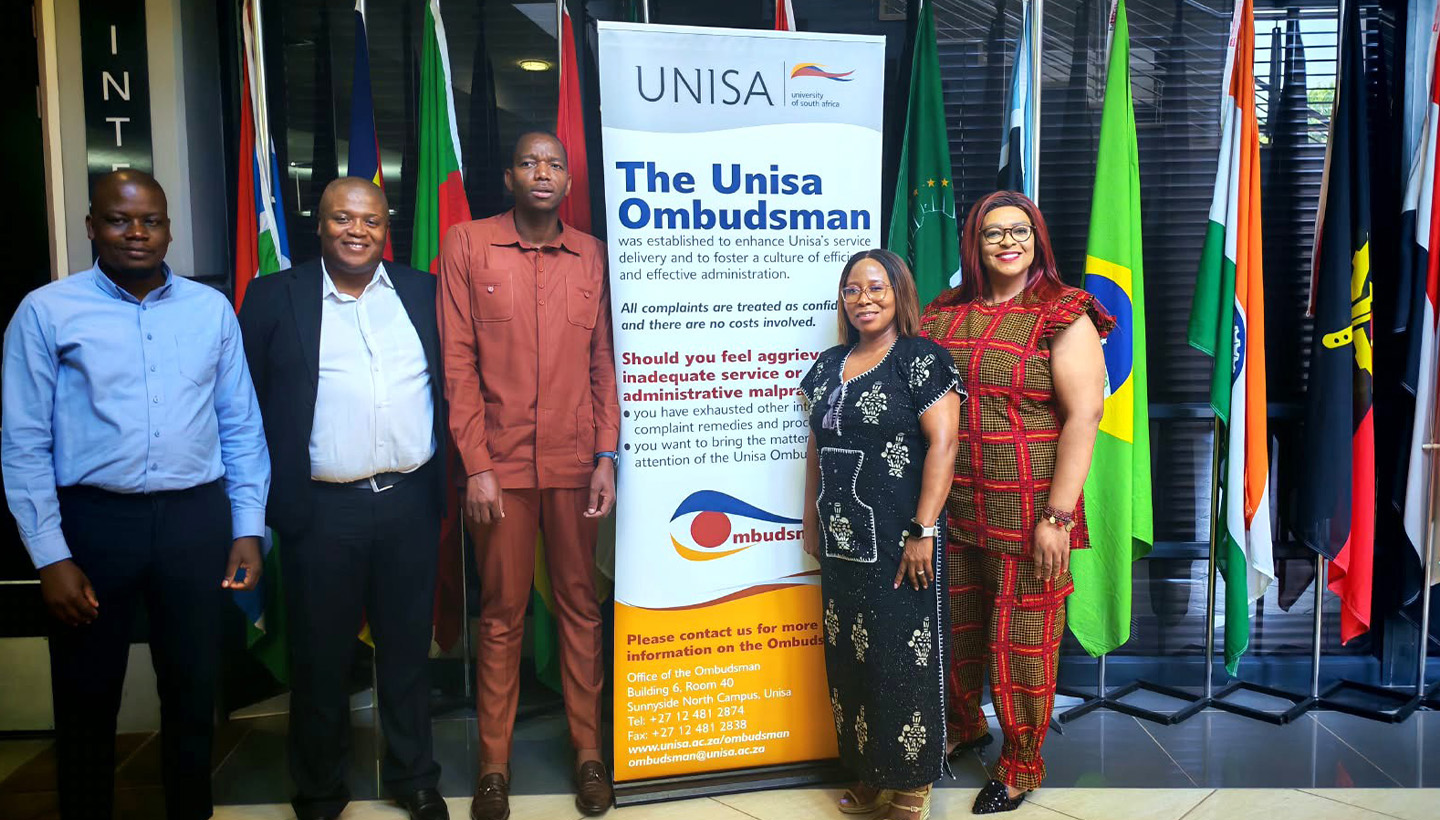
From left: Mogau Malatjie, Manager: Student Governance; Dr Letlhogonolo Marumolwa, Director of the Business Intelligence Directorate; Dr Motlokwe Thobejane, Executive Director: ICT Infrastructure; Dr Motlatso Mlambo, Acting Executive Director: Institutional Intelligence; and Dr Adv Linda Mbana, Unisa Ombudsperson.
Students at the University of South Africa (Unisa) are taking an active role in shaping a new digital complaints-management system aimed at improving how the university receives, tracks and resolves student concerns.
Students from across Unisa’s regions, including members of the National Student Representative Council (NSRC), participated in the Feedback Loop Ombudsperson Digitisation System Pilot at the Kgorong Building. The initiative represents an important step towards modernising the university’s complaints-management processes, strengthening accountability and ensuring that students have a more accessible and transparent means of raising concerns. Rather than introducing a completed platform, Unisa invited students to test the system, identify shortcomings and recommend improvements before its proposed wider rollout in November 2026.
The approach reflects the university’s commitment to involving students in decisions that affect their educational experience, while demonstrating how digital innovation can strengthen institutional governance and service delivery. Welcoming participants on behalf of the Vice-Principal: Strategy, Risk and Advisory Services, Dr Letlhogonolo Marumolwa, Director of the Business Intelligence Directorate, emphasised the importance of student participation in developing the platform.
“ICT has developed a system, but we are not simply presenting you with a finished product. We are giving you an opportunity to contribute to its development,” he said. Marumolwa encouraged student representatives to draw on their experiences and those of their constituencies to identify potential barriers to accessibility, functionality and effective communication. Their input, he explained, would help determine whether the system responds to students’ needs and what improvements should be prioritised before implementation.
The initiative also reflects a shift towards collaborative institutional problem-solving, where students are recognised as partners in designing services rather than simply recipients of administrative support. For a comprehensive open distance e-learning (CODeL) institution such as Unisa, accessible digital services are particularly important because students are geographically dispersed and often depend on remote communication to resolve administrative matters.
The Feedback Loop system is designed to digitise processes within Unisa’s Office of the Ombudsperson, replacing fragmented email correspondence, physical documentation and manual reporting with a structured digital workflow. Under the university’s Ombudsman policy, the Office of the Ombudsperson provides an independent avenue of last resort for complaints involving inadequate service and administrative malpractice. Students must first exhaust the applicable internal complaint procedures and remedies before approaching the office.
The new platform is intended to support this mandate by allowing complainants to submit information, explain the steps already taken to resolve their concerns and upload supporting documents. Once submitted, complaints can move through a structured process involving acknowledgement, review, routing, responses, progress updates and resolution. A centralised case record is intended to improve continuity, clarify responsibilities and make it easier for officials to track outstanding matters.
Automated notifications and alerts are also expected to reduce the need for students to repeatedly request updates on their complaints. The system’s development is particularly relevant to improving administrative efficiency, although its effectiveness will ultimately depend on successful implementation, accessibility and the responsiveness of the officials responsible for resolving cases. Unisa Ombudsperson Dr Adv Linda Mbana outlined the office’s mandate and emphasised that students were essential partners in developing the system.

Unisa Ombudsperson Dr Adv Linda Mbana emphasises the importance of collaboration and student participation in developing a digital complaints-management platform that responds to students’ needs.
She thanked participants for their willingness to engage with the office and encouraged them to test the platform critically, identifying areas requiring improvement. The pilot sought to establish whether students could submit complaints successfully and whether officials could receive, process and respond to matters assigned to them. Dr Motlokwe Thobejane, Executive Director: ICT Infrastructure, reinforced the importance of institutional collaboration in making the initiative successful.
“This is a partnership between ICT, the Registrar’s Office, the Strategy team and the Office of the Ombudsperson. More importantly, it is a partnership with students, who are critical to this project. We are not developing this system for you; we are developing it with you,” he said. Thobejane explained that ICT’s responsibility extends beyond providing technology to enabling the university’s teaching, learning, research, community engagement and administrative functions.
The Feedback Loop initiative illustrates how digital infrastructure can contribute to institutional transformation when technological development is guided by the experiences of its intended users. During the practical session, Devendranath Karedla, Senior Web Developer, and Mokete Mphailane, Senior Business Intelligence Analyst, introduced the platform through a simulation. Molatelo Tloubatla, Acting Senior Information Analyst, presented the training manual, while Mphailane, Tloubatla and Dikeledi Hlabangane from the Office of the Ombudsperson supported participants during the demonstration.
Students tested the system by navigating its features, completing profiles, submitting complaints and supporting documentation, and examining how notifications would work. Although some participants navigated the platform with minimal difficulty, others encountered technical glitches that highlighted areas requiring further development. Students also proposed additional functionality and completed a feedback survey to document their experiences. Importantly, the participation of students with disabilities brought accessibility into sharper focus.
Their contributions highlighted the need for compatibility with assistive technologies and the importance of designing digital platforms that accommodate different user requirements. The project team acknowledged these concerns and committed to appropriate follow-up. This aspect of the initiative is particularly significant for Unisa’s commitment to inclusive education, ensuring that digital transformation does not unintentionally create additional barriers for students who already face challenges accessing institutional services.
Beyond improving the handling of individual complaints, Feedback Loop is intended to strengthen institutional reporting and support evidence-based decision-making. Aggregated information on complaint volumes, outstanding cases and resolution times could help Unisa identify recurring administrative problems and areas where service delivery requires intervention. Such information could assist university management in recognising systemic weaknesses, monitoring institutional responsiveness and improving processes before problems become entrenched.
However, these benefits must be balanced with appropriate safeguards to protect confidentiality, restrict access to sensitive information and preserve the Ombudsperson’s independence. The initiative therefore extends beyond digitising administrative procedures. It has the potential to strengthen institutional accountability by making complaint patterns and service-delivery challenges more visible to those responsible for addressing them. The Feedback Loop initiative contributes to Unisa’s broader institutional transformation agenda by demonstrating how technology can improve governance, student support and administrative efficiency.
Its emphasis on accessible digital services is relevant to the university’s Catalytic Niche Area of the Fourth Industrial Revolution and Digitalisation, particularly through the application of technology to address institutional challenges. The initiative also supports the university’s focus on student support and the co-curricular experience by strengthening the mechanisms through which students can raise concerns and seek administrative assistance. At a broader development level, the project connects with Sustainable Development Goal (SDG) 4, which promotes inclusive and equitable quality education, by seeking to reduce administrative barriers that can undermine students’ educational experience.
It also supports SDG 10, which focuses on reducing inequalities, through its emphasis on accessibility and the inclusion of students with disabilities. Its focus on transparency, accountability and effective institutional processes is particularly relevant to SDG 16, which promotes peaceful and inclusive societies, access to justice and effective, accountable institutions. These objectives also resonate with the African Union’s Agenda 2063, particularly its aspirations for good governance, capable institutions and development driven by African citizens.
In the South African context, the initiative reflects the National Development Plan 2030’s emphasis on building capable, accountable institutions and improving public-service delivery. For Unisa, the longer-term value lies in developing digital systems that are not only technologically functional but also responsive to the diverse needs of the university community. The pilot brought together the Business Intelligence Directorate, the Office of the Ombudsperson and ICT, with the latter providing the technology and equipment required for the practical testing session.
In his vote of thanks, Mogau Malatjie, Manager: Student Governance, acknowledged the contributions of students, management and colleagues who supported the engagement. The project team will now consolidate survey responses, technical observations and student recommendations into requirements for further development. A wider institutional launch is proposed for November 2026, subject to the outcomes of the pilot, followed by engagements with university portfolios to support adoption.
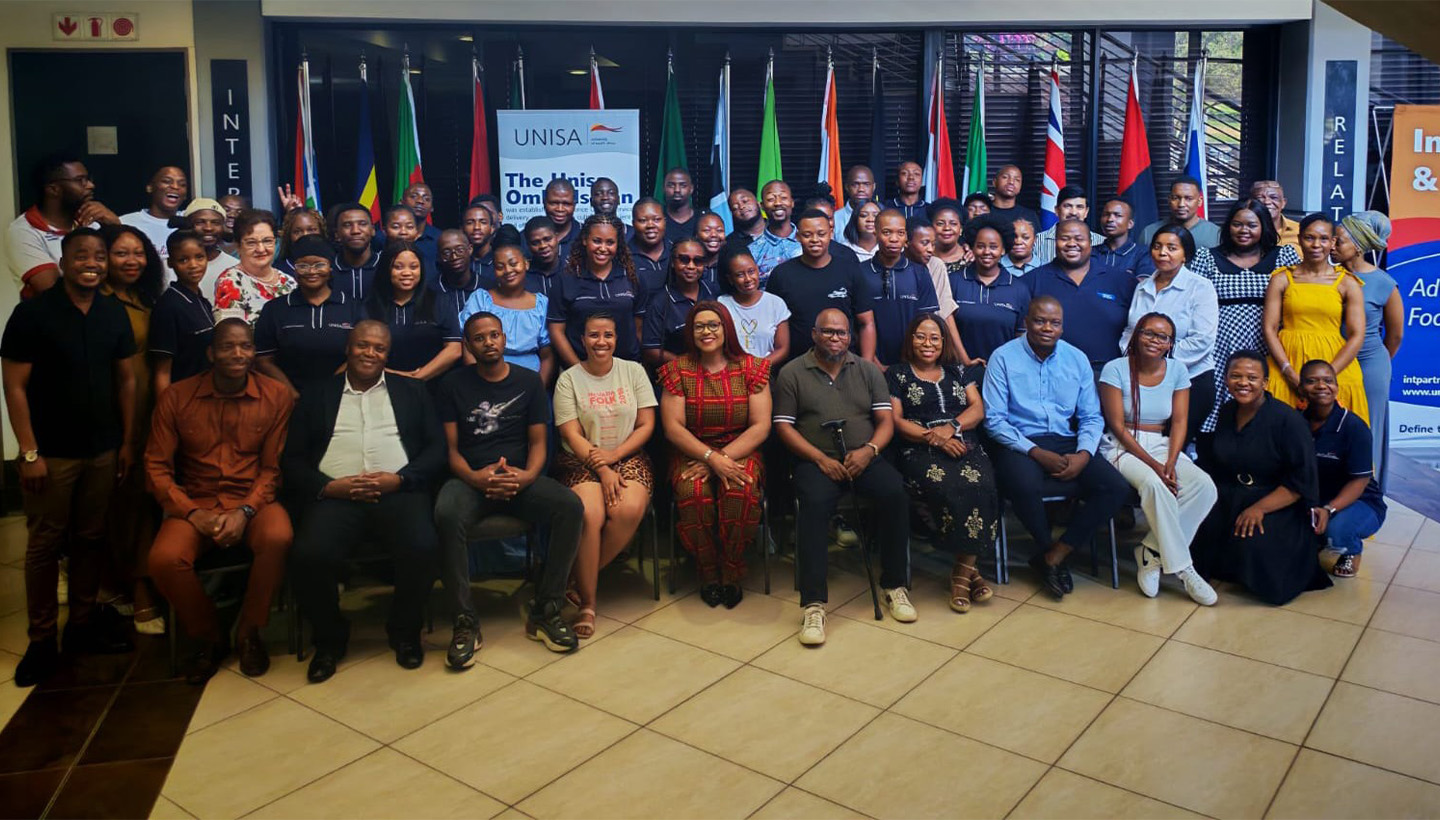
Students and project team members participate in the Feedback Loop Ombudsperson Digitisation System Pilot at Unisa’s Kgorong Building on 15 October 2026, testing the platform and recommending improvements to its functionality and accessibility.
The next phase will be critical in demonstrating whether the concerns raised by students translate into measurable improvements in functionality, accessibility and communication. For Unisa, the success of Feedback Loop will ultimately be determined not simply by the introduction of another digital platform, but by whether it makes students’ experiences of institutional processes more accessible, transparent and responsive. By involving students in its development, the university is taking a step towards a more participatory approach to digital transformation, where technology serves institutional accountability and the people who depend on it.
* By Lesego Chiloane, Journalist, Department of Institutional Advancement
Publish date: 2026-10-19 00:00:00.0