News & Events
Unisa students embrace digital library resources, call for more hands-on support
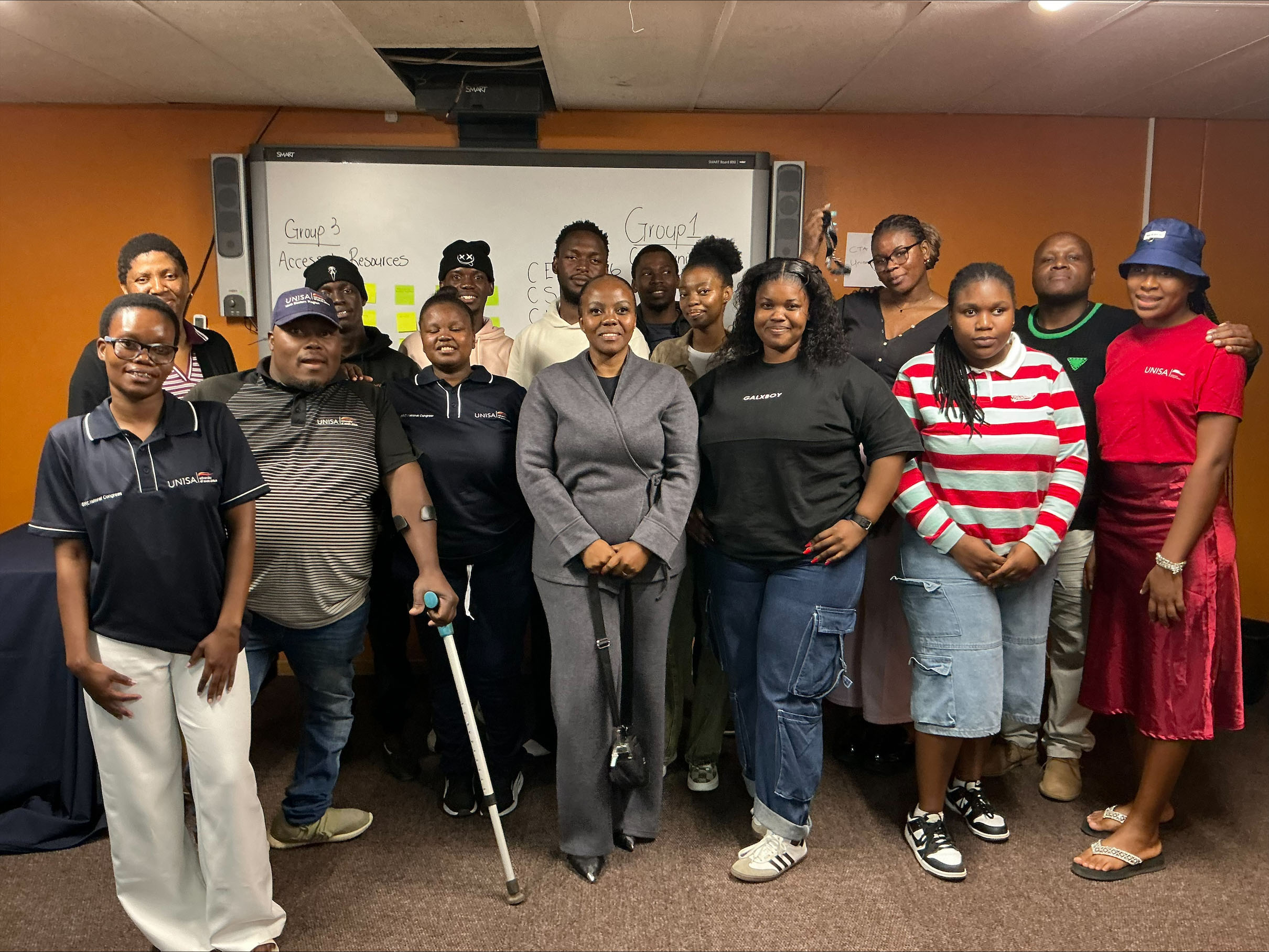
Library and Information Services staff members and students at the Mbombela Regional Centre
Students at the Mbombela Regional Centre have welcomed the growing range of digital library resources available through Unisa, while calling for more practical training to help them navigate academic databases, find credible information and develop stronger research skills.
For many Unisa students, the library is no longer defined by shelves of books and physical study spaces. Increasingly, it is a digital gateway to journals, research databases, e-books and other academic resources that students can access as they pursue their studies.
This was evident during a Library and Information Services (LIS) student engagement session held at the Mbombela Regional Centre on 24 July 2026. The session allowed students to share their experiences of using the University’s library services and identify areas where additional support could help them get more value from the resources available to them.
During an interactive exercise facilitated by Mrs Mpho Masingi, students were asked: “What is the first word that comes to your mind when you hear ‘Unisa Library’?”
Using sticky notes, students shared their perceptions of the Library, highlighting what they value and where they believe additional support is needed.
The responses reflected growing awareness of Unisa’s Online Library and its role in supporting students’ academic work. At the same time, students called for more educational workshops and practical guidance on how to use the University’s digital resources effectively.
One student said: “The Library must have more educational workshops.”
The call highlights the importance of information literacy in an Open Distance and e-Learning (ODeL) environment, where students often need to independently identify appropriate sources, search academic databases, evaluate information and use scholarly material in their assignments and research.
Building on the discussion, Mr Oscar Manamela engaged students about their experiences with LIS services and explored how the Library could better support their academic journeys.
While students expressed appreciation for the assistance provided by library staff, they also indicated that they were not always aware of the full range of resources, technologies and digital services available to them.
Students said that more hands-on training would help them move beyond simply accessing the Online Library to using its resources more confidently and effectively.
The engagement brought together undergraduate students from the Colleges of Law, Education, Human Sciences, Science, Engineering and Technology, and Accounting Sciences. Their diverse perspectives provided valuable insight into how students across different disciplines interact with library services and what additional support they require.
The discussions also highlighted the important role of LIS in supporting Unisa’s core teaching, learning and research mandate. Access to information is only one part of the equation. Students also need the skills and confidence to identify credible sources, conduct effective searches and use academic information responsibly.
For LIS, direct engagement with students provides an opportunity to understand these needs and ensure that library services remain responsive to the realities of studying in an ODeL environment.
The feedback gathered at the Mbombela Regional Centre will help inform future information literacy initiatives and student support activities to strengthen students’ ability to use digital library resources throughout their academic journey.
For students, the message was clear: the resources are increasingly available, but practical guidance can make the difference between simply having access to information and knowing how to use it effectively.
* By Mpho Masingi and Oscar Manamela – Library and Information Services (Research Planning and Quality)
Publish date: 2026-08-11 00:00:00.0