News & Events
Unisa strengthens global standing in 2027 Times Higher Education World University Rankings
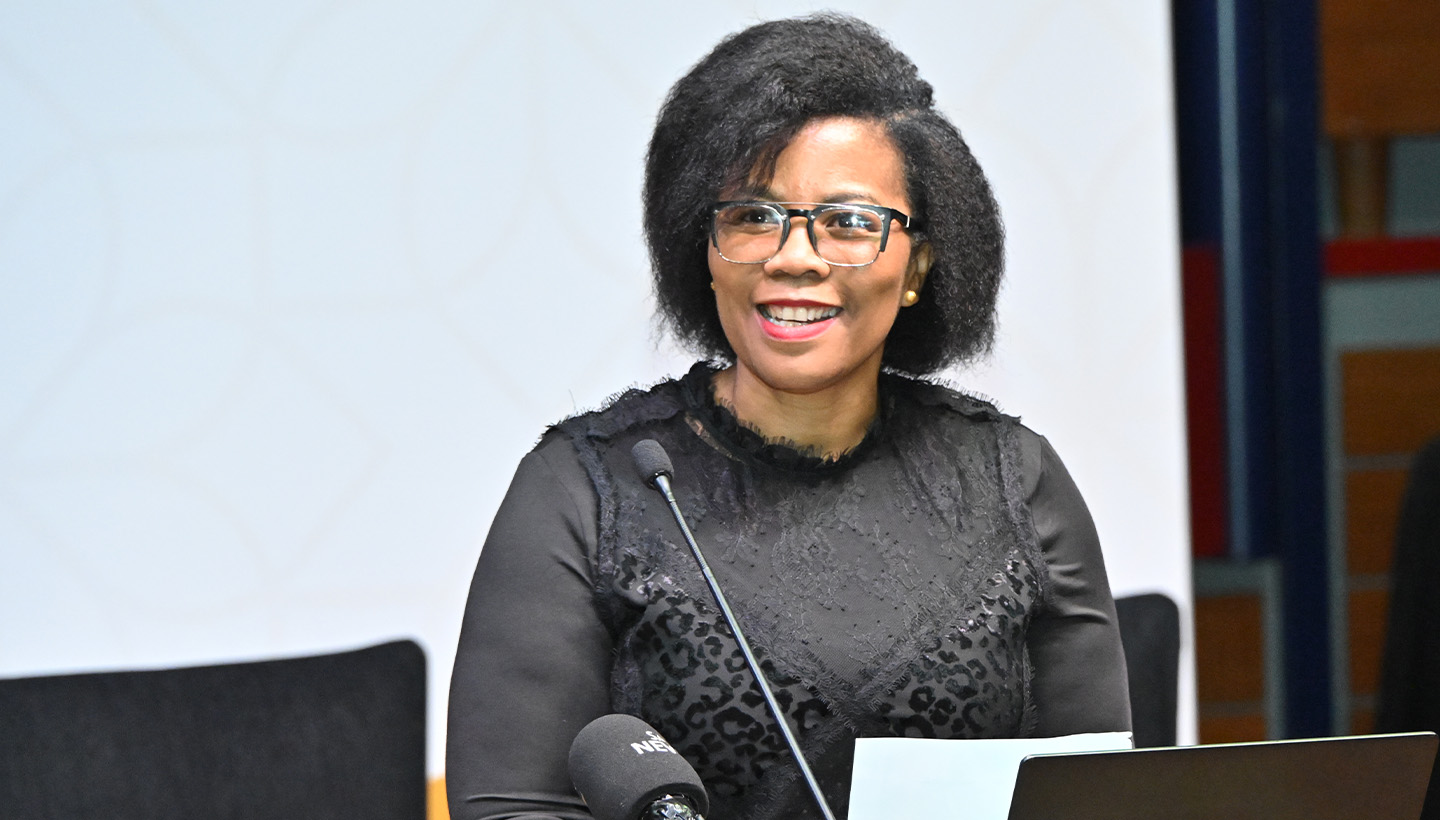
The University of South Africa has strengthened its global standing in the 2027 Times Higher Education World University Rankings, improving its overall score and national position while recording stronger performance in research and industry engagement.
The University of South Africa (Unisa) has strengthened its position on the global higher education stage, improving its overall performance in the 2027 Times Higher Education (THE) World University Rankings and moving up the national standings despite growing international competition.
The latest rankings, released on 30 September 2026, place Unisa in the 1 201–1 400 global ranking band, an improvement from the broader 1 201–1 500 band in 2026. Its overall performance score also increased from 30,7 to 31,2, reflecting progress in key areas of academic and research performance.
Nationally, the university climbed from joint 10th position among 13 ranked South African institutions in 2026 to joint ninth among 17 universities in 2027.
The results are particularly significant for Unisa, Africa's largest open and distance e-learning (ODeL) institution, which continues to demonstrate that expanding access to higher education and pursuing internationally competitive research can go hand in hand.
Unisa is also the only African institution among the six ODeL universities identified in the 2027 rankings, reinforcing its distinctive position in the international distance education landscape.
Its strongest performance came from its research environment, where improvements in research productivity and reputation helped strengthen the university's international standing.
Unisa's improved performance comes against the backdrop of an increasingly competitive global higher education environment.
The 2027 rankings assessed 2 297 universities worldwide, representing a 4,8% increase from the 2 191 institutions included in the previous edition.
A total of 3 146 universities submitted data for consideration, but only 73% were included in the final rankings. The ranked institutions represent approximately 10% of higher education institutions worldwide.
For Unisa, maintaining its international position while improving its overall score is an important achievement in a ranking system that evaluates institutions with vastly different resources, academic structures and operating models.
The WUR ranking assess universities using 18 performance indicators grouped into five pillars: teaching, research environment, research quality, international outlook and industry.
Universities must meet stringent eligibility requirements, including teaching undergraduate students, conducting research across several disciplines and producing at least 1 000 research publications over the five-year assessment period.
The 2027 edition also introduced more detailed ranking bands below the top 300, increasing the number of bands from 10 to 18.
According to Phil Baty, THE's Chief Global Affairs Officer, the changes are intended to help users better distinguish between institutions while making the rankings more inclusive.
For Unisa, the results demonstrate continued progress within an assessment framework that increasingly places universities under scrutiny for the quality, influence and relevance of their academic work.
Research emerged as a major strength in Unisa's latest performance, with the university recording its most significant improvement in the research environment pillar.
The university's score in this category increased by 2,8 points, placing its research environment in the upper half of ranked institutions worldwide.
The improvement was driven by stronger research productivity and research reputation, while research income remained stable.
This performance is particularly encouraging as Unisa continues to strengthen its research capacity, expand scholarly output and position itself as an institution capable of producing knowledge that addresses challenges facing South Africa, Africa and the wider world.
The university also recorded improvements in citation impact and research strength, indicating progress in important measures of how its research is recognised and used within the academic community.
Although the overall research quality pillar declined marginally by 0,3 points, the gains in citation impact and research strength provide a foundation for further improvement.
The results also highlight the importance of Unisa's continued investment in its Catalytic Niche Areas (CNAs), which are intended to focus research expertise on strategic developmental priorities.
These areas encourage collaboration across academic disciplines and support research that responds to challenges such as technological transformation, environmental sustainability, socioeconomic development and the advancement of African knowledge systems.
The university's research progress also reinforces its ambition to produce knowledge that extends beyond academic publications and contributes meaningfully to society.
One of the most notable aspects of the 2027 ranking results is Unisa's position among internationally recognised open and distance e-learning institutions.
Of the six ODeL universities identified in the rankings, Unisa is the only institution from Africa.
The University of Maryland, College Park, leads this group in 123rd position globally, while the Open University of Catalonia and the Open University in the United Kingdom are placed in the 801–1 000 ranking band.
Unisa follows in the 1 201–1 400 band, ahead of Spain's National University of Distance Education (UNED) and the Hellenic Open University, both ranked in the 1 401–1 600 band.
This international comparison is significant because distance education institutions operate differently from conventional residential universities.
Unisa's educational model is designed to accommodate large numbers of students across different geographical locations, socioeconomic backgrounds and stages of their professional lives.
Its ability to participate competitively in international rankings while maintaining this access-oriented mandate demonstrates the importance of recognising diverse approaches to higher education.
The university's teaching pillar remained stable in the latest rankings, with improvements recorded in teaching reputation, the doctorate-to-staff ratio and the student-to-staff ratio. However, declines were recorded in institutional income and the doctorate-to-bachelor's degree ratio.
These indicators present particular challenges for ODeL institutions because their large undergraduate enrolments and distinctive staffing models differ from those of traditional contact universities.
Despite these structural considerations, Unisa continues to pursue academic quality and research excellence while broadening opportunities for students who might otherwise face barriers to university education.
Unisa also recorded an improvement in the industry pillar, an important measure of how universities connect academic knowledge with economic and societal needs.
The improvement comes as higher education institutions face growing expectations to demonstrate the practical value of their research through innovation, industry collaboration and knowledge transfer.
For Unisa, stronger engagement with industry offers opportunities to expand research partnerships, support technological development and strengthen the commercialisation of academic discoveries.
These efforts are closely connected to the university's broader research and innovation agenda, which seeks to ensure that knowledge generated through academic scholarship contributes to addressing real-world challenges.
The university's focus on research commercialisation and innovation is particularly relevant in an African context, where universities have an important role to play in supporting economic development, industrial growth and technological advancement.
By creating stronger connections between researchers, postgraduate students, industry and public institutions, Unisa can further strengthen the contribution of its academic work to national and continental development.
While Unisa recorded improvements in research and industry engagement, the rankings also identified areas requiring further attention.
The university's international outlook score declined by 2,8 points, with lower scores recorded in international co-authorship, international staff and international student representation.
These measures reflect the importance placed on international collaboration and the ability of universities to attract talent and participate in global academic networks.
For Unisa, the results provide an opportunity to strengthen international partnerships and expand collaborative research initiatives.
As an institution with a continental mandate and an established presence in distance education, Unisa is well positioned to develop academic partnerships that connect African scholarship with international research communities.
Greater collaboration can also create opportunities for postgraduate students and researchers to participate in international projects, exchange expertise and contribute to research addressing shared global challenges.
Strengthening this dimension of its work will be important as Unisa seeks to build on its research achievements and enhance its international academic profile.
The 2027 rankings also reflect the continued participation of South African universities in the global higher education landscape.
South Africa had 17 institutions included in the rankings, the second-highest number on the African continent after Nigeria, which had 29.
Across Africa, 163 universities were ranked.
The University of Cape Town remained the continent's highest-ranked institution, sharing 147th position globally, followed nationally by the University of the Witwatersrand, Stellenbosch University and the University of Johannesburg.
Unisa shared the 1 201–1 400 ranking band with the University of the Free State and Durban University of Technology.
Its improved national position, from joint 10th to joint ninth, reflects progress within a growing group of South African institutions participating in the international assessment.
For Unisa, this performance is particularly meaningful given its distinctive institutional mandate and its role in expanding access to higher education on a scale that differs considerably from conventional residential universities.
The latest rankings also reveal a changing international higher education environment, with Asian universities increasingly challenging the dominance of traditional academic centres in Europe and North America.
The University of Oxford retained first position for the 11th consecutive year, narrowly ahead of the Massachusetts Institute of Technology.
The top 10 remained dominated by universities from the United States and United Kingdom, with seven American and three British institutions.
However, China's Tsinghua University climbed to 11th position, moving ahead of ETH Zurich and strengthening Asia's representation among the world's leading universities.
Three Asian universities now feature among the top 15 institutions globally.
Baty described the results as reflecting a historic shift in the international distribution of academic influence, with Asian universities becoming increasingly competitive.
For African universities, these developments reinforce the importance of investing in research excellence, developing internationally competitive academic programmes and strengthening partnerships that support knowledge production.
They also highlight the opportunities available to institutions such as Unisa to contribute to a more diverse and inclusive global research landscape.
Unisa's performance in the 2027 THE World University Rankings represents another step in its efforts to strengthen academic excellence, research productivity and international competitiveness.
The improvement in its overall score, stronger research environment and higher national position provide encouraging evidence of progress.
At the same time, the results identify opportunities to strengthen international collaboration, improve research quality and build on the university's growing engagement with industry.
These priorities are consistent with Unisa's broader institutional vision of advancing African scholarship, developing research capacity and producing knowledge that contributes to sustainable development.
The university's Catalytic Niche Areas, postgraduate research programmes and innovation initiatives provide important platforms for pursuing these ambitions.
The rankings also reinforce the value of Unisa's open and distance learning model, which enables the institution to pursue research excellence while maintaining its commitment to widening participation in higher education.
At the opening of the 2026 academic year at the Muckleneuk Campus, Unisa Principal and Vice-Chancellor, Professor Puleng LenkaBula, emphasised that the year "must be marked by dedication, coherence, and decisive action".
The latest rankings provide an opportunity to build on that call through sustained investment in research, postgraduate development, academic partnerships and innovation.
As global competition intensifies, Unisa's progress demonstrates that its commitment to accessible education can coexist with its ambition to be an internationally recognised centre of research and knowledge production.
For the university, the significance of the rankings extends beyond numerical scores and institutional positions. They reflect an ongoing effort to strengthen its contribution to higher education while ensuring that the knowledge it produces helps shape a more inclusive, innovative and sustainable future for Africa.
* By Karabo Ngoepe, Editor, Department of Institutional Advancement
Publish date: 2026-10-09 00:00:00.0