News & Events
Unisa champions disability rights, inclusion and accessibility through month-Long awareness campaign
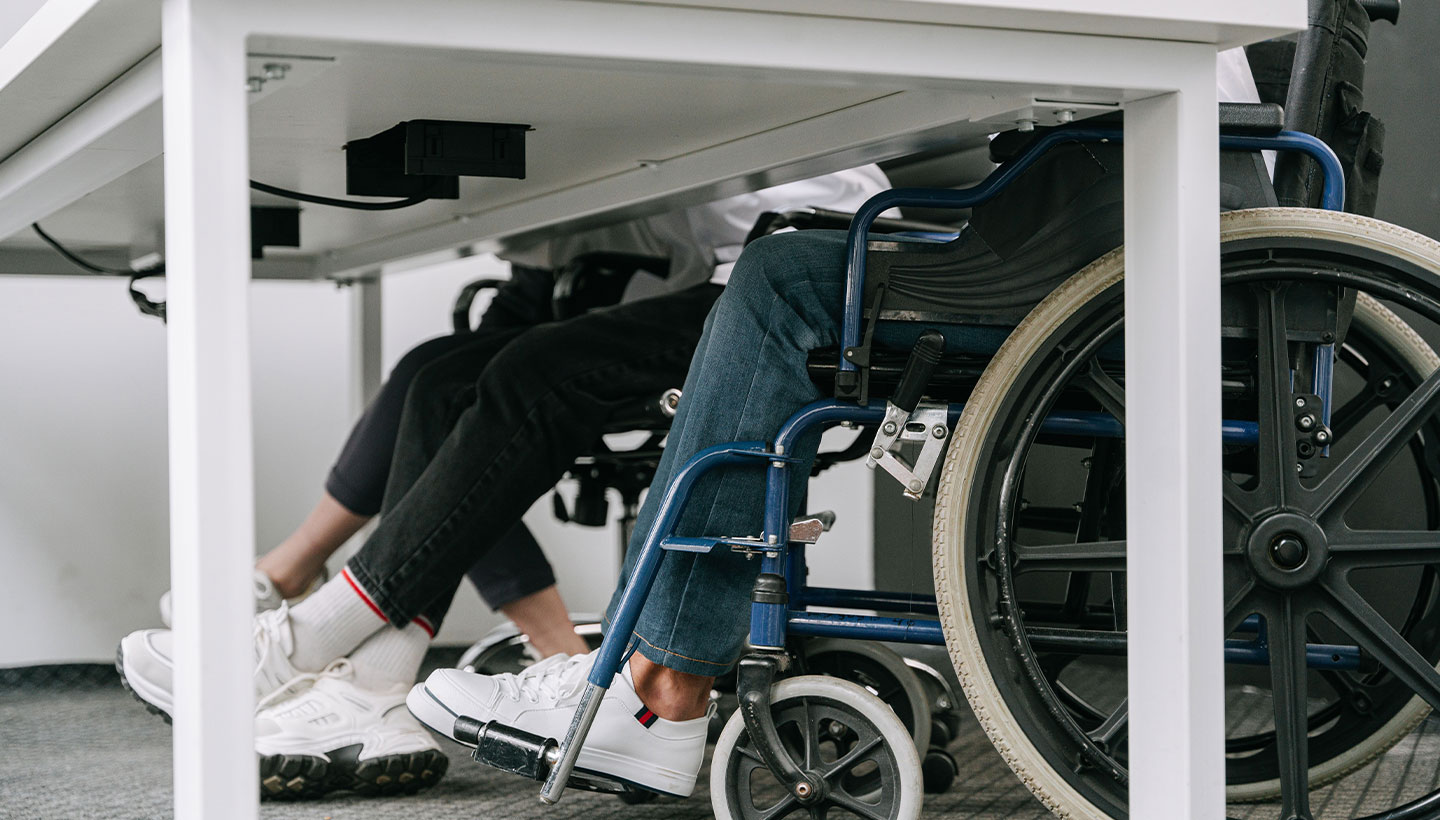
Creating an inclusive society requires removing physical, social and institutional barriers that limit the participation of persons with disabilities. Through its 2026 Disability Rights Awareness Month campaign, Unisa is calling for greater accessibility, dignity and equal opportunities for all. Photo: Pexels
The University of South Africa (Unisa) has launched its 2026 Disability Rights Awareness Month campaign, reaffirming its commitment to creating an inclusive university environment in which persons with disabilities can participate fully, exercise their rights and pursue their aspirations without discrimination.
Observed nationally from 3 November to 3 December, Disability Rights Awareness Month provides an opportunity to reflect on the progress made in advancing disability rights while confronting the barriers that continue to prevent persons with disabilities from participating equally in education, employment and society. This year's Unisa campaign, themed Beyond Silence, Beyond Disability, places particular emphasis on communication rights, accessibility, lived experiences and the institutional changes needed to build a more inclusive society.
The campaign encourages the university community to recognise that disability inclusion is not simply about raising awareness or providing reasonable accommodation. It is also about creating environments in which persons with disabilities are heard, respected, supported and empowered to participate meaningfully in all aspects of university life. The campaign brings together two complementary themes, each addressing an important dimension of disability inclusion. The first, Beyond Silence: Advancing Sign Language for All, focuses on promoting sign language awareness, accessibility and communication rights, particularly for Deaf and hard-of-hearing people.
It highlights the importance of ensuring that communication barriers do not prevent individuals from accessing education, public services, employment opportunities or participating in community life. For an institution such as Unisa, where teaching, learning and student support increasingly depend on digital and distance education platforms, accessible communication is particularly important. Promoting South African Sign Language (SASL), strengthening accessible communication practices and ensuring that institutional information and services are available in appropriate formats are essential to creating equitable learning and working environments.
The second theme, Beyond Disability: How I Thrive and What Society Must Change, shifts attention towards the experiences, achievements, ambitions and contributions of persons with disabilities. Rather than defining individuals by their disabilities, the campaign seeks to recognise their abilities and aspirations while challenging the physical, social, institutional and attitudinal barriers that restrict their opportunities. It also encourages a more meaningful conversation about resilience, recognising the achievements of persons with disabilities without romanticising the challenges they face or overlooking society's responsibility to remove barriers.
Together, the two themes reinforce a central message: meaningful inclusion requires both the recognition of individual rights and the transformation of environments, systems and attitudes that prevent equal participation. Through the campaign, Unisa aims to promote sign language accessibility, amplify the lived experiences of persons with disabilities, challenge stigma and discrimination, and encourage greater institutional and societal accountability. An important part of this effort is ensuring that disability inclusion becomes an everyday institutional responsibility rather than an issue receiving attention only during commemorative events.
Disability Rights Awareness Month provides an opportunity to examine challenges that are often overlooked, including inaccessible infrastructure, communication barriers, discriminatory attitudes and institutional practices that may unintentionally exclude persons with disabilities. Addressing these challenges requires sustained efforts to ensure that university policies, programmes, infrastructure and organisational culture support equal access, independence, dignity and meaningful participation. It also requires the university community to recognise that persons with disabilities are not merely beneficiaries of institutional support but active participants whose perspectives and experiences should inform decisions affecting their lives.
For Unisa, this responsibility extends across the student and employee experience, from admission and registration processes to teaching and learning, assessment, employment, campus accessibility and access to institutional services. As Africa's leading open distance e-learning institution, Unisa has an important role to play in demonstrating how accessible educational systems can expand opportunities for persons with disabilities, particularly those who may face geographical, financial or other barriers to conventional higher education. The campaign also reflects Unisa's broader commitment to social justice, equity and transformation. Its objectives are closely aligned with the United Nations Sustainable Development Goals (SDGs), particularly SDG 4, which promotes inclusive and equitable quality education, SDG 10 on reducing inequalities, and SDG 16, which calls for inclusive institutions and equal access to justice.
By advocating for accessible education and the removal of discriminatory barriers, the campaign also contributes to the African Union's Agenda 2063 vision of an inclusive continent in which all citizens can participate in social and economic development. At national level, the initiative supports the objectives of South Africa's National Development Plan (NDP), particularly its emphasis on eliminating discrimination, expanding educational opportunities and building a society in which persons with disabilities can participate fully. These commitments are particularly relevant to higher education institutions, which have a responsibility not only to provide accessible learning opportunities but also to contribute research, knowledge and practical solutions that advance disability rights across society.
Through teaching, research, advocacy and community engagement, Unisa can contribute to changing perceptions of disability while promoting approaches that place human dignity, accessibility and equality at the centre of institutional development. Unisa's Disability Rights Awareness Month campaign is being implemented through a collaborative institutional effort involving the Department of Leadership and Transformation (DLT), the Advocacy and Resource Centre for Students with Disabilities (ARCSWiD), the Disability Centre of Excellence, regional offices and Unisa Radio. Throughout the month, these stakeholders will use various institutional platforms to raise awareness, encourage dialogue and promote a deeper understanding of disability rights and inclusion.
The collaborative approach recognises that creating an inclusive university requires the participation of different departments, academic units, support services, employees and students. It also provides opportunities to share lived experiences, identify gaps in accessibility and encourage practical improvements that can strengthen the university's disability inclusion efforts. The campaign will culminate on 3 December 2026, when Unisa joins the international community in commemorating the International Day of Persons with Disabilities (IDPD).
As part of the commemoration, the Department of Leadership and Transformation will host a Disability Indaba on 3 December 2026, from 09:00 to 14:00, at the former Protea Restaurant, OR Tambo Building, Muckleneuk Campus, Pretoria. Held under the theme Beyond Disability: How I Thrive and What Society Must Change, the gathering will provide a platform for reflection and engagement on the experiences of persons with disabilities and the changes required to promote meaningful inclusion. The theme encourages participants to look beyond individual achievements and consider the responsibility of institutions and society to remove obstacles that continue to limit opportunities.
The Indaba forms part of the university's efforts to encourage conversations that translate awareness into practical commitments and sustained institutional change. In Limpopo, ARCSWiD, in collaboration with the College of Education's Inclusive Education UCDP Project and Unisa's North-Eastern Region, will host a three-day programme in Polokwane from 1 to 3 December 2026. The programme will bring together disability rights awareness, inclusive education and communication accessibility through a series of activities.
The programme begins on 1 December, coinciding with World AIDS Day, with activities at Unisa's Polokwane Campus focusing on the intersection of HIV/AIDS and disability. These engagements will highlight the importance of inclusive health awareness, access to information and support for persons with disabilities. On 2 December, the Association for Persons with Disabilities (APD) will host a Disability Indaba in Polokwane, focusing on South African Sign Language and its importance in advancing communication rights and social inclusion. The programme concludes on 3 December with the International Day of Persons with Disabilities commemoration at Unisa's Polokwane Campus.
Held under the theme Beyond Silence: Advancing Sign Language Accessibility and Inclusion for All, the event will reinforce the importance of removing communication barriers and ensuring that Deaf and hard-of-hearing people can participate equally in education and society. While Disability Rights Awareness Month provides an important opportunity to highlight disability rights, Unisa's campaign emphasises that meaningful inclusion cannot be confined to a single month. The challenge is to ensure that the conversations, commitments and lessons emerging from the campaign translate into lasting improvements in institutional policies, practices, infrastructure and attitudes.
Achieving this requires continuous engagement with persons with disabilities, greater awareness of accessibility needs and a shared commitment to addressing discrimination and exclusion wherever they occur. For Unisa, the campaign is therefore both a celebration of the achievements and contributions of persons with disabilities and a call to action for the entire university community. By moving beyond silence and challenging the barriers associated with disability, the university seeks to strengthen a culture in which accessibility, dignity and equal opportunity are embedded in everyday institutional life. The message of Beyond Silence, Beyond Disability is ultimately one of shared responsibility: persons with disabilities should not have to overcome exclusion to demonstrate their abilities. It is society and its institutions that must change to ensure everyone has an equal opportunity to thrive.
* By Tholiwe Lamola, Grace Khunou and Bheki Nxumalo
Publish date: 2026-11-05 00:00:00.0