News & Events
Talifhani Banks challenges Unisa innovators to build solutions that matter
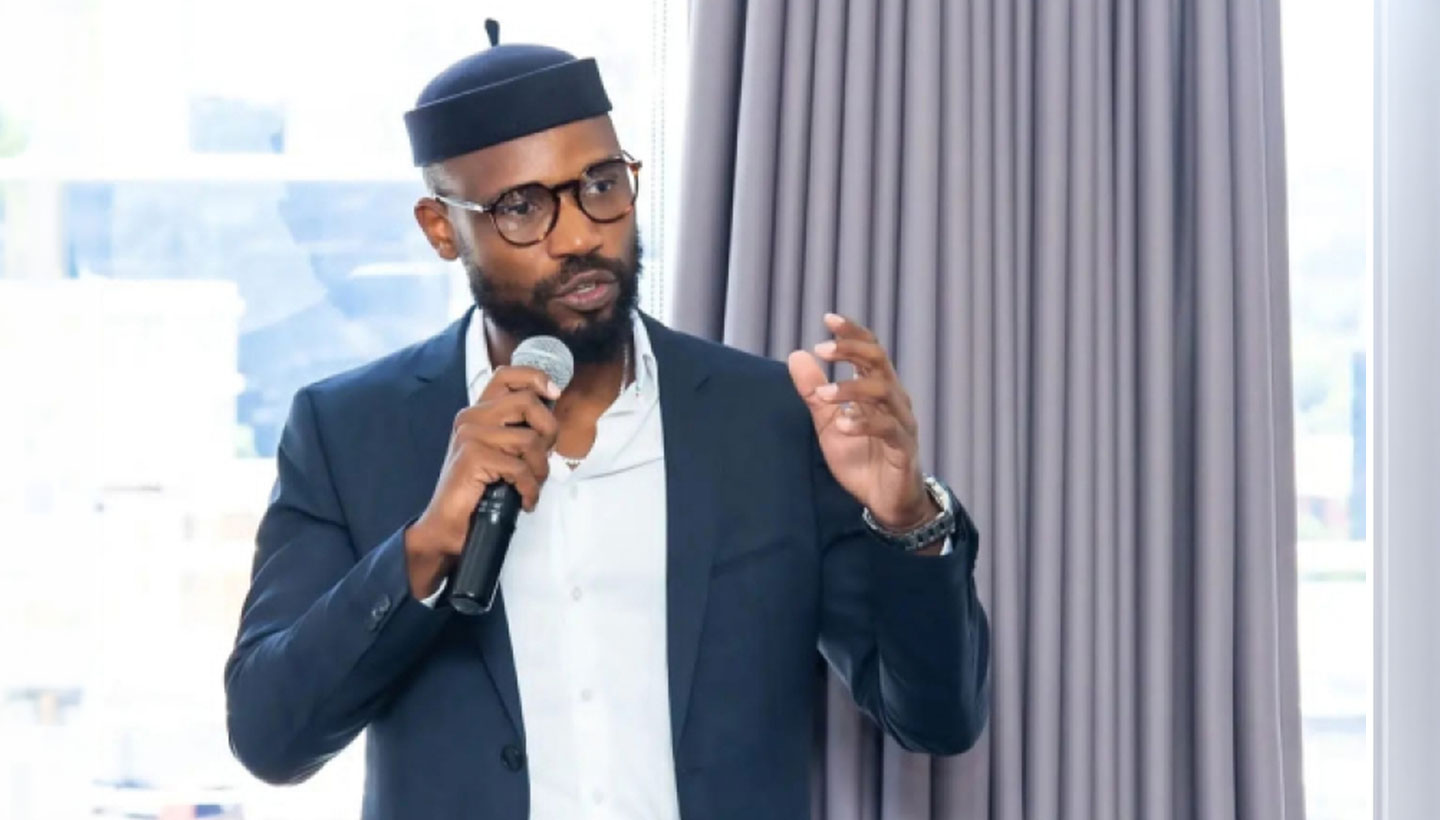
Mr Talifhani Banks - Group CEO and Chairman of AnalyticsX
What problem are you willing to dedicate your life to solving? For renowned entrepreneur and technology leader Talifhani Banks, this is more than a question. It is the foundation of meaningful innovation.
Banks, Group CEO and Chairman of AnalyticsX, posed this challenge to the Unisa innovation community during an engaging talk on building African solutions through artificial intelligence, data and innovation.
His address formed part of the latest edition of the Unisa Innovation Leadership Series, hosted by the Directorate of Innovation, Technology Transfer and Commercialisation (DITTC), in partnership with the Academy of Applied Technology and Innovation (AATI) ICT.
The Innovation Leadership Series exposes the Unisa innovation community to leaders and industry experts who are shaping Africa’s future through innovation. It provides an opportunity for students and staff to learn from people who have built businesses, overcome challenges and transformed ideas into solutions with real-world impact.
By bringing industry and academia together, the series seeks to strengthen a culture of innovation and encourage the development of ideas that can contribute to South Africa’s socio-economic development.
Banks’ entrepreneurial journey began early.
Born and raised in Louis Trichardt (Makhado), Limpopo, he launched his first business at just 10 years old. His early interest in entrepreneurship was driven by a desire to identify problems and find ways of solving them.
That curiosity eventually led him to study Statistics and Econometrics at the University of Pretoria, giving him an analytical foundation that would later become central to his work in data, business intelligence and technology.
Before becoming a full-time entrepreneur, Banks built an extensive corporate career, working for companies including Daymon, Pick n Pay and AutoZone South Africa. His experience included pricing models, business intelligence and data analytics.
Although his corporate career provided valuable experience, Banks eventually realised that his greatest opportunity lay in building something of his own.
He went on to establish Analytics Advertising and Spaza Eats, an innovative platform aimed at digitising township spaza shops and opening up new economic opportunities in underserved communities.
More recently, AnalyticsX has expanded into fintech through myXPay, further advancing Banks’ focus on using technology to promote financial inclusion.
For Banks, innovation is not simply about having a clever idea or developing the latest technology. It starts with understanding a problem and committing to solving it.
He challenged students to think carefully about the problems they encounter in their communities and to consider which ones are worth dedicating their careers to solving.
“Money follows solutions,” he said, explaining that entrepreneurs should focus on creating value rather than simply pursuing financial rewards.
“I learnt that chasing money doesn’t guarantee success. Money follows solutions. If you create solutions, money will follow.”
The message was clear: identify a meaningful problem, develop a solution and create value. Financial success, he suggested, is more likely to follow when the solution addresses a genuine need.
Another central theme of Banks’ address was authenticity.
He urged aspiring innovators not to measure themselves against others or attempt to replicate someone else’s success. Instead, they should recognise the value of their own experiences, perspectives and abilities.
“You need to be your true self in every room. You can’t be a duplicate because then we can’t see you,” he said.
For Banks, authenticity is not simply a personal quality. It is an entrepreneurial advantage.
“That’s another part of being an innovator: be your true, genuine, genius self. Talifhani Banks already exists. There is no need for another one. Be yourself.”
He explained that discovering his own purpose was an important turning point in his entrepreneurial journey. It gave him the confidence to build businesses around his own vision rather than follow a conventional career path.
Banks also challenged the audience to look closer to home when thinking about innovation.
Africa’s unique challenges, he argued, also present significant opportunities for entrepreneurs who are prepared to understand local markets and develop solutions that respond to them.
He pointed particularly to township economies, where businesses and consumers generate significant economic activity but are often poorly served by formal systems and technology.
“Africa knows how to move money but doesn’t have systems. It leaves loopholes and as a result people at the bottom of the pyramid can’t be credited,” he said.
This gap helped inspire Spaza Eats, which seeks to digitise township businesses while creating greater economic inclusion.
For Banks, the lesson extends beyond a single business. African entrepreneurs have an opportunity to develop technology that responds to the continent’s realities rather than simply importing solutions designed for different markets.
Banks’ message was particularly relevant to the many Unisa students attending the session.
He challenged students to think beyond obtaining qualifications and accumulating knowledge. The real test, he argued, is what they do with what they have learned.
“Ideas are not important. What’s important is the execution of ideas.”
He encouraged students to consider how their education could be transformed into products, businesses and solutions that create value for others.
“As a Unisa student, you are learning to think differently and to take knowledge and create. But if your celebration stops at graduation, you haven’t achieved much,” he said.
His challenge went beyond entrepreneurship. Students were encouraged to think about the kind of legacy they could create through their knowledge.
“You can’t transfer knowledge to your kids. You can only transfer the product of your knowledge.”
The message was a powerful reminder that education can be more than a personal achievement. It can become the foundation for something that benefits communities and future generations.
Throughout his career, Banks has used data, artificial intelligence and technology to identify opportunities and address challenges, while encouraging young entrepreneurs to recognise their own potential.
His address at the Unisa Innovation Leadership Series reinforced a central lesson: innovation is not about chasing trends or simply generating new ideas. It is about understanding real problems, having the courage to approach them differently and following through with solutions.
As the Innovation Leadership Series continues to bring leading thinkers and innovators to Unisa, Banks’ message offers students a challenge worth carrying beyond the lecture hall: Be yourself, find a problem that matters and build something that makes a difference.
* By Matshego Njumbuxa, Communication and Marketing Specialist, Directorate of Innovation, Technology Transfer and Commercialisation
Publish date: 2026-08-24 00:00:00.0