News & Events
Supporting success: How Unisa’s PRG helped Babalwa Ramncwana take the next step in her academic journey
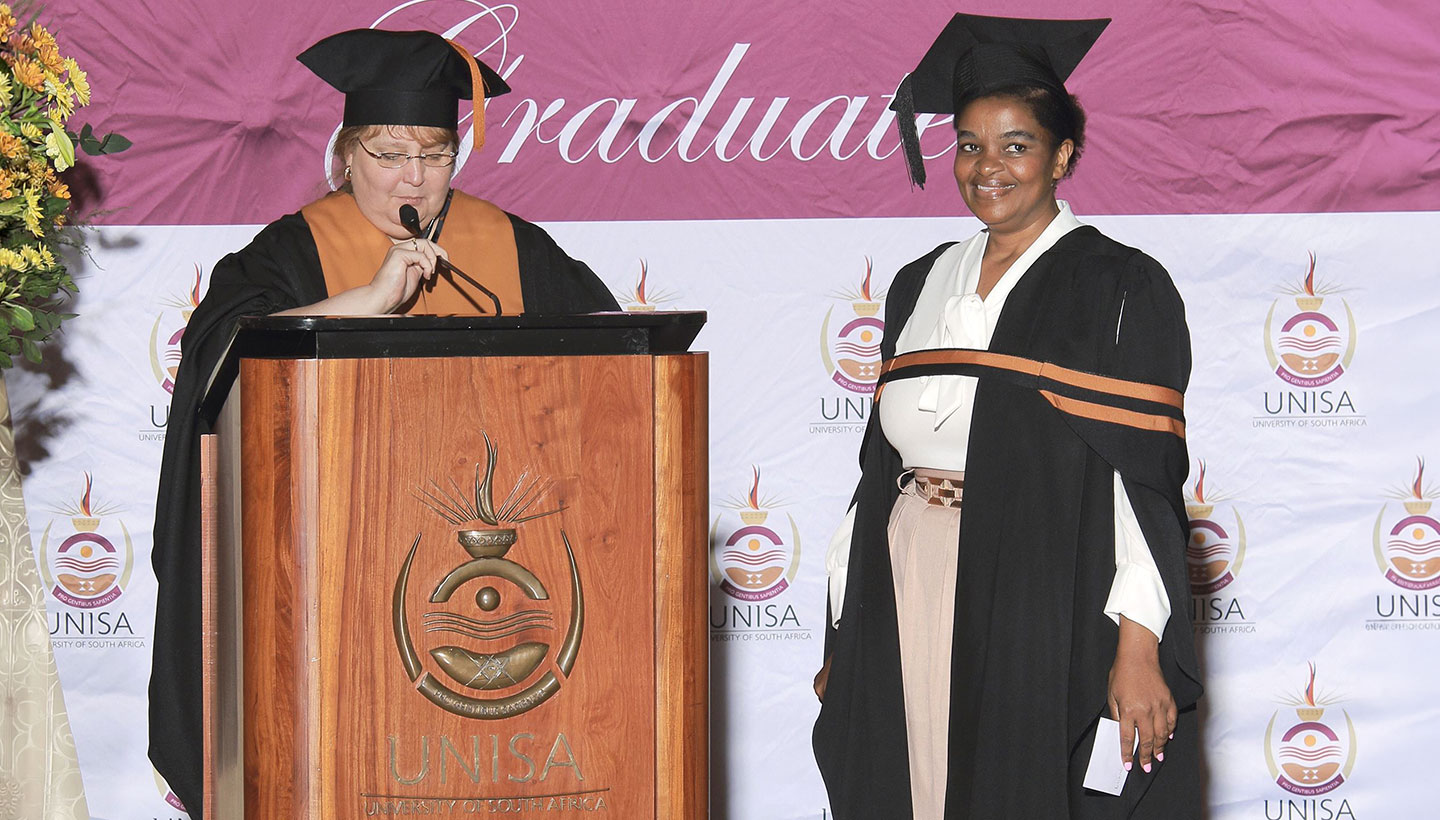
PhD candidate Babalwa Ramncwana chats to Unisa about her master’s journey and how the University’s Professional Research Group (PRG) helped her unlock her research potential.
For many professional and administrative staff members, pursuing a postgraduate qualification while working full time can feel like a difficult balancing act.
For Babalwa Ramncwana, however, the challenge became an opportunity to turn her professional experience into research, deepen her expertise and open the door to a new academic chapter.
Ramncwana, a senior records officer in Unisa’s Privacy and Records Governance Directorate (DPRG), has built a career at the intersection of records management, archives and heritage.
Her professional journey began as an archivist at the University of Fort Hare. She later worked at the Hector Pieterson Museum and Iziko Museums of Cape Town before joining Unisa in 2013.
She holds a bachelor’s degree from the University of Fort Hare, an honours degree from Stellenbosch University and a master’s degree in information science from Unisa.
She credits the university’s Professional Research Group (PRG) and Professional Research Committee (PRC) with providing valuable support during her master’s journey.
She spoke about her experience, the challenges of balancing work and postgraduate research, and how institutional support helped her take the next step in her academic journey.
What was your master’s research about, and what motivated you to pursue it while working at Unisa?
My master’s study investigated the implementation of an electronic content management system (ECM) at Unisa’s library, particularly its role in managing electronic records and supporting compliance with records management policies.
The findings highlighted the importance of effective records management and recommended upgrading the existing Electronic Records Management System and migrating records to the improved platform. This would strengthen governance, accessibility and operational efficiency.
The research also allowed me to examine an area closely connected to my professional experience and to contribute to strengthening records management practices within the university environment.
How did you balance your administrative responsibilities with the demands of postgraduate research?
In my capacity as a senior records officer, I had to meet demanding professional responsibilities while also fulfilling the rigorous requirements of postgraduate research.
This required careful planning and effective time management. There were many occasions when I had to continue with my academic work in the evenings and over weekends.
Although balancing work and research was challenging, my professional experience in records governance became an advantage. It provided practical perspectives that enriched my academic work and allowed me to connect theoretical concepts with real-world professional practice.
What impact did the PRG and PRC have on your master’s journey?
Throughout my master’s journey, I received invaluable support from the PRG and PRC, which played an important role in helping me complete my studies successfully.
When I reached the data collection stage of my research, committee members provided professional guidance and encouragement. They also helped me understand the benefits and opportunities available to professional staff members pursuing master’s and doctoral qualifications.
One of the most significant forms of support was their advocacy for academic leave. I took academic leave in 2024, which gave me dedicated time to focus on critical stages of my research. I graduated in 2025.
I also benefited greatly from participating in research forums and postgraduate development initiatives offered by the university.
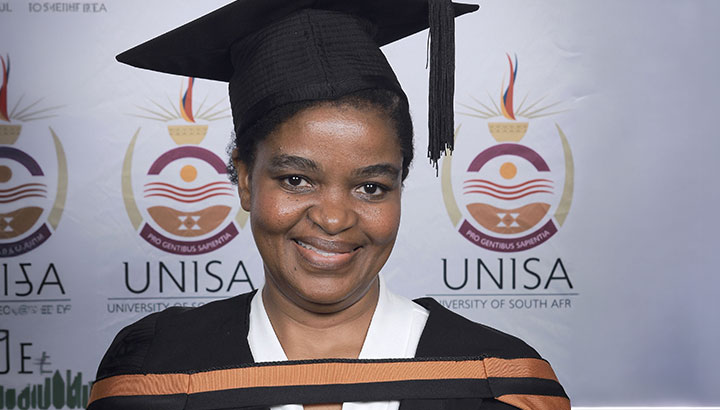
Babalwa Ramncwana
How has completing your master’s degree shaped you professionally and personally?
Completing my master’s degree was a transformative and rewarding milestone that significantly enriched my professional and academic growth.
The journey gave me valuable opportunities to expand my knowledge, strengthen my research capabilities and develop a deeper appreciation for scholarly inquiry.
I feel truly privileged and honoured to be among the professional support staff members selected to transition into the academic space within the Department of Information Science through the Talent Management Career Transition Programme.
This opportunity represents more than career progression. It is the fulfilment of a long-held aspiration to contribute to teaching, learning and knowledge creation.
I firmly believe that when preparation meets opportunity, success becomes achievable. My journey is a testament to the power of dedication, perseverance and institutional support in unlocking one’s full potential.
What is next for you? Are you considering a PhD, and if so, what would you like to research?
I am currently pursuing a PhD in the field of heritage and information management. My research focuses on contributing to the discourse on decoloniality within the discipline.
For Ramncwana, the journey from professional support staff member to postgraduate researcher and now PhD candidate demonstrates what can happen when professional experience, academic ambition and institutional support come together.
Her story is also a reminder to other Unisa staff members considering further study that the path to postgraduate success may be demanding, but they do not have to walk it alone.
* By Rivonia Naidu-Hoffmeester, Professional Research Committee (PRC) Marketing and Communications Convener
Publish date: 2026-08-20 00:00:00.0