News & Events
From rural beginnings to award-winning researcher: Dr Nokulunga Ngcongo’s journey
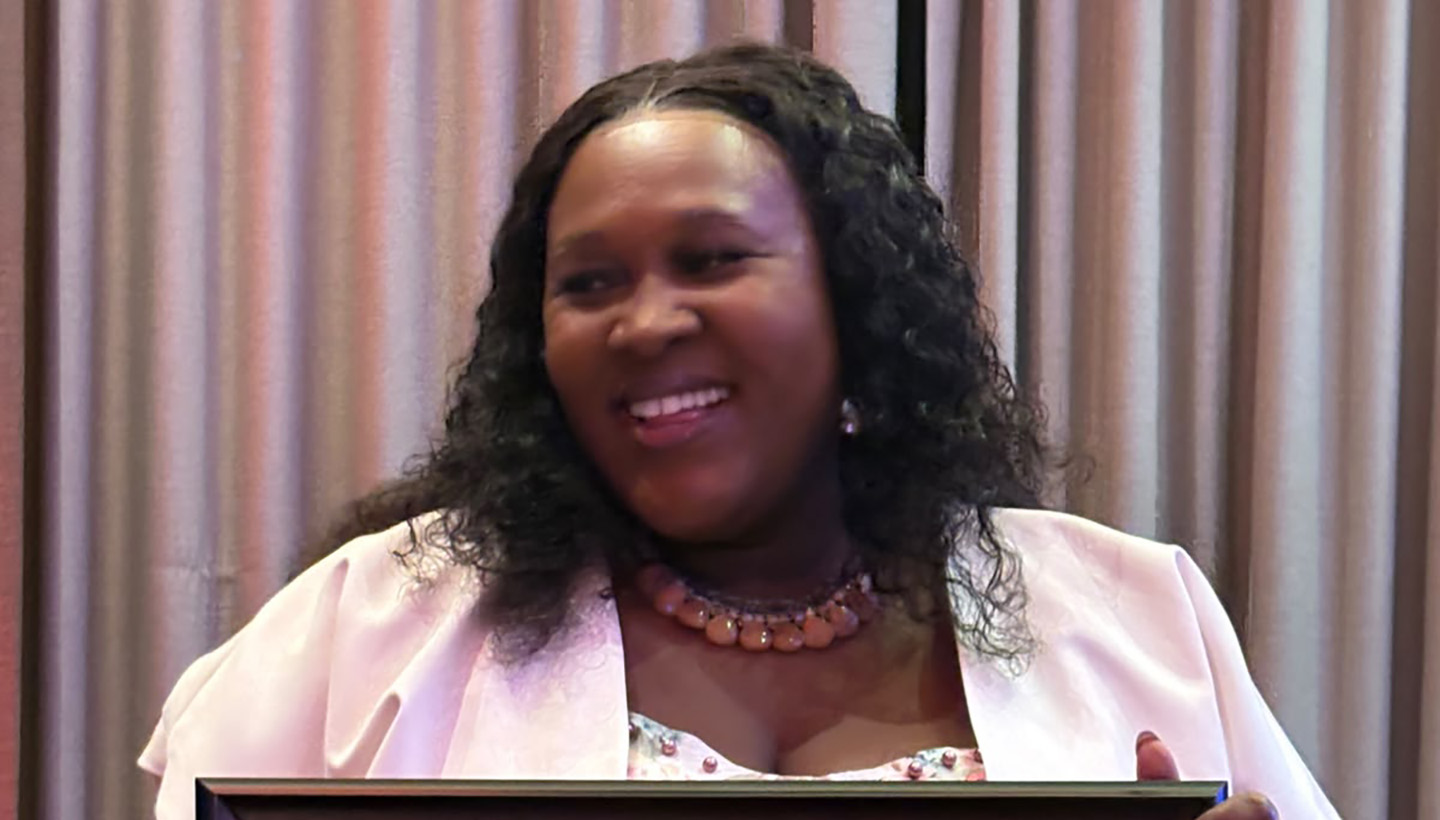
Unisa lecturer Dr Nokulunga Ngcongo
A journey shaped by curiosity, persistence and continuous learning has taken Dr Nokulunga Ngcongo from humble rural beginnings to recognition as an award-winning researcher.
Ngcongo, a lecturer in the Department of Applied Management at the University of South Africa (Unisa), was named second runner-up in the Best Competitive Research Paper category at the 2026 International Business Conference (IBC), held on 7 October at the Arabella Hotel in the Western Cape. Born in Embo, a rural area on the south coast of KwaZulu-Natal, Ngcongo developed an interest in entrepreneurship, education and community development. Growing up in a rural community also shaped her interest in research exploring the opportunities and challenges facing people in rural areas.
“I believe that where we come from can shape our perspective, but it need not limit where we go,” she said. Her academic journey was not without obstacles. After completing matric, financial constraints prevented her from pursuing tertiary education immediately. To earn a living, she opened a small hair salon in one of Durban’s informal settlements. The business eventually failed, partly because she lacked the entrepreneurial knowledge and business management skills needed to sustain it. Rather than abandoning her ambitions, the experience sparked a deeper interest in entrepreneurship and prompted her to explore why some small businesses succeed while others fail.
A particularly demanding period in her academic journey came in 2019. Financial constraints forced her to put her Master of Business Administration (MBA) studies at MANCOSA on hold for two years, while she was also pursuing a Master of Philosophy at the University of Pretoria. After securing permission from both institutions to register concurrently, she had to complete the research components of the two qualifications in the same year.
“I spent practically the whole of 2019 in the library,” she recalled. The experience strengthened the discipline and determination she would later draw on during her Doctor of Philosophy (PhD) in Business Management, specialising in Entrepreneurship, at the University of Pretoria. It also reinforced her belief that a person’s circumstances or starting point need not determine their future. Today, Ngcongo holds seven NQF-credited qualifications, including a PhD, and has earned recognition for research that addresses challenges facing rural communities.
“Personally, this win means a great deal because it represents perseverance through financial and academic challenges. It reminds me of my mother’s encouragement, the hours spent in the library and the commitment that ultimately brought me to doctoral research,” she said. Ngcongo’s award-winning paper, co-authored with Professor Jurie van Vuuren, is titled Entrepreneurial Willingness for Agricultural Entrepreneurship in the Context of Land Expropriation Without Compensation: Evidence from Rural South Africa. The research examines what influences rural residents’ willingness to pursue agricultural entrepreneurship amid uncertainty surrounding land access and property rights.
Entrepreneurship is often presented as a possible response to unemployment and limited economic opportunities. However, identifying a business opportunity does not necessarily mean that people feel equipped or confident enough to pursue it. To investigate the factors influencing this willingness, Ngcongo analysed survey data from 620 rural residents in KwaZulu-Natal, focusing on behavioural and capability-related factors. The findings suggest that entrepreneurial willingness is multidimensional. Behavioural readiness emerged as the strongest predictor in the study, while human capital, entrepreneurial attitudes and personality characteristics also showed significant positive relationships with the willingness to pursue entrepreneurship.
The research indicates that people are more likely to consider agricultural entrepreneurship when they feel prepared to act and have relevant knowledge, experience and confidence. It also highlights the importance of community networks and social influences, which should complement rather than replace individual capability and readiness. For Ngcongo, these findings have practical implications for policymakers and development organisations. She argues that support for rural agricultural entrepreneurship should go beyond land access and technical agricultural training. Instead, interventions should include entrepreneurship education, mentoring, exposure to practical business activities and initiatives that build confidence. Greater institutional clarity around land and property rights could also help rural residents make informed decisions in uncertain circumstances.
The research has relevance beyond the academic discussion of entrepreneurship. Its focus on agricultural enterprise, rural economic participation and the development of individual capabilities speaks to several of the United Nations Sustainable Development Goals (SDGs). SDG 1 (No Poverty) and SDG 8 (Decent Work and Economic Growth) are particularly relevant because the study examines factors that may influence rural residents’ participation in economic activity and their ability to pursue business opportunities. Its agricultural focus also relates to SDG 2 (Zero Hunger), while the emphasis on entrepreneurship education, knowledge and skills connects with SDG 4 (Quality Education). These links also reflect priorities in the African Union’s Agenda 2063, particularly the ambition to build an inclusive and prosperous continent through agricultural development, economic participation and the empowerment of its people. In South Africa, the research speaks to the National Development Plan: Vision 2030, which identifies poverty reduction, job creation, skills development and support for small enterprises as important priorities.
The findings point to an important consideration for rural development: access to land or technical training alone may not be enough to encourage entrepreneurship. People also need the knowledge, confidence, networks and institutional support to turn opportunities into viable economic activities. For Unisa, research of this nature demonstrates how higher education can contribute to addressing practical development challenges. Through research into the factors that shape entrepreneurial willingness, the University adds to the evidence available to policymakers and development organisations seeking to design interventions that respond to the realities of rural communities. It also highlights the importance of sustainable development approaches that build people’s capabilities and support meaningful economic participation. However, translating these findings into measurable improvements in livelihoods will depend on how they are taken up and applied by institutions, policymakers and development practitioners.
Ngconco hopes her work will encourage further studies in other provinces and economic sectors. She is particularly interested in longitudinal research that follows individuals over time to establish whether their willingness to pursue entrepreneurship eventually translates into actual business activity. “My ultimate hope is that the findings will help shape programmes that respond to what rural residents actually need in the midst of the land expropriation without compensation discussions,” she said.
Her own journey has also shaped the advice she gives to young researchers and students who aspire to pursue academic and professional success. She encourages them to remain curious, believe in their abilities and recognise that delays do not necessarily mean defeat. “When I started working in Durban, I could not construct a simple sentence in the English language, but that did not stop me from pursuing my dreams,” she said.
Her recognition at the international conference represents an important milestone in a journey shaped by personal setbacks, academic determination and a desire to understand how research can address the challenges facing rural communities.
* By Buhle Biyela, Intern, Department of Institutional Advancement
Publish date: 2026-11-25 00:00:00.0