News & Events
From peer support to student success: Unisa SI leaders share what works
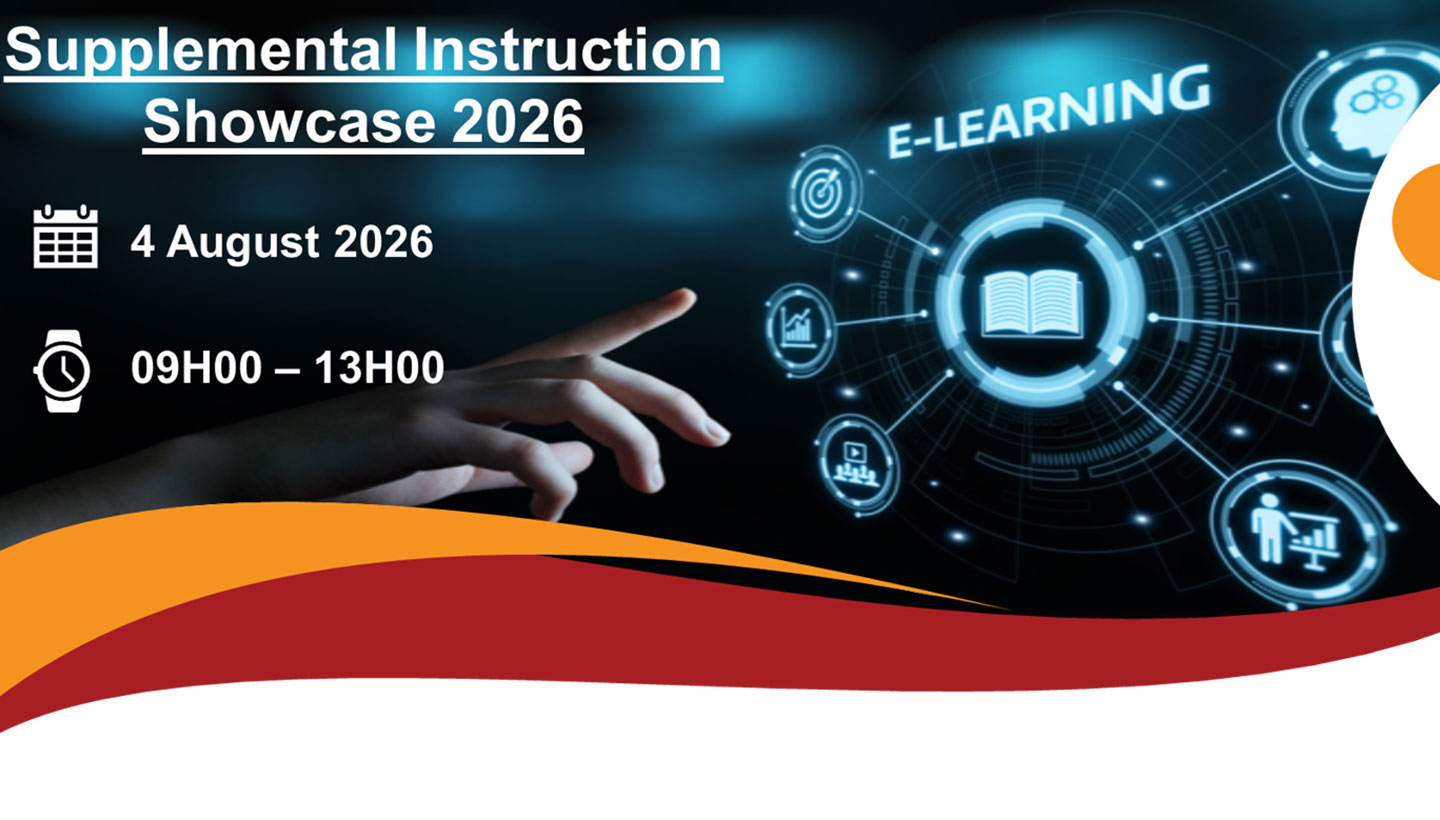
What does it take to turn peer support into meaningful academic success? At Unisa’s SI Showcase 2026, student leaders shared practical lessons on leadership, technology, inclusive learning and multilingualism.
For some students, a difficult module can be the difference between falling behind and finding their confidence. At Unisa, Supplemental Instruction (SI) leaders are helping to close that gap by turning peer support into practical learning, collaboration and academic confidence.
These ideas took centre stage earlier in August when the University of South Africa hosted the Supplemental Instruction (SI) Showcase 2026, bringing together SI leaders, practitioners, support staff and stakeholders to share innovative approaches to helping students succeed.
Held under the theme “Inspiring Success: Sharing Best Practices”, the virtual showcase went beyond celebrating SI achievements. It offered a window into the people, tools and teaching approaches helping students navigate challenging academic content, participate more confidently and take greater ownership of their learning.
The showcase created a platform for SI leaders from across the university’s colleges to share strategies that promote student learning, engagement and academic achievement through peer-assisted learning.
Among the featured presentations was Leading Through the Screen: Dare to Dream, presented by Gontse Gaohose, a Unisa Siyaphumelela Dream Scholar and SI Leader for Introduction to Law (ILW1501). Reflecting on leadership and personal development, Gaohose reminded participants that “Leadership is legacy, not a title.”
Amanda Mkhwanazi, SI Leader for Principles of Management Accounting (MAC2061) in the College of Accounting Sciences, shared practical strategies for facilitating learning in content-intensive modules. Her presentation emphasised the importance of patience and supportive learning environments, captured in her message: “Patience builds understanding.”
In the College of Law, Makoena Nkoana, SI Leader for Law of Persons (PVL2601), explored ways of encouraging critical thinking and meaningful discussion. She urged SI leaders to “Celebrate attempts before correcting mistakes”, highlighting the importance of creating spaces where students feel comfortable participating, making mistakes and reflecting on their learning.
Ayanda Ngidi, SI Leader for English Literacy Studies (ENG1501) in the College of Human Sciences, focused on building inclusive and participatory SI spaces. Through the messages “Approach SI with curiosity” and “Honour your intention”, she highlighted the role of empathy, openness and purpose in creating learning environments in which students feel valued and encouraged to participate.
Technology also featured prominently during the showcase. Mphele Beulah Mohlala, SI Leader for Linear Algebra I (MAT1503), demonstrated how Microsoft Whiteboard and other digital tools can support collaborative problem-solving. Her presentation showed how interactive technology can help students engage more actively with difficult concepts, noting that “Interactive learning creates opportunities for deeper understanding.”
Similarly, Roulette Lethabo Mamabolo, SI Leader for The Interpretation of Maps, Aerial Photographs and Satellite Images (GGH2603), demonstrated how technology can make complex scientific concepts easier to understand. She noted that “Technology helps students see concepts they may struggle to imagine” and that “Visualisation strengthens understanding and confidence.”
From the College of Education, Boitumelo Thubane and Lethabo Jeritah Makoela shared principles for designing student-centred SI lessons. Their presentation emphasised that effective SI leadership requires ongoing development, discipline and intentionality.
They highlighted several key elements of effective SI practice, including clearly defined learning outcomes, scaffolding, inclusive lesson planning and meaningful feedback that supports student development. Reflecting on her own growth, Thubane added: “There’s no substitute for hard work. Every opportunity is a chance to learn and improve ourselves.”
The showcase concluded with a thought-provoking presentation by Babalwa Resha and Zimele Melusi Mnikathi from the Directorate of Language Services (DLS), titled “Bridging Language Barriers Through Translanguaging in SI Sessions”.
Their presentation highlighted the role of multilingualism in strengthening learning, participation and epistemic access. They captured the value of working across languages with the message: “No language is an island; languages club together to construct meaning.”
The SI Showcase 2026 demonstrated that student success is supported not only by academic content, but also by effective leadership, inclusive learning environments, technology, collaboration and a willingness to learn from one another.
By creating a space for SI practitioners and leaders to exchange ideas and celebrate effective practice, the showcase strengthened a growing community committed to improving the student learning experience across Unisa.
Ultimately, the message of the showcase was clear: inspiring success starts with sharing what works, learning from one another and creating opportunities for students to thrive.
* By Ziyanda Febana – Mkila, Student Retention Unit: Student Success Practitioner & Siyaphumelela
Publish date: 2026-08-21 00:00:00.0