News & Events
Department of Health Studies strengthens postgraduate research capacity in Ethiopia
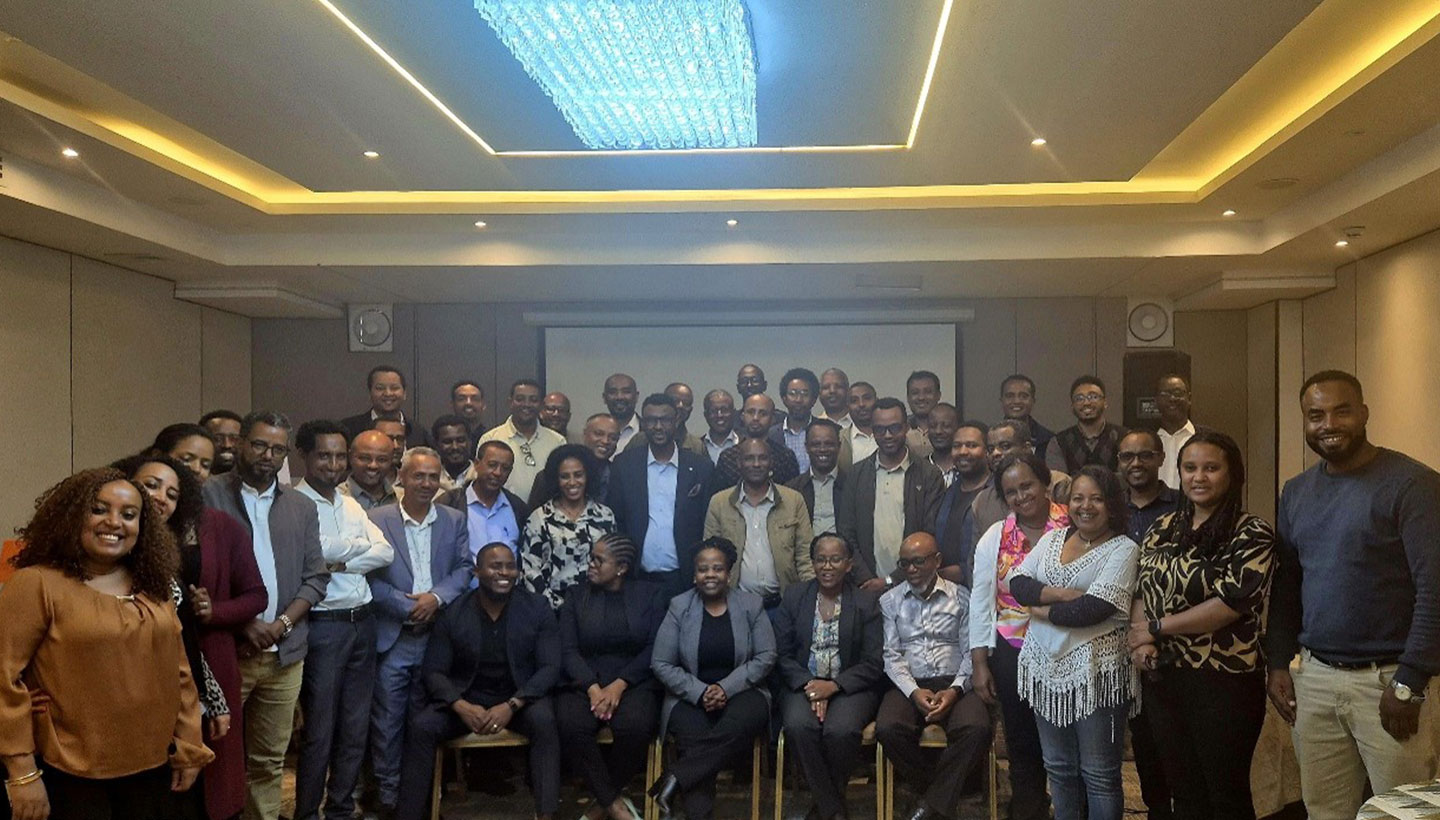
Workshop for first-year master’s and doctoral students
The Department of Health Studies recently strengthened its support for postgraduate students in Ethiopia through a five-day face-to-face workshop for the 2026 master’s and doctoral cohorts at the Ethiopia Regional Learning Centre (ERLC).
Held in August 2026, the workshop provided new postgraduate students with a foundation in research methodology, academic writing and scholarly publishing, while creating opportunities for current students to receive individual guidance on their research.
The programme was formally opened by the Regional Director and the College Director, who underscored Unisa’s commitment to strengthening postgraduate research capacity and supporting students throughout their academic journeys.
Led by academics from the Department of Health Studies, the workshop introduced students to the key principles and processes underpinning successful postgraduate research.
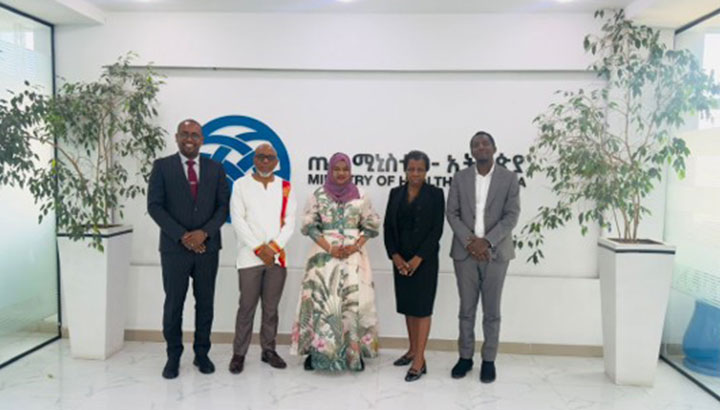
Meeting at the Ministry of Health
Participants explored the structure and content of a research proposal, including the essential components and expectations at master’s and doctoral level. Discussions also focused on identifying gaps in existing knowledge and developing research that makes an original scholarly contribution.
The sessions further examined theoretical and conceptual frameworks, with particular emphasis on understanding the distinction between the two. Doctoral students were encouraged to consider a theoretical framework as the intellectual foundation of their research.
Ethical clearance was another important focus. Students were guided through departmental and college review processes, as well as in-country requirements. They were reminded that research data collected without the necessary ethical approval cannot be accepted and that extensions should be requested where required.
The academics also discussed research paradigms and design, helping students understand how different ways of viewing a research problem influence the choice of research design and methodology.
Participants were introduced to qualitative, quantitative and mixed-methods approaches, including examples of multi-phase transformative research strategies.
The responsible use of artificial intelligence in academic work was also addressed, including the use and interpretation of AI-detection tools such as Turnitin.
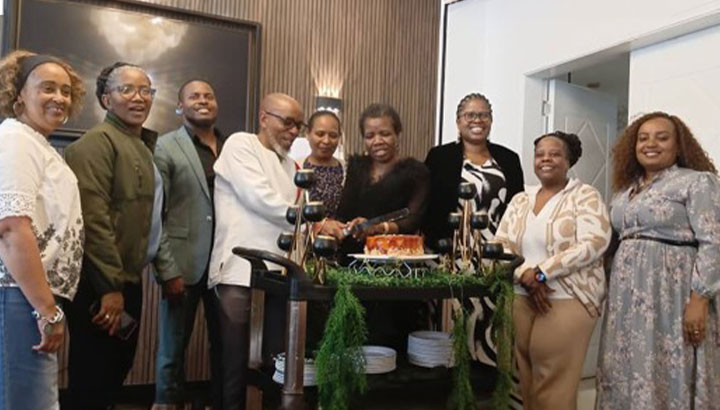
Cake-cutting ceremony
Students were encouraged to prioritise credible academic sources, verify information generated by AI, reference sources appropriately and avoid plagiarism. The sessions emphasised that AI should support academic work rather than replace independent scholarly thinking.
The discussions also highlighted the importance of interpreting AI-detection results carefully and within the broader context of academic integrity.
Scientific writing and publication strategies formed another important part of the programme, equipping students with practical guidance on developing and disseminating scholarly work.
The workshop was highly interactive, with students engaging academics through questions, discussions and detailed responses. This allowed participants to clarify concepts and gain greater confidence in navigating their postgraduate research.
The final three days of the programme focused on students already registered with the Department of Health Studies at the Regional Learning Centre.
Students presented their ongoing research and received tailored guidance based on their individual stages of academic progress. The sessions provided an opportunity for academics to identify challenges, offer practical advice and help students move their research forward.
This approach ensured that the workshop extended beyond orientation for new students to provide meaningful academic support to students already progressing with their studies.
The department also used the week to engage with its alumni through a dedicated session on article writing and publication.
The session provided targeted support to alumni seeking to develop their research into publishable academic articles. It also reinforced the department’s commitment to maintaining links with graduates and supporting them in contributing to the wider body of scholarly knowledge.
By bringing together postgraduate orientation, research support and alumni engagement, the programme created a broader platform for academic development and collaboration.
The visit also provided an opportunity to strengthen institutional engagement with Ethiopia’s Ministry of Health.
Senior members of the Department of Health Studies delegation, Prof Azwihangwisi Mavhandu-Mudzusi and Prof Ditaba Mphuti, met with the State Minister of the Ministry of Health, Seharla Abdulahi.
The meeting focused on Unisa’s programme offerings, including the Postgraduate Diploma in Public Health, as well as its master’s and PhD programmes.
Discussions also explored the implementation of guidelines and models developed through the research of Ethiopian graduates of the department.
The State Minister welcomed the delegation and highlighted the importance of expanding educational opportunities for the ministry’s civil servants. She also emphasised the need to maintain the quality of education through effective progress monitoring and evaluation.
She recommended that the parties explore a formal collaboration through a memorandum of understanding (MoU), including the development and implementation of a customised curriculum for the ministry.
The engagement opened the possibility of strengthening the relationship between Unisa and the Ministry of Health while expanding opportunities for professional development among public-sector employees.
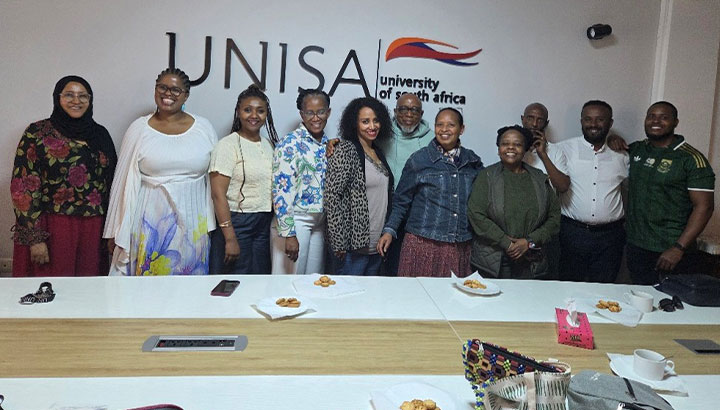
Delegates with staff members of the ERLC
The delegation also visited the Unisa Ethiopia Regional Learning Centre, where they met with staff and gained a better understanding of the centre’s operations and its role in supporting Unisa students in the country.
The visit provided an opportunity for academics and centre staff to engage directly and gain insight into the student-support environment in which the department’s postgraduate students are studying.
The week-long programme demonstrated the Department of Health Studies’ commitment to supporting postgraduate students at different stages of their academic journeys.
From equipping new master’s and doctoral students with essential research skills to supporting current students with their ongoing work and helping alumni develop articles for publication, the programme extended academic support beyond the traditional classroom.
The engagement with the Ministry of Health and the visit to the Regional Learning Centre further strengthened the department’s institutional and academic links in Ethiopia.
Together, these activities contribute to Unisa’s broader commitment to developing research capacity, supporting scholarly excellence and creating opportunities for collaboration that extend beyond the university.
* By Gelilawit Belay Mekonnen, Student Adviser, Ethiopia Regional Learning Centre, College of Graduate Studies
Publish date: 2026-09-15 00:00:00.0