News & Events
Beyond registration: From enrolment to empowerment
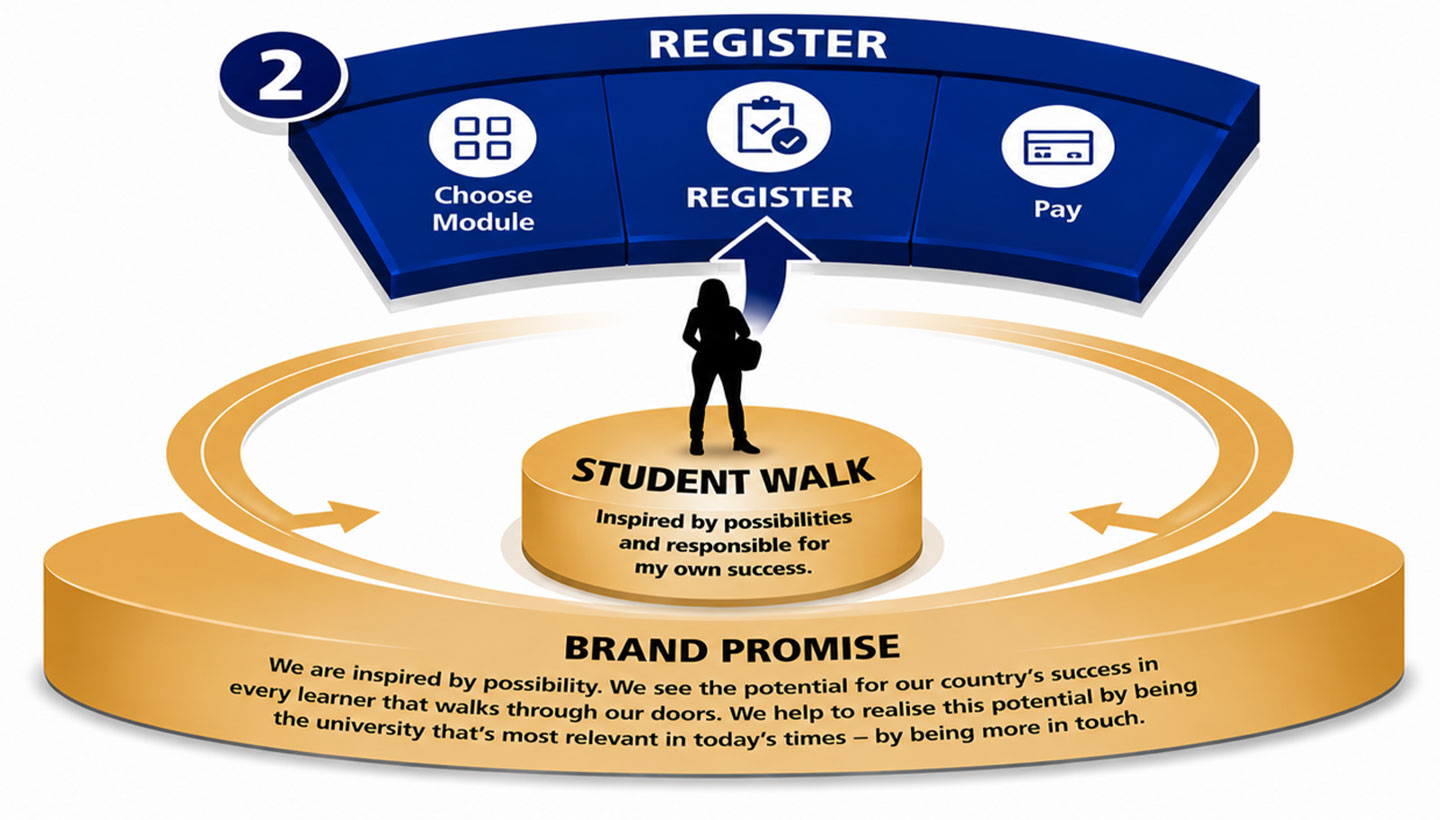
Registration is only the beginning. What happens afterwards can shape how confidently students navigate university, engage with their studies and build the skills they need to succeed in an Open Distance and e-Learning (ODeL) environment.
For many students, registration represents an important milestone. But becoming a Unisa student involves much more than completing the registration process.
Students also need to understand how the University works, become familiar with their academic environment and develop the knowledge, skills and behaviours required to take ownership of their studies.
Recognising the importance of this transition, the Student Retention Unit (SRU) offers a range of post-registration initiatives designed to support students as they move from newly registered students to active, informed and engaged members of the University community.
Step 2: Register
Once registration is complete, students are introduced to a range of interventions designed to help them understand what is expected of them as Unisa students and prepare them for the realities of studying in an ODeL environment.
These interventions bring together orientation, academic preparedness, academic integrity and personalised support, providing students with a foundation on which to build their academic journey.
One of the first points of engagement is Post-registration Orientation.
In 2024, Unisa introduced its nationwide Orientation Week (O-Week), a post-registration programme designed to welcome students into the University community and help them prepare for success in an ODeL environment.
While O-Week marked a new chapter in the University’s approach to orientation, the importance of helping students transition into university life is not new. Orientation has long played a role in helping students understand the University, its systems and the support available to them.
O-Week has since developed into an important part of the student experience, connecting students with information, resources and support while helping them develop a sense of belonging from the outset.
An important feature of the programme is the student voice. Daily feedback surveys provide insights into students’ experiences, expectations and needs. This feedback allows the University to continually refine the orientation programme and respond to what students identify as important.
The success of O-Week also depends on collaboration across the University. Academics, professional support staff and student leaders contribute to the programme, ensuring that students encounter a coordinated support network from the beginning of their journey.
As the saying goes, “no feast comes to the table on its own feet.” O-Week demonstrates that meaningful student support is a collective effort involving many people and parts of the University.
Once students have completed registration and orientation, their next step is to develop the practical skills and knowledge needed to navigate university successfully.
Students are automatically linked to two zero-credit courses 48 to 72 hours after their registration has been finalised.
One of these is FYE1500: Fundamentals to Student Success, housed on the myModule platform. The course is designed for first-year students and introduces them to practical aspects of the Unisa student experience.
FYE1500 covers areas such as navigating myUnisa, accessing library resources, developing digital literacy and strengthening study skills, among other areas.
By focusing specifically on the first-year experience, the course helps students become more informed, independent and engaged participants in their studies.
Being prepared for university also means understanding the principles that underpin responsible academic work.
The compulsory Academic Integrity Course (AIC) for NQF levels 5 to 8 is available on the MOOC site. The course introduces students to the principles and practices that support ethical academic engagement.
It covers areas including academic honesty, responsible use of information and technology, academic writing and the ethical use of artificial intelligence.
Introducing these principles early helps students understand that academic success is not only about achieving good results, but also about ensuring that those results are achieved honestly and responsibly.
While orientation and foundational courses provide students with important knowledge and skills, some students may benefit from more personalised support.
The SRU’s Student Success Coaching programme is designed to help students navigate university expectations, particularly within an ODeL environment.
The programme focuses on developing students’ self-awareness, self-regulation and academic confidence, while equipping them with practical strategies for studying and engaging effectively with their learning.
Through the coaching process, a dedicated student success coach can help students identify their strengths, values, interests and goals. This can assist them in making informed decisions about their academic journey and developing strategies that work for their individual circumstances.
Student Success Coaching also encourages students to engage with the wider University community, helping to build a sense of belonging, resilience and connection.
By combining personal development with practical academic support, the programme encourages students to take greater ownership of their learning and positions them for sustained success at Unisa.
Students can book a one-on-one session through the SRU Booking App, join a group session or wait to be contacted by their designated college-specific coach.
Taken together, these initiatives create a connected support pathway that extends well beyond registration.
Post-registration Orientation helps students understand the University environment and find their place within it. FYE1500 develops foundational capabilities for the first-year experience. The Academic Integrity Course establishes the principles of responsible academic practice, while Student Success Coaching provides personalised guidance to students who need additional support.
The effectiveness of this support depends on collaboration across the University. Academic colleges, support departments and the SRU each have a role to play in ensuring that students are not left to navigate their academic journey alone.
The transition from registration to successful study therefore requires more than giving students access to a qualification. It requires creating the knowledge, skills, support and confidence that enable them to take ownership of that opportunity.
At Unisa, the journey does not end when a student registers. It is where the next stage begins.
In the next phase of this series, we explore Step 3: Teach and Learn, where student success becomes a shared responsibility.
The article will examine student-focused programmes such as the numeracy course and Supplemental Instruction, as well as academically directed initiatives including the SRU’s Early Alert System and Referral Mechanism. Together, these interventions complement the work of academics and help identify and respond to student needs throughout the teaching and learning journey.
* By Naseehat Ebrahim Dawood, Student Retention Unit: Student Success Practitioner (DTSFL)
Publish date: 2026/09/25