

Providing affordable, accessible, high quality, relevant Science Engineering and Technology programmes
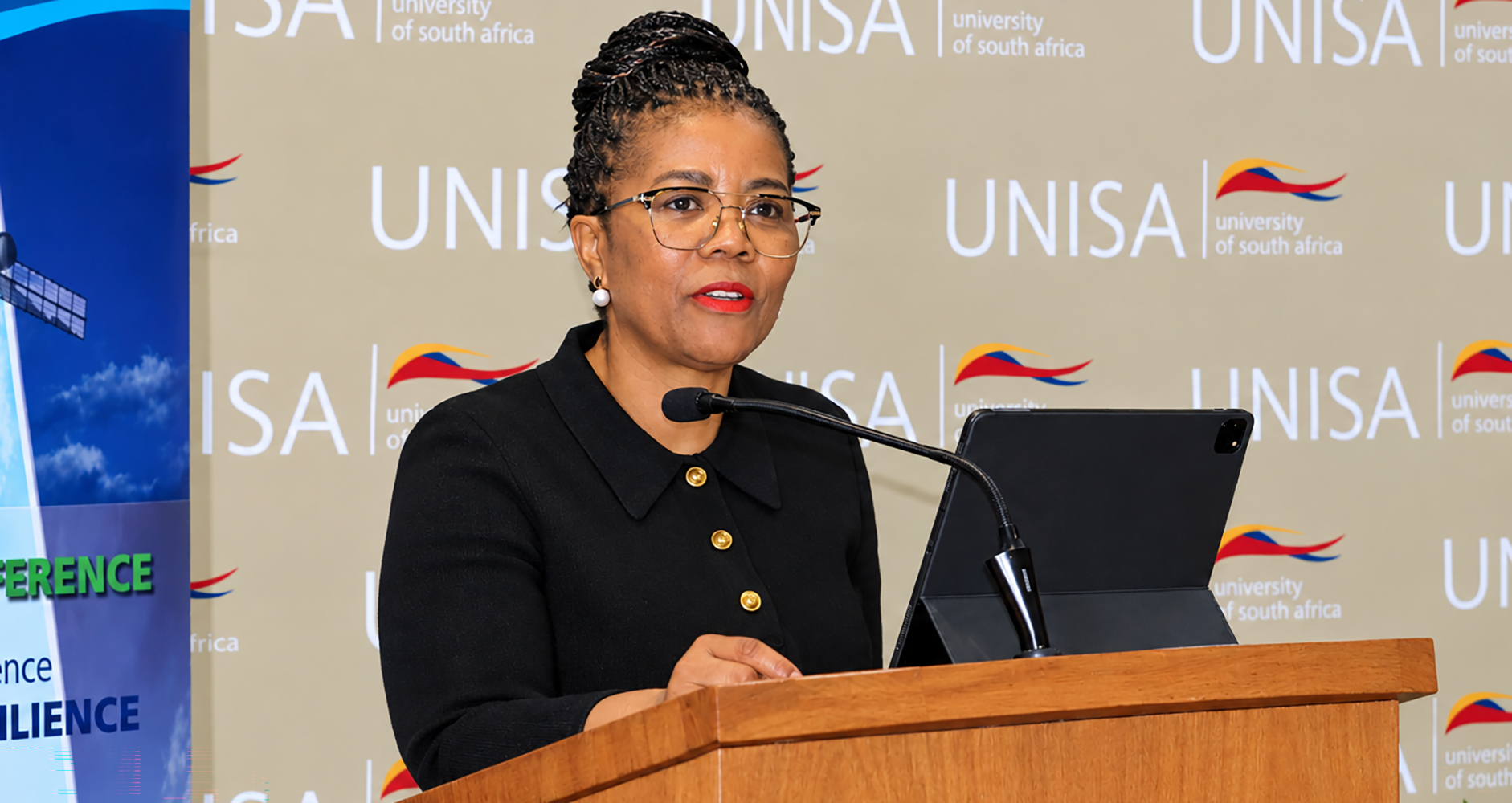
Unisa Principal and Vice-Chancellor Prof Puleng LenkaBula addresses delegates at the 40th Annual Conference of the South African Society for Atmospheric Sciences, hosted at Unisa's Muckleneuk Campus.
As South Africa confronts increasingly severe weather events and growing climate-related risks, scientists, policymakers and industry leaders have called for stronger collaboration to improve climate forecasting, protect vulnerable communities and strengthen the country's resilience.
The call emerged during the South African Society for Atmospheric Sciences (SASAS) 40th Annual Conference, hosted at the University of South Africa's (Unisa) Muckleneuk Campus in collaboration with the South African Weather Service (SAWS) and Santam. Held under the theme 40 years and beyond – Atmospheric science excellence advancing climate resilience in South Africa, the conference brought together atmospheric scientists, academics, policymakers, industry representatives, postgraduate students and emerging researchers to examine how scientific knowledge can better inform responses to climate change.
Discussions focused on strengthening research partnerships, improving early warning systems, harnessing emerging technologies and ensuring that climate science translates into practical solutions for communities, businesses and government. For Unisa, the gathering provided an opportunity to demonstrate the importance of interdisciplinary research and the role universities can play in addressing one of South Africa's most pressing development challenges. Opening the conference, Unisa Principal and Vice-Chancellor Prof Puleng LenkaBula emphasised that the 40th anniversary was not only an opportunity to celebrate four decades of scientific achievement, but also a moment to consider the future of atmospheric research. She urged delegates to reflect on how scientific advances could improve the understanding of weather patterns, strengthen forecasting capabilities and prepare society for increasingly unpredictable climatic conditions.
LenkaBula highlighted the importance of developing the next generation of scientists, describing the conference as an important platform for postgraduate students and early-career researchers to present findings, exchange knowledge and establish professional networks. "Many established scientists began their research careers by presenting their work at conferences such as this one," she said. She stressed that scientific progress depends on the continuous development of researchers across generations, with experienced scientists mentoring emerging scholars and creating opportunities for collaboration. The Vice-Chancellor also emphasised the importance of partnerships between universities, government and industry, arguing that meaningful scientific advancement cannot take place in isolation.
However, she cautioned against relationships in which businesses engage universities primarily through corporate social responsibility initiatives rather than recognising them as strategic partners in research, innovation and economic development. According to LenkaBula, stronger partnerships should enable institutions to develop scientific knowledge into practical products, processes and systems that address societal needs while improving economic competitiveness. "The weather and climate sciences cannot be confined to a single discipline. They require expertise from physics, mathematics, computer sciences, engineering, environmental sciences, economics, and human sciences," she said.
She explained that Unisa's comprehensive academic offering and open distance e-learning model position the university to support interdisciplinary research that connects scientific innovation with the needs of communities and industries. Such collaboration also creates opportunities to advance research associated with Unisa's Catalytic Niche Areas, particularly where environmental sustainability, technological innovation and societal development intersect. LenkaBula drew attention to the devastating consequences of extreme weather events in South Africa, including the destructive floods experienced in KwaZulu-Natal in 2022 and Limpopo in 2026.
These events, she noted, demonstrate how climate-related disasters can claim lives, damage infrastructure, disrupt economic activity and threaten livelihoods. They also highlight the need for scientific research that goes beyond understanding atmospheric processes to producing information that helps communities, businesses and government prepare for environmental risks. "These events remind us of the importance of advancing our understanding of weather and climate systems, strengthening early warning capabilities and ensuring that scientific knowledge translates into actions that protect communities and build resilience," LenkaBula said.
Her remarks underscored the importance of ensuring that scientific discoveries contribute to disaster preparedness, sustainable development and the protection of vulnerable populations. For South Africa, this means strengthening the relationship between atmospheric research, infrastructure planning, environmental management and public safety. Delivering the host partner address virtually, SAWS Acting Chief Executive Officer Dr Jonas Mphepya outlined the organisation's commitment to advancing atmospheric science in support of a safer and more climate-resilient South Africa.
He explained that the role of weather and climate science is expanding beyond forecasting daily conditions to informing decisions across several sectors of the economy. "Climate information has become essential for water resources, agriculture, energy, public health, infrastructure, and human settlements," he emphasised. Mphepya said SAWS continues to strengthen its capabilities in climate monitoring, climate projections and the analysis of extreme weather events. These efforts are increasingly important as climate variability and extreme weather place additional pressure on infrastructure, food production, water security and public services.
He highlighted the transformative potential of emerging technologies, including artificial intelligence, advanced satellite systems, automated observation networks and improved weather and climate models. Such technologies could enable scientists to analyse larger volumes of information, identify emerging threats earlier and produce more detailed forecasts. However, Mphepya emphasised that technological advances must be accompanied by stronger cooperation between researchers, operational institutions, government and industry.
Scientific discoveries, he argued, become most valuable when they are incorporated into systems capable of delivering timely, understandable and actionable information. For communities exposed to floods, droughts and other weather-related hazards, improved forecasting and early warnings could provide critical opportunities to prepare and reduce potential losses. Imraan Patel, Deputy Director-General in the Department of Science, Technology and Innovation, reinforced the importance of placing scientific research at the centre of South Africa's development agenda. He argued that atmospheric science should be recognised as a foundational discipline with direct implications for economic planning, environmental sustainability and national resilience.
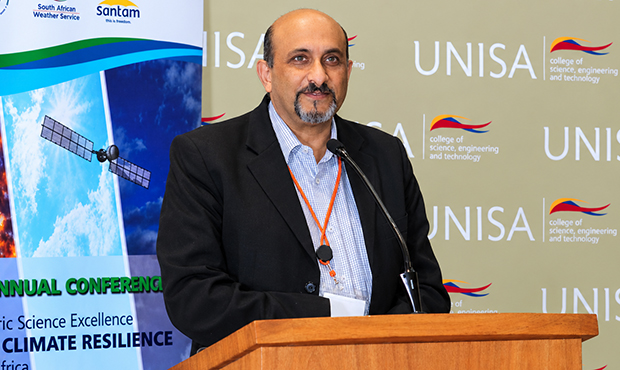
Imraan Patel, Deputy Director-General in the Department of Science, Technology and Innovation, discusses the importance of science-led development and stronger research partnerships in building South Africa’s climate resilience.
According to Patel, public policy must strengthen the connection between scientific research, innovation systems and practical societal outcomes. He called for a national innovation system capable of responding effectively to South Africa’s interconnected development challenges. "South Africa faces interconnected development challenges; poverty, unemployment and inequality remain pressing concerns, and climate change compounds these vulnerabilities, affecting economic activities and public infrastructure," he said. Patel emphasised that countries require strong scientific and technological capabilities to understand their development challenges, design appropriate solutions and make informed decisions about the technologies shaping their future.
He also stressed the importance of sustainable public investment in research infrastructure, skills development and scientific institutions. "We need to ensure that our national system of innovation has the depth, resilience, and strategic autonomy required to serve national interests in an increasingly uncertain world," he said. His remarks highlighted the need to move beyond isolated research initiatives towards coordinated national efforts that connect universities, government departments, research organisations and the private sector. Another central theme of the conference was the importance of communicating scientific knowledge beyond academic and professional environments.
Patel cautioned that research findings cannot achieve their full societal value if they remain confined to scientific publications, datasets, lecture halls and conferences. Instead, he called for stronger public engagement to ensure that scientific information reaches communities, is understood and informs decisions. He also highlighted the contribution of indigenous and local knowledge to understanding environmental conditions and responding to climate risks. "Indigenous and local knowledge must contribute insights into seasonal change, environmental observation, and responses to risk. Such knowledge should be engaged respectfully and critically alongside systematic scientific evidence," he said.
The approach recognises that scientific research and community experience can complement one another, particularly in understanding local environmental conditions and designing context-specific responses. For South Africa, where communities experience climate-related risks differently depending on geography, infrastructure and socioeconomic circumstances, accessible and relevant information is essential. The discussions reflected the broader importance of atmospheric science in achieving sustainable development. The conference’s focus on climate resilience aligns particularly with the United Nations Sustainable Development Goal 13, which calls for urgent action to combat climate change and its impacts.
Its emphasis on interdisciplinary research, technological innovation and stronger partnerships also supports SDG 9, which promotes resilient infrastructure and innovation, and SDG 17, which encourages partnerships for sustainable development. These priorities resonate with South Africa's National Development Plan 2030, which recognises environmental sustainability, scientific capability and resilient infrastructure as important foundations for long-term development. They also contribute to the African Union's Agenda 2063 aspirations for environmentally sustainable and climate-resilient economies and communities. For Unisa, the conference reinforced the university's role in connecting research, teaching, innovation and engaged scholarship to challenges affecting society.
As the SASAS conference marked four decades of atmospheric science, its central message was that the next phase of scientific progress must be defined not only by improved knowledge and technology, but also by the ability to translate research into meaningful action. Strengthening South Africa's climate resilience will require sustained investment in scientific capabilities, closer cooperation across disciplines and sectors, and a shared commitment to ensuring that research contributes to protecting lives, livelihoods and the environment.
* Article and photography by Victor Malatji, Journalist Intern, Department of Institutional Advancement
Publish date: 2026/10/27

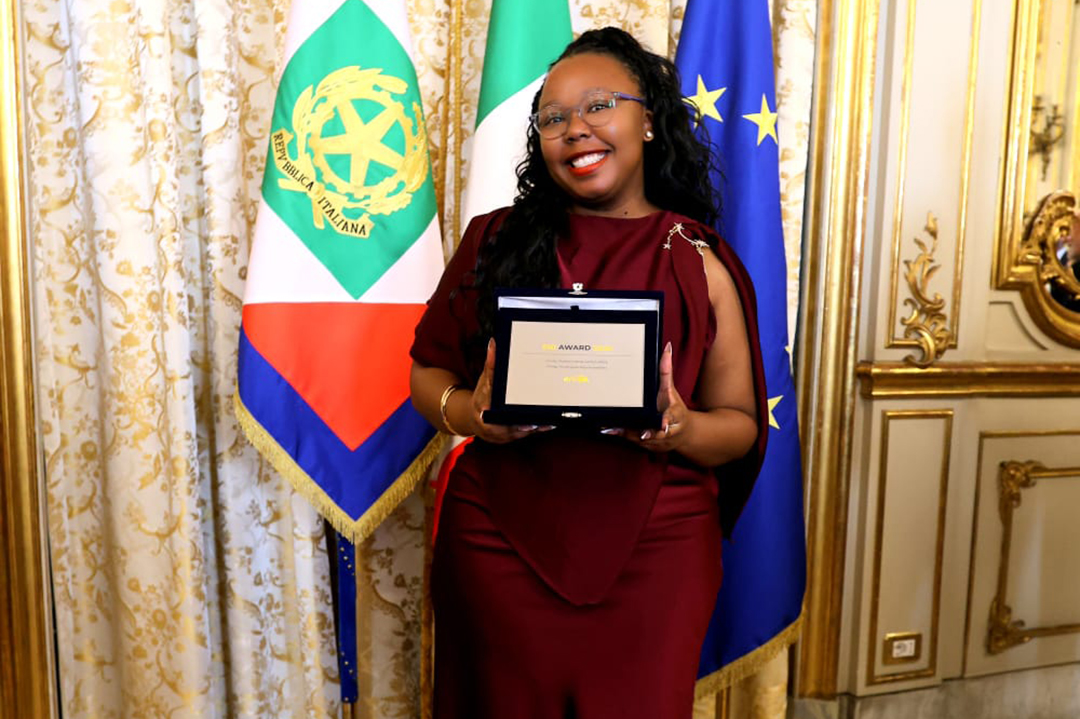 Unisa PhD student Gosego Sedikelo wins prestigious 2026 Eni Award for sustainable battery recycling research
 Unisa and TVET Colleges join forces to drive rural economic development through education and technology
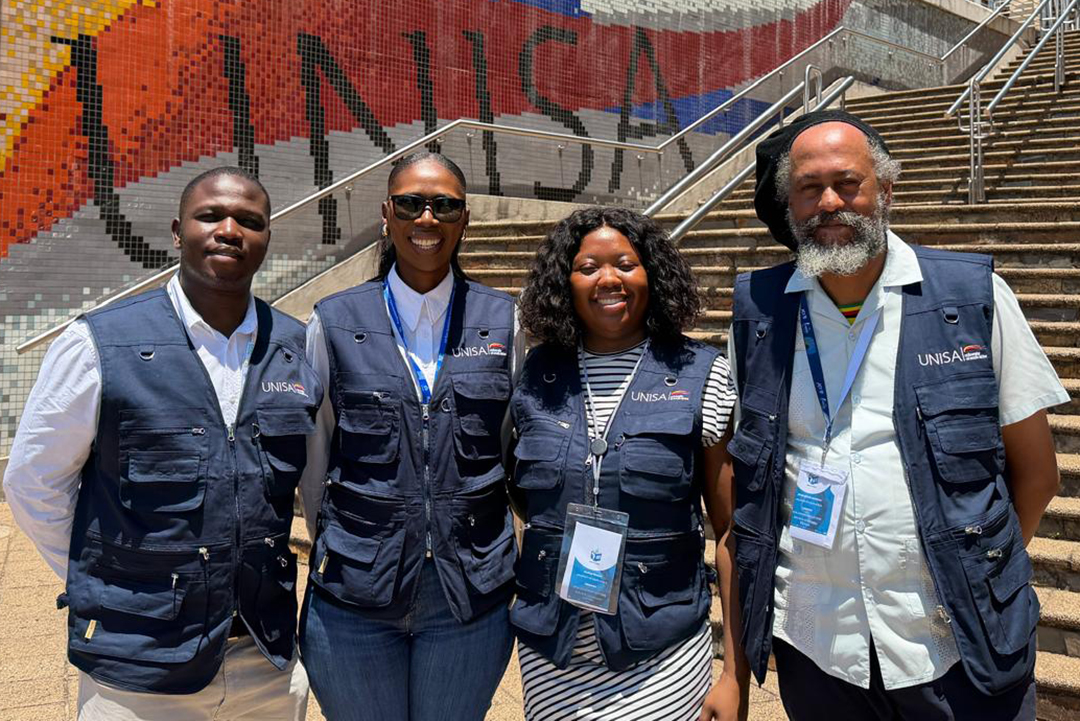 Unisa deploys 100 Election Observers to strengthen democracy and electoral accountability
 Unisa champions disability rights, inclusion and accessibility through month-long awareness campaign
 Unisa KwaZulu-Natal Region promotes staff well-being through health and wellness day