

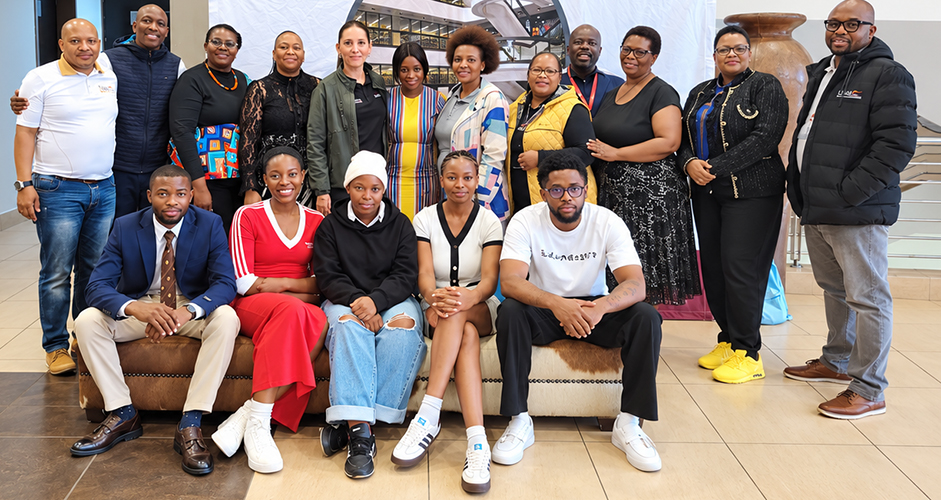
Participants and members of Unisa Library and Information Services management at the Book Conversation – Previously Banned Books, which brought together academics, artists and young readers to explore censorship, resistance and the enduring relevance of African literature.
Books can be banned, removed from shelves and denied an audience, but the ideas they carry often survive long after those who sought to silence them have disappeared. For generations, literature has challenged injustice, questioned authority and given a voice to people whose experiences might otherwise have been forgotten.
This enduring power of the written word took centre stage at the University of South Africa (Unisa), where academics, students, artists and literary enthusiasts gathered at the Unisa Art Gallery in the Kgorong Building for a thought-provoking discussion on previously banned books.
The event, titled Book Conversation – Previously Banned Books, brought literature, visual art, history, poetry and music together to examine censorship and the continuing relevance of works that challenge oppression and confront uncomfortable social realities.
At the heart of the discussion was The Stone Country, the novel by South African writer Alex La Guma that explores imprisonment, injustice, resistance and the struggle to preserve human dignity under oppressive conditions.
The gathering was organised through a collaboration involving the Department of Art and Music and the Department of Information Science in Unisa's College of Human Sciences, Unisa Library and Information Services (LIS), and the Literary Outreach Incubation Programme.
It also provided an opportunity for the Unisa LIS Book Club to extend its activities beyond conventional reading sessions, demonstrating how literature can encourage critical thinking, public dialogue and engagement with contemporary social challenges.
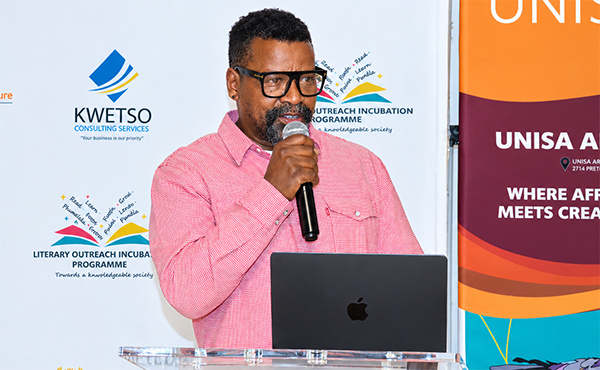
Dr Daniel Mosako, Chair of Unisa's Department of Art and Music, encouraged greater engagement with literature and highlighted the importance of archives in preserving history and informing contemporary society.
Welcoming participants, Dr Daniel Mosako, Chair of the Department of Art and Music, emphasised the importance of reading and engaging with literature as a means of expanding knowledge and understanding society.
He encouraged students and members of the public to participate in book conversations, literary discussions and launches, noting that such engagements provide opportunities to explore the ideas, historical circumstances and experiences that shape literary works.
Mosako also challenged the perception that archives exist merely to preserve records of the past.
Instead, he presented archives as living sources of knowledge that allow societies to revisit their histories, question established narratives and draw lessons relevant to contemporary challenges.
His reflections reinforced the importance of preserving literary and historical material, particularly works that were once suppressed because they challenged prevailing political and social systems.
Representing the Department of Sport, Arts and Culture (DSAC), director Mme Catherine Mokoena highlighted opportunities available to students and emerging writers seeking to publish their work.
She drew attention to financial and operational support intended to assist aspiring authors in developing their writing careers and encouraged students to explore these opportunities.
Mokoena also urged participants to share the knowledge gained through university engagements with their communities, emphasising that the value of education extends beyond academic institutions.
Her message highlighted the importance of making literature, cultural knowledge and intellectual engagement accessible to broader society.
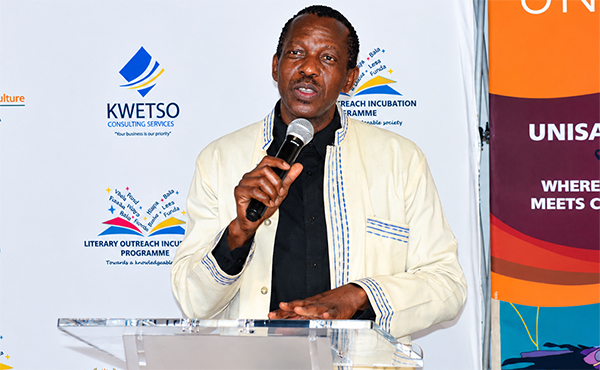
Dr Bongani Mkhonza, Senior Lecturer in Art History at Unisa, explored the relationship between literature and visual art, drawing parallels between Alex La Guma's The Stone Country and Jane Alexander's The Butcher Boys.
Delivering the keynote address, Dr Bongani Mkhonza, Senior Lecturer in Art History, demonstrated how literature and visual art can deepen society's understanding of oppression, violence and the human condition.
Drawing parallels between La Guma's The Stone Country and The Butcher Boys, a sculpture by South African artist Jane Alexander, Mkhonza explored how different artistic forms can communicate similar experiences of dehumanisation.
He connected the character known as "The Butcher" in La Guma's novel with Alexander's unsettling sculptural figures, showing how literature and visual art can expose the brutality of oppressive systems.
The comparison encouraged participants to look beyond the surface of artistic works and consider the deeper social and political meanings they convey.
Mkhonza also situated the discussion within the broader history of censorship, reflecting on how governments and other authorities have attempted to suppress ideas through restrictions on books, art and public expression.
Yet, as the discussion illustrated, censorship does not necessarily erase the ideas it seeks to control. In many instances, previously banned works continue to attract new audiences and generate fresh interpretations long after the restrictions have been lifted.
One of the highlights of the programme was the participation of three Unisa LIS Book Club members, Nolwazi Mahlalela-Achonye, Bontle Makuoa and Katlego Rakgate, who reviewed The Stone Country and shared their interpretations with the audience.
Their contributions brought a younger generation's perspective to a novel rooted in South Africa's history of political oppression.
Rather than approaching the book solely as a historical account, the readers examined its themes of injustice, power, imprisonment and resistance, considering how these experiences continue to resonate in contemporary society.
Their participation demonstrated the importance of encouraging students to engage critically with literature, question established interpretations and develop their own understanding of complex social issues.
It also reinforced the role of university libraries as spaces for intellectual exchange, where reading becomes an opportunity for discussion, debate and the development of independent thought.
By placing young readers at the centre of the conversation, the event demonstrated that the relevance of historical literature depends not only on its preservation but also on the willingness of successive generations to engage with it.
Although The Stone Country provided the historical foundation for the discussion, the programme also confronted some of the most pressing challenges facing contemporary South African society.
Poet Tshanduko Faith Nemutanzhela, also known as Kingdom Vessel, delivered a performance addressing gender-based violence and femicide, drawing attention to the continued vulnerability of women and the devastating consequences of violence in communities.
Before her performance, participants observed a moment of silence in remembrance of women recently murdered in Ekurhuleni.
The tribute connected the themes of violence, injustice and human suffering explored in La Guma's novel with present-day realities, demonstrating how artistic expression can create awareness and encourage social reflection.
For panellist Dr Tsosheletso Chidi, the African philosophy of Botho and Ubuntu provided another important perspective through which to interpret the novel.
"Motho ke motho ka batho, Umuntu ngumuntu ngabantu," she reflected, invoking the principle that a person's humanity is realised through relationships with others.
Chidi examined how prisoners portrayed in The Stone Country maintained human connections and a sense of solidarity despite the degrading conditions imposed upon them.
Her contribution drew attention to the importance of compassion, community and mutual support in preserving human dignity, even under circumstances designed to strip individuals of their humanity.
Music added another dimension to the conversation, with performances by Simon Makgatholela and Bomang Music complementing the literary and artistic discussions.
Bomang's performance of Bua highlighted the importance of passing knowledge, cultural values and collective wisdom from one generation to another.
Together, the poetry, music and literary discussions demonstrated how different forms of creative expression can contribute to conversations about justice, identity and social responsibility.
Beyond its literary significance, the event reflected Unisa's broader commitment to advancing African scholarship, preserving cultural heritage and encouraging critical engagement with historical narratives.
By revisiting works that were suppressed during apartheid, the university created an opportunity to examine whose voices were historically excluded, how systems of power influenced the production and circulation of knowledge, and why access to diverse perspectives remains important.
It also supports the university's contribution to Sustainable Development Goal 4, which promotes inclusive and equitable quality education, by encouraging reading, critical thinking and lifelong learning.
The discussion's focus on censorship, human rights and social justice further connects with Sustainable Development Goal 16, which promotes peaceful and inclusive societies, access to justice and accountable institutions.
Through its emphasis on African literature, cultural expression and intergenerational knowledge sharing, the initiative also contributes to the African Union's Agenda 2063 aspiration of an Africa with a strong cultural identity, common heritage and shared values.
These connections illustrate how literary scholarship and public engagement can contribute to a deeper understanding of society while encouraging informed participation in conversations about democracy, freedom and human dignity.
The conversation at the Unisa Art Gallery demonstrated that the significance of previously banned books extends far beyond the circumstances in which they were written or prohibited.
Their enduring value lies in their ability to challenge readers, provoke difficult questions and encourage reflection on the relationship between the past and the present.
For the young readers who engaged with The Stone Country, the novel offered more than an account of imprisonment and political oppression. It provided an opportunity to examine the meaning of freedom, the consequences of injustice and the importance of preserving humanity in difficult circumstances.
The gathering also illustrated the value of interdisciplinary collaboration, bringing together academics, librarians, artists and students to explore how literature can inform conversations about contemporary social issues.
Through initiatives such as the Book Conversation – Previously Banned Books, Unisa continues to demonstrate the importance of taking knowledge beyond classrooms and libraries and creating spaces where different generations can learn from one another.
Ultimately, the event reinforced a powerful message: preserving books is only the beginning. Their true value emerges when people continue to read them, question their ideas and apply their lessons to the world around them.
The Stone Country may belong to an earlier chapter of South Africa's history, but the questions it raises about power, justice, resistance and human dignity remain relevant today.
And as long as new generations continue to engage with those questions, the voices that censorship once sought to silence will continue to be heard.
* By Itumeleng Mpete, Marketing Coordinator, and Calvin Mosekar, Department of Art and Music Marketing Chair, Unisa
Publish date: 2026/10/13

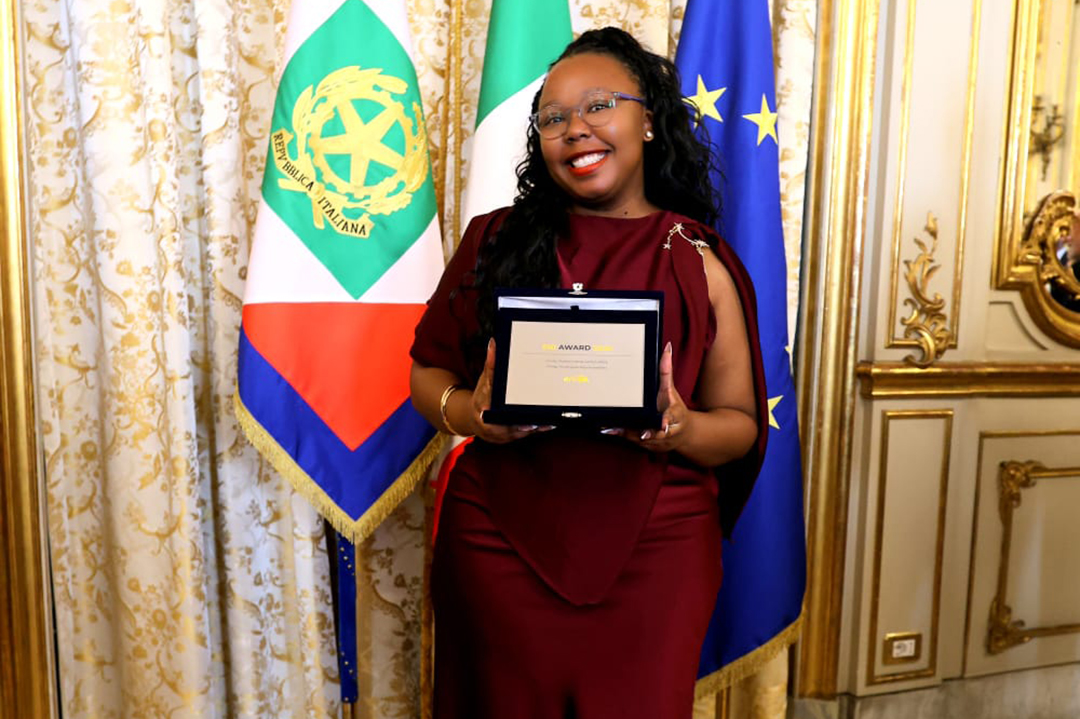 Unisa PhD student Gosego Sedikelo wins prestigious 2026 Eni Award for sustainable battery recycling research
 Unisa and TVET Colleges join forces to drive rural economic development through education and technology
 Unisa deploys 100 Election Observers to strengthen democracy and electoral accountability
 Unisa champions disability rights, inclusion and accessibility through month-long awareness campaign
 Unisa KwaZulu-Natal Region promotes staff well-being through health and wellness day